
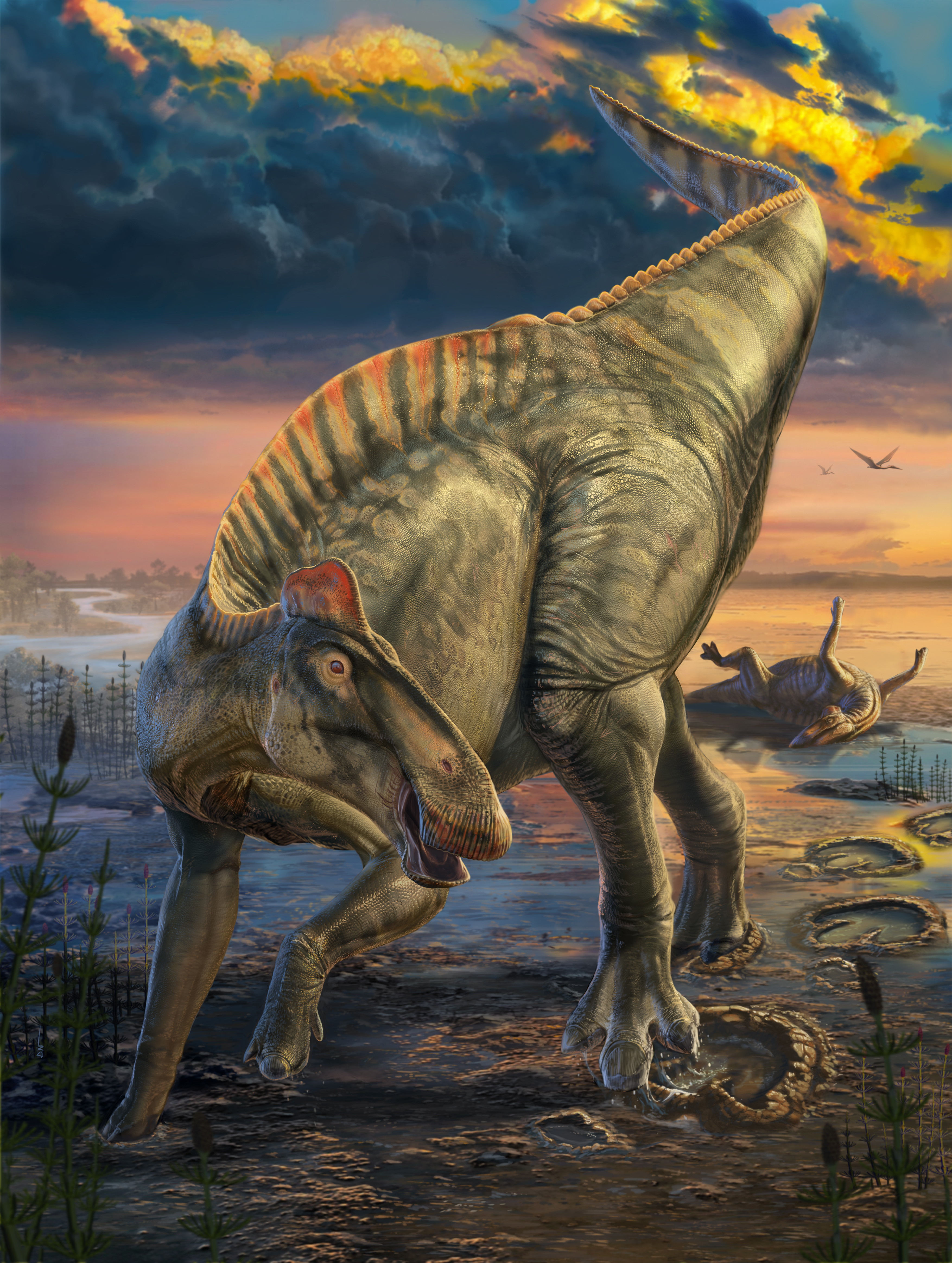
Remarkably Preserved Dinosaur with ‘Hooves‘ Unearthed in Wyoming
WORLAND, WYOMING – Paleontologists have announced the finding of two exceptionally well-preserved Edmontosaurus annectens dinosaurs in the badlands of Wyoming, revealing unprecedented details about the anatomy and life of these duck-billed herbivores. The fossils, nicknamed “mummies” due to their skin and soft tissue preservation, represent the first-ever discovery of hooved dinosaurs, challenging previous understandings of dinosaur locomotion and evolution.
The find, detailed in a statement released today, offers a rare glimpse into the dinosaur’s external appearance, revealing a fleshy crest, a row of tail spikes, and small, pebble-like scales. Crucially, the fossils exhibit clear evidence of hooves - a feature previously unknown in reptiles – and distinct differences in forelimb and hindlimb posture. This discovery, lead by paleontologist Paul Sereno, promises to reshape our understanding of dinosaur physiology and behavior.
The remarkably intact fossils were discovered in the Hanson Formation in Wyoming.Researchers utilized X-rays,micro-CT scans,clay analysis,and fossilized footprint studies to reconstruct the dinosaurs’ biology and preservation. The team believes the dinosaurs were rapidly desiccated by a drought, then quickly buried by a flash flood. A unique process involving static electricity and microorganisms then drew clay from the surrounding sediment, creating a protective template as the organic material decayed and was replaced by rock.
“There are so many amazing ‘firsts’ preserved in these duck-billed mummies – the earliest hooves documented in a land vertebrate, the first confirmed hooved reptile, and the first hooved four-legged animal with different forelimb and hindlimb posture,” Sereno said.
Edmontosaurus annectens was a large herbivore, reaching lengths of over 40 feet (12 meters). The scales covering the lower body and tail were remarkably small, measuring only 0.2 inches (4 millimeters) across. The discovery provides invaluable insights into the skin structure and potential coloration of these ancient creatures, furthering paleontological research and offering a more complete picture of life during the Late Cretaceous period. Further analysis of the fossils is ongoing, with researchers hoping to unlock even more secrets about these extraordinary specimens.
