
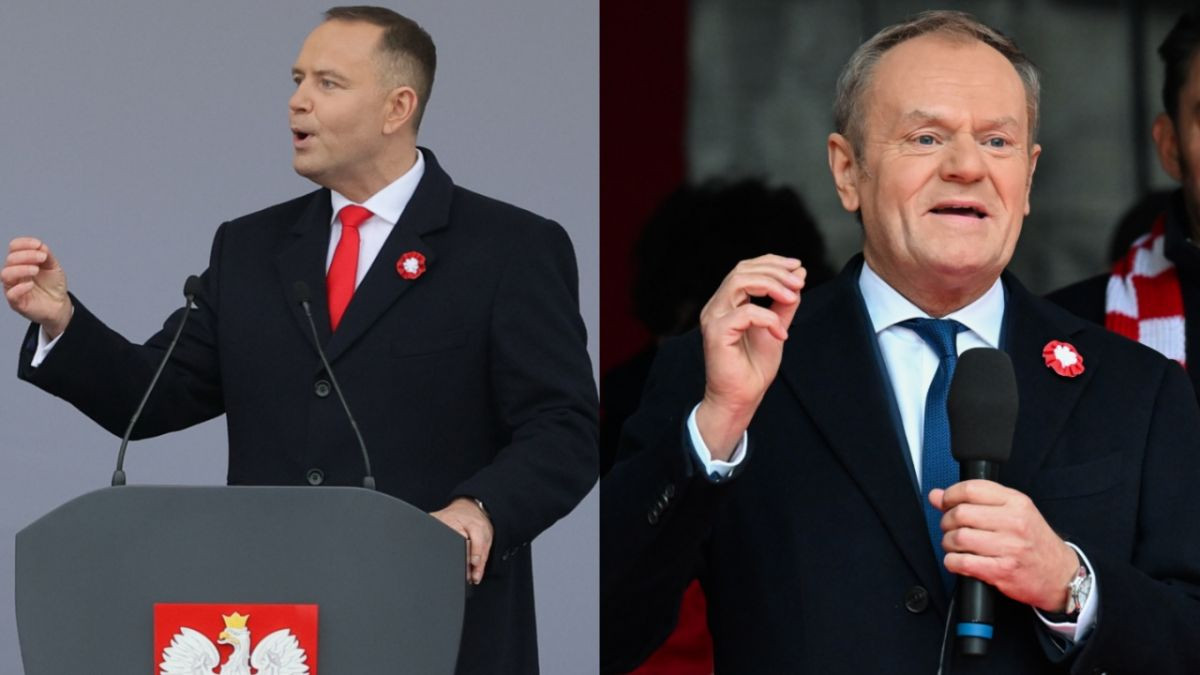
Warsaw,Poland – November 11,2024 – Poland’s Independence Day celebrations were marked by a visible political rift between president andrzej Duda’s predecessor,and Prime Minister Donald Tusk,despite both leaders issuing calls for national unity. the annual Independence March in Warsaw, which drew an estimated 100,000 participants according to city officials, highlighted the growing mainstream presence of far-right political ideologies, a point implicitly addressed by Tusk.
The Independence March, a customary event commemorating the restoration of Polish sovereignty in 1918, featured prominent figures from across the political spectrum, including Law and Justice (PiS) leader Jarosław Kaczyński, former Prime Minister Mateusz Morawiecki, and Confederation party leader Krzysztof Bosak. Organizers claimed a turnout of 300,000.
While the Warsaw Security Center reported the march proceeded “without major incidents,” aside from the use of banned pyrotechnics, a single incident occurred during a left-wing counter-march when a participant threw a flare onto the stairs of the United States consulate. police are investigating and no damage was reported. left-leaning groups regularly stage counter-marches, protesting what they view as the ultra-nationalist character of the main Independence Day event.
Speaking from Gdańsk, Prime Minister Tusk emphasized the importance of national unity, stating, “The greatest miracle was that Poles were able to unite.” He added, “No one has a monopoly on patriotism. We are a community whenever we are united,” a statement widely interpreted as a response to the far-right’s prominent role in the day’s events. Tusk also highlighted Poland’s economic progress, growing military power-including local production of South Korean K2 tanks-and continued support for Ukraine, asserting that Poland had become “a safe country where free Poles live” and “a regional leader.”
Despite their shared appeal for unity, tensions remain high between tusk and President Andrzej Duda. In a pre-holiday interview with Gazeta Wyborcza, Tusk accused Duda of “consciously devastat[ing] even the minimal space for cooperation” and using his veto power to obstruct key government initiatives. While expressing hope for “good cooperation with the presidency as an institution,” Tusk maintained that Duda’s actions were detrimental to Polish state interests.
