
ICE Expands Immigration Enforcement Powers Through Local Partnerships and Private Contracts Under Trump Administration
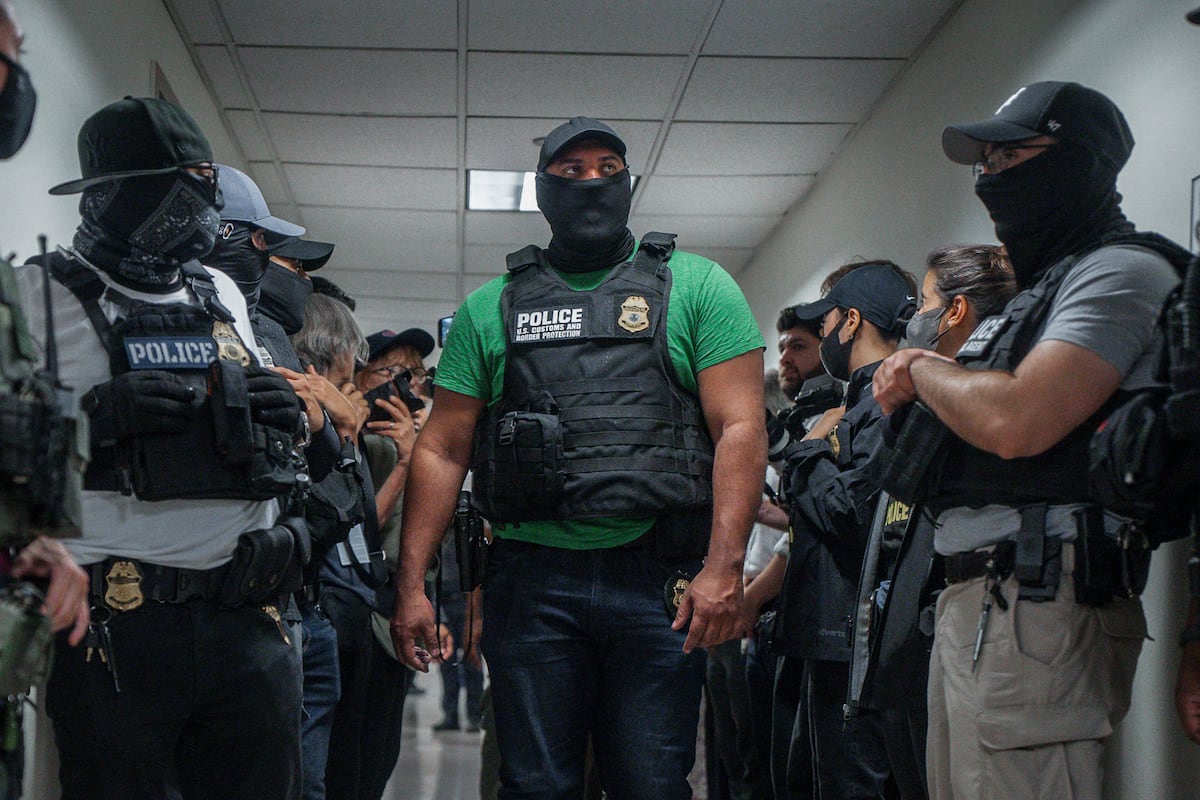
In the first ten months of the Trump Administration, U.S. Immigration and Customs Enforcement (ICE) has significantly expanded its reach into immigration enforcement, leveraging agreements with state and local law enforcement agencies and relying heavily on private companies for detention and deportation services.
According to data updated mid-October from ICE, the agency has entered into 287(g) agreements – allowing state and local entities to enforce federal immigration law – with a growing number of jurisdictions. Florida and Texas lead the nation with over 200 agreements each, while Virginia, Ohio, Alabama, and Pennsylvania each have 30. These agreements empower a wide range of local entities, including Highway Patrol, sheriffs, Port Authority police, School Police, Airport Police, and Park Police, to conduct raids, detentions, arrests, and imprisonments related to immigration violations.
The financial incentives for participation are ample. ICE provides funding for new vehicles - up to $100,000 – covers the salaries and benefits of participating agents, and offers to cover up to 25% of overtime costs. Moreover, ICE funds training for local agents, offering courses on immigration law, multicultural communication, and “how to avoid racial profiling.”
Though, the program’s expansion has drawn criticism. John Cano, of the Legal Aid Justice Center, points out the program was previously suspended due to concerns about racial profiling.He argues that focusing local resources on immigration enforcement “make[s] the community less safe because by redirecting resources to implement immigration law, focus is lost on what is happening at the local level, such as traffic accidents or other crimes.” Cano also warns that the program fosters distrust in law enforcement, as “migrants and citizens will think twice before contacting the police for fear of being arrested.”
Beyond local partnerships, the expansion of ICE’s power is deeply intertwined with private companies contracted for detention and deportation. Billions of dollars in government contracts are awarded to companies providing services such as prisoner transportation (Trailboss Enterprises and Hallmark Aviation),surveillance and monitoring (Palantir),and food and medical care for detainees (Aramark and Corizon Health).
According to Jesse Franzblau, associate director of the National Migrant Justice Center (NIJC), “More than 90% of people in immigration detention are held in facilities operated by private companies, and largely two companies-GEO Group and CoreCivic- the main beneficiaries.” Franzblau states that these prisons receive a fixed daily payment for each migrant incarcerated, ranging from approximately $80-$90 to over $250 in some cases.
Concerns have also been raised regarding potential conflicts of interest. Tom Homan, the current border czar, previously provided consulting services to GEO Group before joining the second Trump Administration and received contracts of unspecified value, according to journalistic investigations. As Homan’s appointment,the Department of Homeland Security has awarded GEO Group numerous contracts,including a 15-year,$1 billion contract to provide support services for the construction of Delaney Hall in Newark.
