
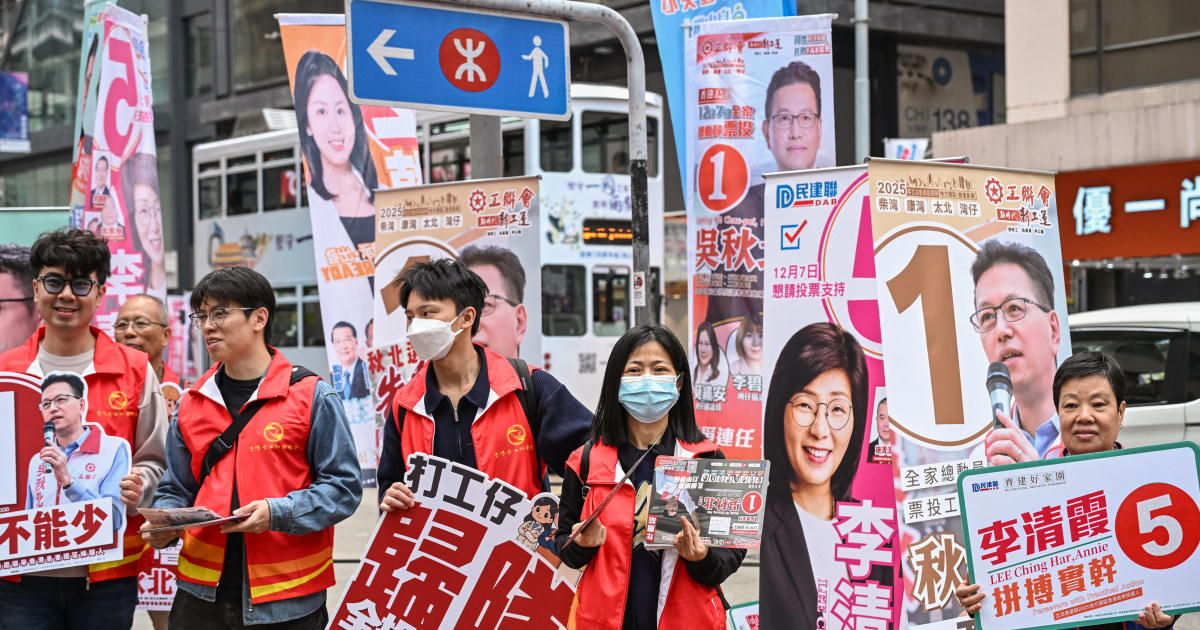
Hong Kong Holds Legislative Election Amid Scrutiny Following Deadly Fire
HONG KONG – Hong Kong residents are voting Sunday in a legislative election held in the wake of the city’s deadliest fire in decades, a blaze that has sparked questions about government oversight and building safety. The election takes place against a backdrop of diminished democratic portrayal and heightened political scrutiny.
The vote follows a period of political upheaval, including large-scale anti-government protests in 2019 and subsequent electoral changes in 2021. Authorities arrested individuals accused of inciting others to boycott the election or submit invalid ballots.
The recent fire, which occurred in a 1980s-era apartment complex undergoing renovations, has intensified public focus on building maintenance and potential irregularities in project bidding. Hong Kong Chief Executive John Lee stated last week that proceeding with the election, rather than postponing it, would better facilitate the response to the tragedy. “They have all experienced this fire and shared the pain,” Lee said of the Legislative Council.”They will certainly work with the government to promote reforms, diligently review funding, and draft relevant laws.”
The current election system significantly reduces direct representation. Of the 90 legislative seats, only 20 are directly elected by the city’s 4.1 million eligible voters. Forty seats are chosen by a largely pro-beijing election committee, and the remaining 30 represent industry groups – including finance, healthcare, and real estate – elected by their members.
Candidates are vetted to ensure loyalty to the central government in Beijing. Observers note the candidate pool appears aligned with Beijing’s desire for lawmakers who support its agenda, signaling a tightening of control. Lee has defended personnel changes as normal during an election cycle and criticized attempts to “distort” these changes.
Turnout is being closely watched as a potential indicator of public sentiment. Low participation could suggest disengagement even among government supporters, according to John Burns, an honorary professor at the University of Hong Kong. “It is a reflection of public sentiment,” Burns said, noting that some voters may be motivated to support the government’s response to the fire, while others may harbor reservations due to the high death toll and concerns about systemic issues in building maintenance.
Many democracy supporters have become disillusioned with politics as the crackdown following the 2019 protests, contributing to a decline in political engagement. Prior to the 2021 changes, direct election accounted for half of the 70-member legislature.
