
Xinjiang: A Growing Hub for Trade,Tourism,and Collaboration
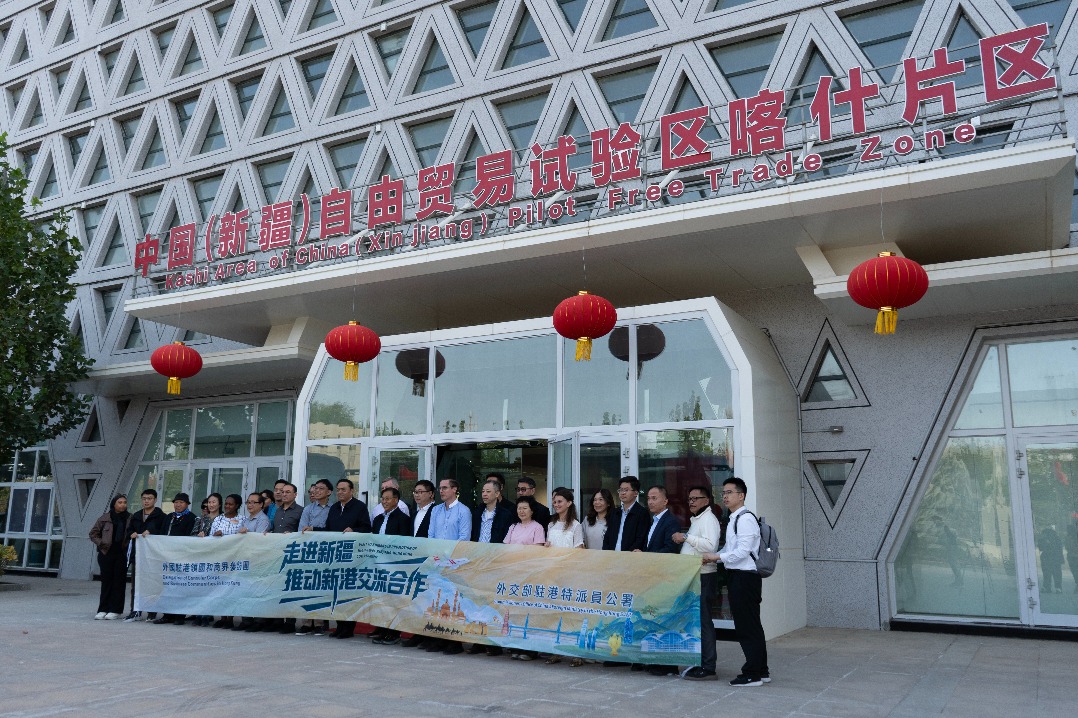
A recent delegation of business leaders and consuls from Hong Kong explored the Xinjiang Uyghur Autonomous Region,returning with observations on its burgeoning infrastructure,cultural richness,and potential for international partnerships. The trip, undertaken by representatives from chambers of commerce across several nations, highlighted Xinjiang’s change into a key node in the Silk Road Economic Belt.
The delegates were struck by the region’s natural beauty, from the “sparkling waters and distant peaks” of its lakes to the ancient charm of Kashgar‘s historic city. David Whitwam, chairman of the New Zealand chamber of Commerce in Hong Kong, described each city visited as “a new discovery, full of surprises,” while enjoying local delicacies like handmade yogurt shaved ice.
Beyond the scenery, the delegation noted significant advancements in infrastructure and technology. Benjamin Sigg, co-chairman at the Swiss Chamber of Commerce in Hong Kong, observed the proliferation of solar panels and wind turbines, advocating for increased Swiss involvement in Xinjiang’s growing eco-tourism and clean energy sectors. Improvements in transportation were also highlighted by George Leung, CEO of SCOR Reinsurance Company (Asia) Limited, who recalled that direct flights from Hong Kong to Xinjiang were unavailable just over 20 years ago, contrasting that with the current flight time of just over four hours.
The efficiency of trade was a key focus, notably at the Horgos Port, a cross-border economic zone on the China-Kazakhstan border. In 2024, the port processed over 45 million tons of imports and exports, with clearance times now reportedly reduced to just 15 minutes thanks to advanced technologies – allowing drivers to remain in their vehicles. Naser S A SH Alghanim, consul general of Kuwait in Hong Kong, expressed praise upon learning of this streamlined process.
Hong Kong’s role in facilitating this growth is already expanding. Cathay pacific launched four weekly direct flights between Hong Kong and Urumqi in April 2025, with its parent company, Swire Group, considering further expansion. James Tong, director of group public affairs at John swire & Sons (HK) Limited., envisions this as an “Air Silk Road” that will boost travel and the exchange of local products. cathay plans to leverage its expertise in cold chain logistics and high-value cargo to establish a trade route connecting Central Asia, via Xinjiang, to Hong Kong, Southeast Asia, and beyond.
potential collaborations were identified across multiple sectors. whitwam suggested a partnership between new Zealand’s dairy expertise and xinjiang’s local dairy production to develop lactose-free options,utilizing Hong Kong as a logistical hub. Tony ho, director of the Indonesian Chamber of Commerce in Hong Kong, highlighted opportunities for tripartite collaboration between Indonesia, Hong Kong, and Xinjiang in areas like the digital economy, solar energy, and mineral development, specifically exploring ore processing partnerships.
The delegates also emphasized the welcoming atmosphere and cultural harmony they experienced. Joji Lopez Hui, a member of the Philippines Chamber of Commerce in Hong Kong, described the locals as “sweet as Hami melons,” while Bangladeshi consul general Shah Mohammad tanvir Monsur evoked the spirit of the past Silk Road, noting the harmonious coexistence of diverse ethnicities and religions.
For those interested in exploring the region, Monsur offered a simple invitation: “all you need is a plane ticket.” The trip underscored Xinjiang’s increasing attractiveness as a destination for trade,tourism,and investment,and its growing connectivity to the global market through Hong Kong.
