
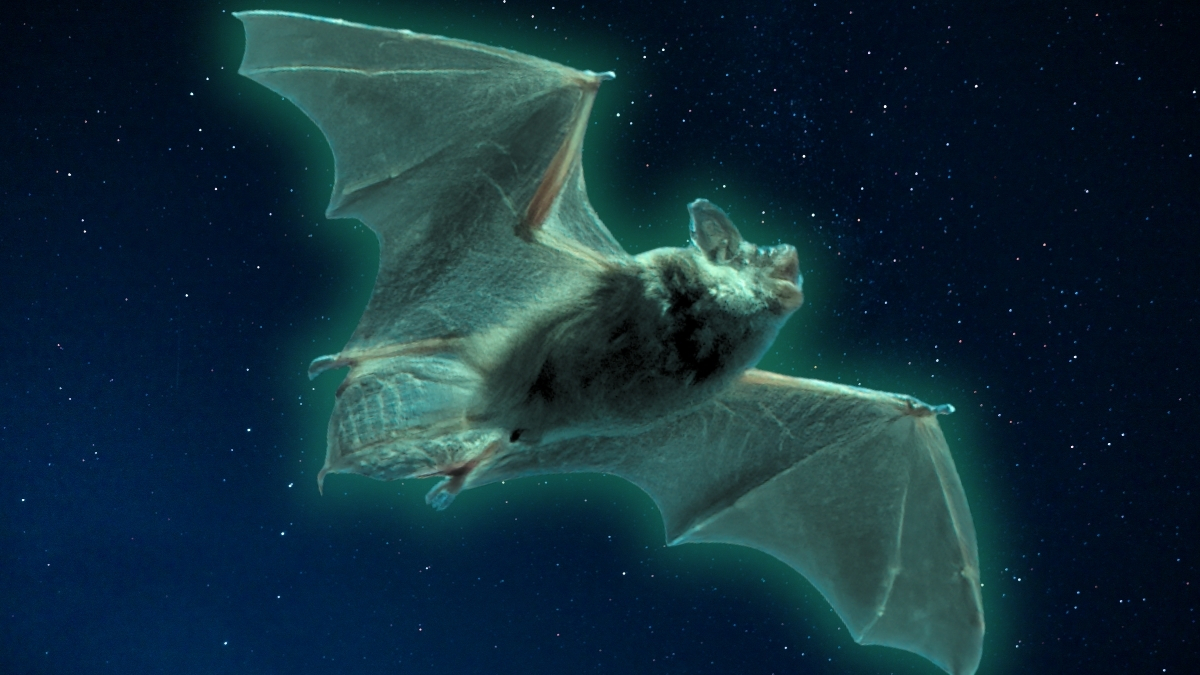
Bats Across north America Exhibit Unexpected Green Glow under UV Light
ATHENS, GA – In a surprising discovery, researchers at the University of Georgia have confirmed that North American bats glow a ghostly green when exposed to ultraviolet (UV) light. The finding, published in the journal Ecology & Evolution, adds bats to a growing list of mammals exhibiting biofluorescence.
The team examined 60 museum specimens representing six species: big brown bats (eptesicus fuscus), eastern red bats (Lasiurus borealis), Seminole bats (Lasiurus seminolus), southeastern myotis (Myotis austroriparius), gray bats (Myotis grisescens), and Brazilian free-tailed bats (Tadarida brasiliensis). Every specimen tested emitted light under UV radiation.
Notably, the glow was consistent across all species, sexes, and ages, originating specifically from the wings, hind limbs, and membranes between the legs. The emitted light consistently fell within a narrow range of green wavelengths.
“The data suggests that all these species of bats got it from a common ancestor. they didn’t come about this independently,” explains wildlife biologist Steven Castleberry of the University of Georgia. “It might potentially be an artifact now, as maybe glowing served a function somewhere in the evolutionary past, and it doesn’t anymore.”
Researchers believe the uniformity of the glow rules out its use for species recognition or mate selection. While the wavelengths are within the bats’ visual range, the team questions whether sufficient UV light exists in their nocturnal environments, especially within dark roosting locations, to trigger noticeable fluorescence.
However, the glow’s location on wings and lower limbs – visible during flight and foraging – suggests a potential behavioral function that warrants further inquiry with live bats. This discovery builds on previous research revealing biofluorescence in a diverse “menagerie of mammals,” as reported by ScienceAlert.
