
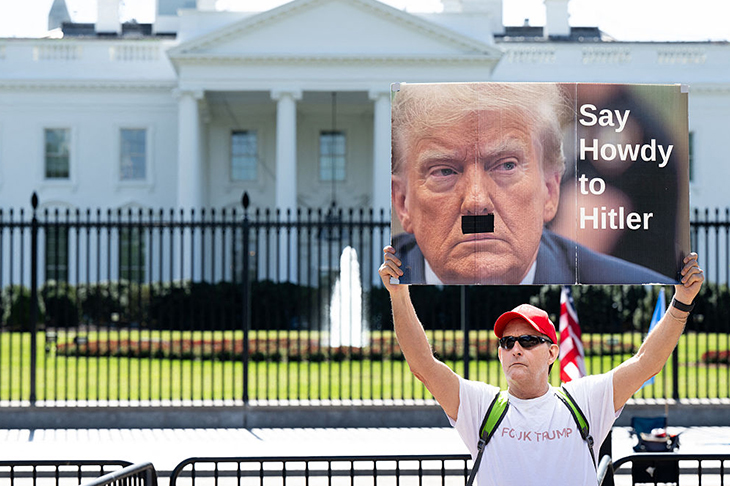
The Erosion of Norms: why Framing Trump as Hitler Misses the Point
Recent anxieties about the state of democracy, especially in the United States, often center on the specter of authoritarianism – a new strongman poised to dismantle established institutions. Comparisons to Hitler, while emotionally resonant, are ultimately a misdiagnosis. The true threat isn’t a singular figure seizing power, but a more insidious erosion of the very norms that underpin democratic function, perpetrated by elites across the political spectrum.
The fragility of these norms is increasingly apparent, even in countries like Australia, which often assume a degree of immunity from the polarization seen elsewhere. The intense and prolonged pursuit of the Morrison government and its ministers by the Labor party, progressive media outlets, and societal institutions serves as a stark warning. The Brittany Higgins saga, in particular, exemplifies this risky trend. For over eighteen months, a narrative took hold – amplified by the national broadcaster and even a leading university - presenting the allegations as beyond question.
This environment stifled journalistic scrutiny, compromised prosecutorial objectivity, and transformed Parliament into a platform for moral grandstanding. An alleged crime became a political tool, wielded to damage a government and influence an election, seemingly at any cost.The subsequent unraveling of the narrative – revealing a non-existent cover-up and exposing institutional overreach – highlights the damage inflicted by this relentless pursuit.
The case of christian Porter was arguably even more troubling. Facing accusations from a deceased individual,and with the deceased’s family expressing doubts about the claims,Porter was subjected to a campaign of reputational destruction. Despite the absence of charges, a trial, or even the possibility of one, he was treated not as a citizen entitled to due process, but as a sacrificial figure. This wasn’t justice; it was a demonstration of mob rule,fueled by the same fervor seen in the Higgins case,and a willingness among established institutions to discard the very norms they claim to uphold when politically expedient.
This pattern – accusation coupled with moral certainty serving as justification for institutional action - echoes the “lawfare” tactics employed against Donald Trump and his associates. The danger lies not in the populism itself, but in the weaponization of the legal system, transforming it from a check on power into an instrument of political retribution.
Despite concerns, the American constitutional structure remains remarkably resilient. Its inherent checks and balances, the federal system, and the independence of the courts provide significant safeguards. History demonstrates that a single individual, even a president, cannot unilaterally dismantle the system without the complicity of powerful elites. The recent protests against Trump, ironically, underscored this point – demonstrating the continued capacity for resistance and the limitations of executive power.
The focus should shift from fearing a king or a dictator, to recognizing the more subtle, yet equally dangerous, threat of a political class willing to abandon the norms that are essential for a functioning democracy.
