
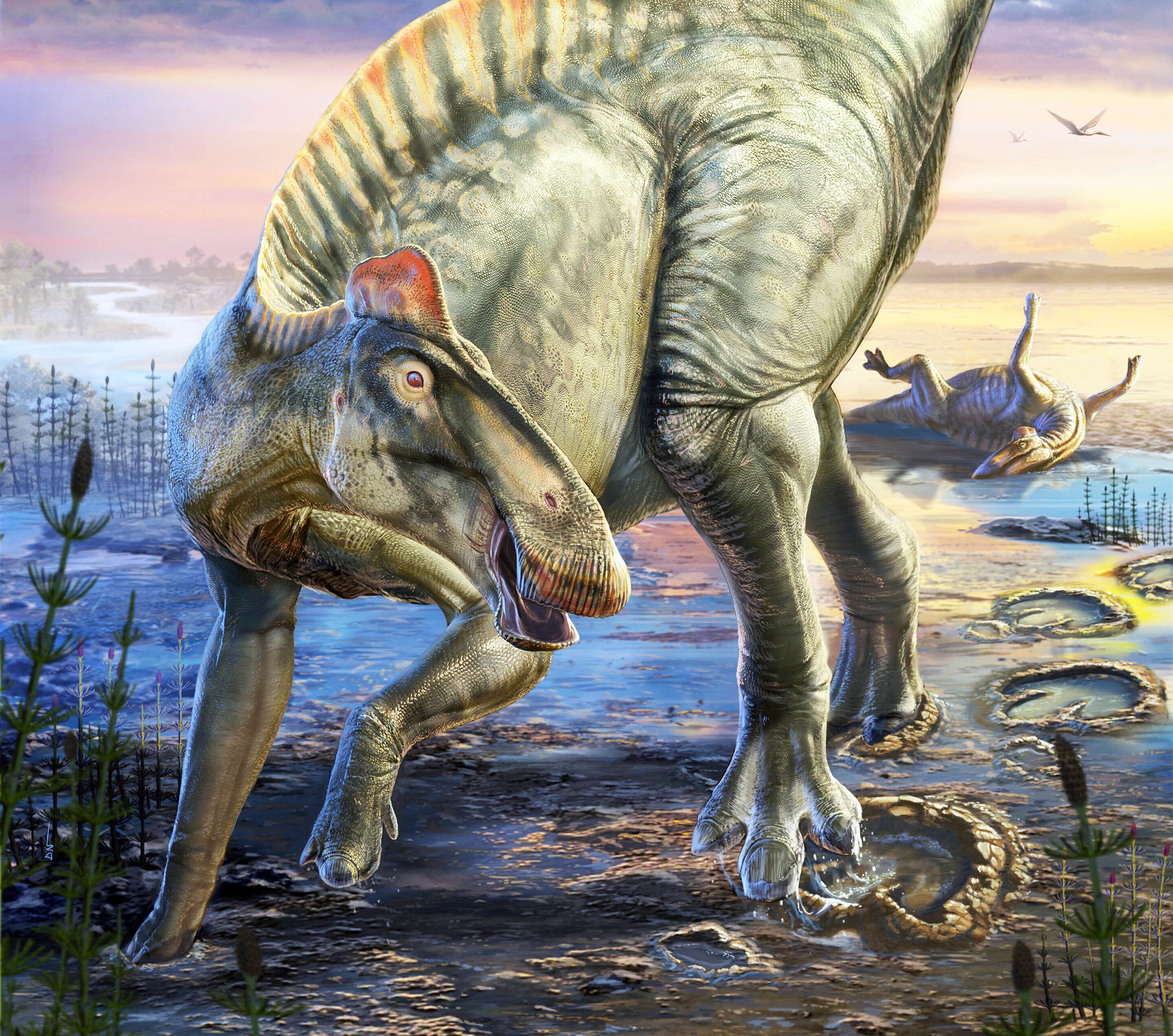
Wyoming’s ‘Mummy Zone’ Continues to Reveal Exceptionally Preserved Dinosaur Fossils
A region in Wyoming,dubbed the “mummy zone,” is yielding remarkably well-preserved fossils of dinosaurs including Edmontosaurus,Triceratops,and Tyrannosaurus rex. A recent study, published in the journal Science, details how unique geological conditions in the area have allowed for unprecedented fossil preservation, offering scientists new insights into the anatomy and final moments of these prehistoric creatures.
The area, less then ten kilometers wide, experiences rapid geological subsidence and alternating drought-flood cycles near a Cretaceous coastline. These conditions repeatedly facilitated a process called clay templating, essentially creating molds of the dinosaurs that preserved soft tissues like skin and, in some cases, even potential traces of blood molecules. This discovery is revolutionizing how paleontologists interpret fossils,moving beyond skeletal structure to understand the complete organisms and the processes that led to their fossilization.
Researchers, led by Professor paul Sereno of the University of Chicago, have focused on a particularly stunning specimen: an adult Edmontosaurus annectens mummy nicknamed “Ed Sr.” The fossil exhibits remarkably preserved hooves and offers a detailed look at the dinosaur’s skin texture.
“This may be the single best paper I’ve released,” Sereno said. “From field to lab to 3D reconstructions along with a suite of useful terms defined, it’s a tour de force, and it tells a coherent story about how these remarkable fossils come to be and what we can learn from them.”
The study not onyl details the preservation process but also establishes a standardized terminology for describing these “mummy” fossils, furthering collaboration and understanding within the paleontological community. This breakthrough allows scientists to read the “ancient language of fossils” with greater clarity, revealing not just the shapes of vanished creatures but also the delicate processes that captured their final moments in clay.
The study is published in the journal Science.
