
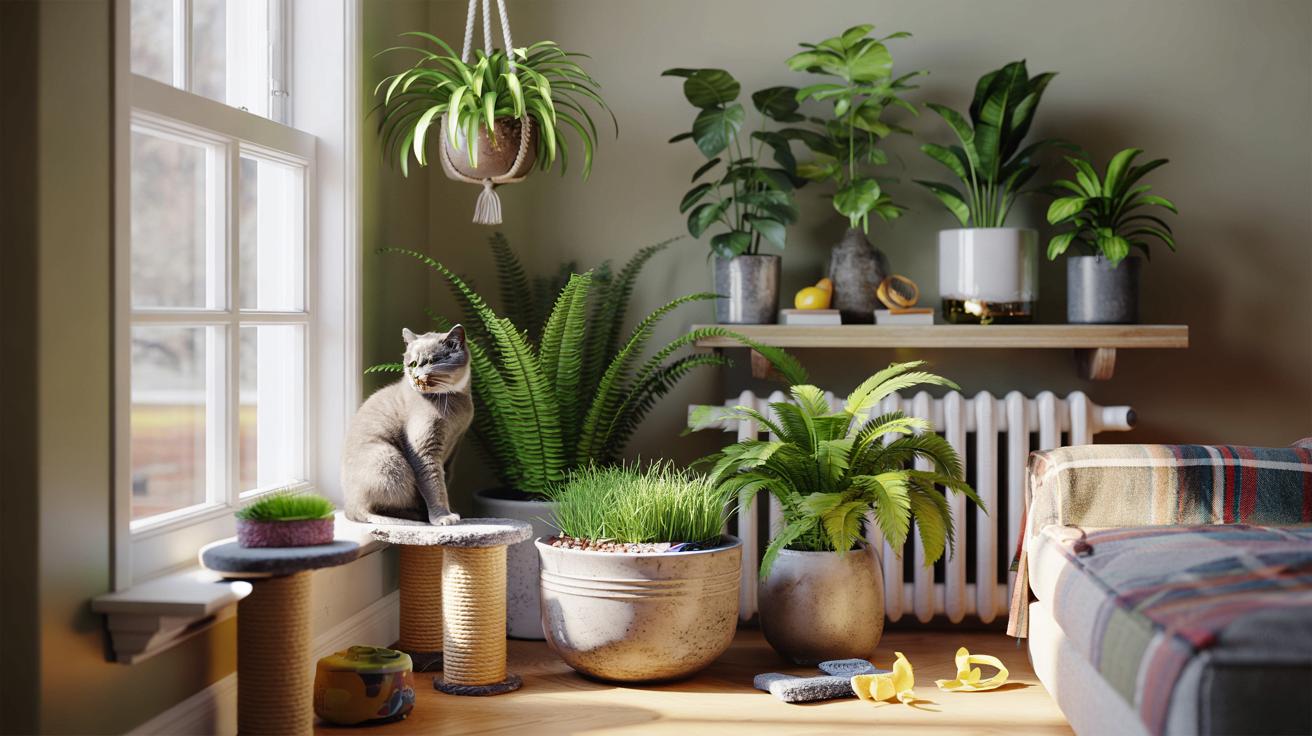
Your Cat Keeps Chewing Your Houseplants? 9 Safe Swaps to cut £350 Vet Bills Across the UK
Across the UK, an estimated 11 million cats share our homes – and sometimes, our houseplants. A nibbling habit can quickly lead to expensive veterinary bills, potentially reaching £200-£350 before tests or treatment for suspected plant ingestion. Fortunately, a few simple changes can redirect your cat’s attention and protect both your greenery and your wallet.
Here’s a guide to creating a cat-kind, plant-safe home:
1. Discourage Digging: Top-dress your plant soil with pebbles or coco chips. Avoid cocoa mulch entirely, as it’s toxic to cats.
2. Deter Chewing (Temporarily): If a specific pot rim is attracting your cat, briefly wrap it in double-sided tape.
3. Plant-Safe Deterrents: Use mild, plant-safe deterrents around pots, like citrus peels placed on the soil. Remember to refresh these weekly.
4. Mental Enrichment is Key: Combat boredom with puzzle feeders, scattering kibble on a snuffle mat, and a dedicated 10-minute play session each day.
5. Supervise or Separate: When you can’t supervise,shut doors. A bathroom orchid is a safer bet than a tempting windowsill buffet.
6.Adapt to Winter Light: Changes in winter lighting can cause plants to lean and flutter, tempting pounces. Stake leggy stems, prune lightly to reduce movement, and water in the morning to avoid evening droplets that catch the eye.
7. What to do After a Nibble: Remain calm. Immediately remove access to the plant. Wipe your cat’s mouth with a damp cloth if you see sap. Offer fresh water. Crucially, monitor for drooling, pawing at the mouth, vomiting, diarrhoea, or changes in behaviour. If any of these signs appear, or if the plant may be toxic, call your vet immediately. Be prepared to provide your cat’s weight,what was eaten,the time of ingestion,and a photo of the plant. Do not induce vomiting at home. Keep plant labels for swift reference.
8. Establish a Weekly Routine: Consistency is key. Sow a fresh tray of cat grass every Sunday, refresh toys on Wednesdays, and move a safe pot to a sunny perch on Fridays. These small rituals redirect interest and reduce raids on other foliage.
9. Be Vigilant with Seasonal Hazards: Holiday bouquets, particularly those containing lilies, are dangerous. Decline them or keep them outside. Store fertilisers, pest sprays, and plant food in sealed cupboards, as many are not pet-safe. Always read labels before use and choose pet-safe options.
Quick Wins & Tracking Progress:
* Heavy Pots: Swap plastic pots for heavier ceramic ones to discourage tipping.
* Motion & play: A dangling toy near a safe pot is more appealing than a still leaf.
* Cool Comfort: Offer a chilled ceramic tile as a cool nap spot; rested cats are less likely to hunt leaves.
* Palate Testing: Experiment with barley grass versus wheat to see which your cat prefers.
* The “Green Triangle” trial: Set up three cat grass pots – by a window perch, near a scratcher, and in the lounge area – with a catnip toy at each. Track leaf raids for seven days. Many cats will shift their chewing within 72 hours.
Zoning Your Home:
Consider creating three zones: cat-free (for precious or toxic plants), supervised, and cat-friendly (for edible greenery). This planning exercise protects your collection, reduces stress, and provides your cat with a clear, rewarding route through the day.
By implementing these strategies, you can significantly reduce the risk of costly vet bills and create a harmonious home for both you and your feline friend. A three-pack of cat grass seed costs considerably less than a takeaway – a small investment for peace of mind. Aim for two safe greenery points within ten steps of your cat’s favourite sleeping place and add a five-minute feather-wand session before dinner. Tracking incidents in a notes app can help you see progress as the safe buffet becomes routine.
