
Landmark Achievement for Tibetan Buddhist Nuns as Advanced Degree Programs Expand
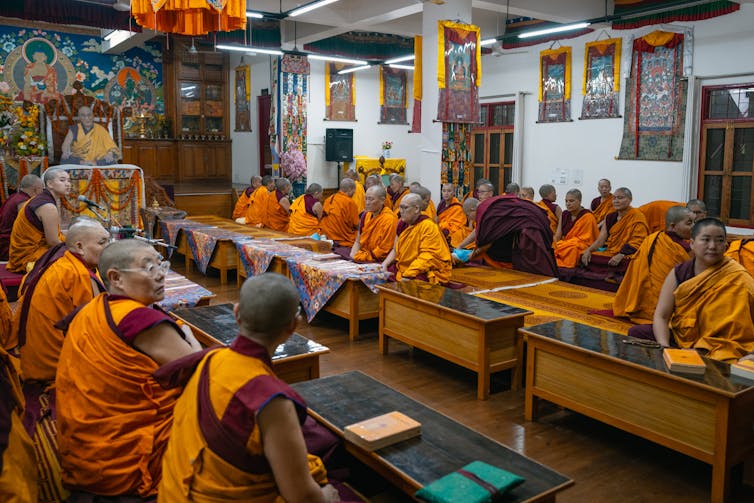
DHARAMSHALA, INDIA – Tibetan Buddhist nuns are increasingly attaining the highest levels of monastic education, a shift significantly propelled by the support and advocacy of the Dalai Lama.Historically limited in their access to advanced training, nuns are now earning degrees equivalent to those traditionally held only by monks, transforming leadership opportunities within the Tibetan Buddhist community.
For centuries,the most advanced degrees in the Geluk tradition – “geshe” or “khenpo” for monks – were unavailable to nuns. Recognizing a disparity in opportunity, the Dalai Lama championed equal access to education for women within the monastic system. “In the beginning when I spoke about awarding Geshema degrees, some were doubtful,” the Dalai Lama recalled in 2018. “I clearly told them that Buddha had given equal opportunity for both men and women.”
This advocacy led to the introduction of the “geshema” degree for nuns in 2012.Candidates undergo 17 years of rigorous study of Buddhist texts and must achieve a score of 75% or higher to qualify for the examinations. In 2016, the dalai Lama personally awarded the first 20 geshema degrees to Tibetan nuns, four years after the Tibetan government-in-exile formally accredited the program. Prior to this, only one Western nun, Kelsang Wango, had received a comparable degree. Currently, there are 73 geshemas.
The momentum has extended beyond the Geluk school. Nuns within the Nyingma, Sakya, and Kagyu schools of Tibetan Buddhism are also pursuing advanced degrees, earning the title of “khenmo,” which similarly qualifies them to teach Buddhist scriptures. In 2022, the Dalai Lama offered blessings to newly enthroned khenmo within the Sakya school.
Organizations like Sakyadhita International Association of Buddhist Women, which has supported the empowerment of Buddhist women for nearly 40 years through international meetings, and local nonprofits such as the Ladakh Nuns Association, providing opportunities in healthcare, have also played a crucial role in this progress.
As more women attain these advanced degrees, they are poised to assume greater leadership roles within their communities, furthering educational opportunities for other nuns and contributing to the preservation of Tibetan culture.
