
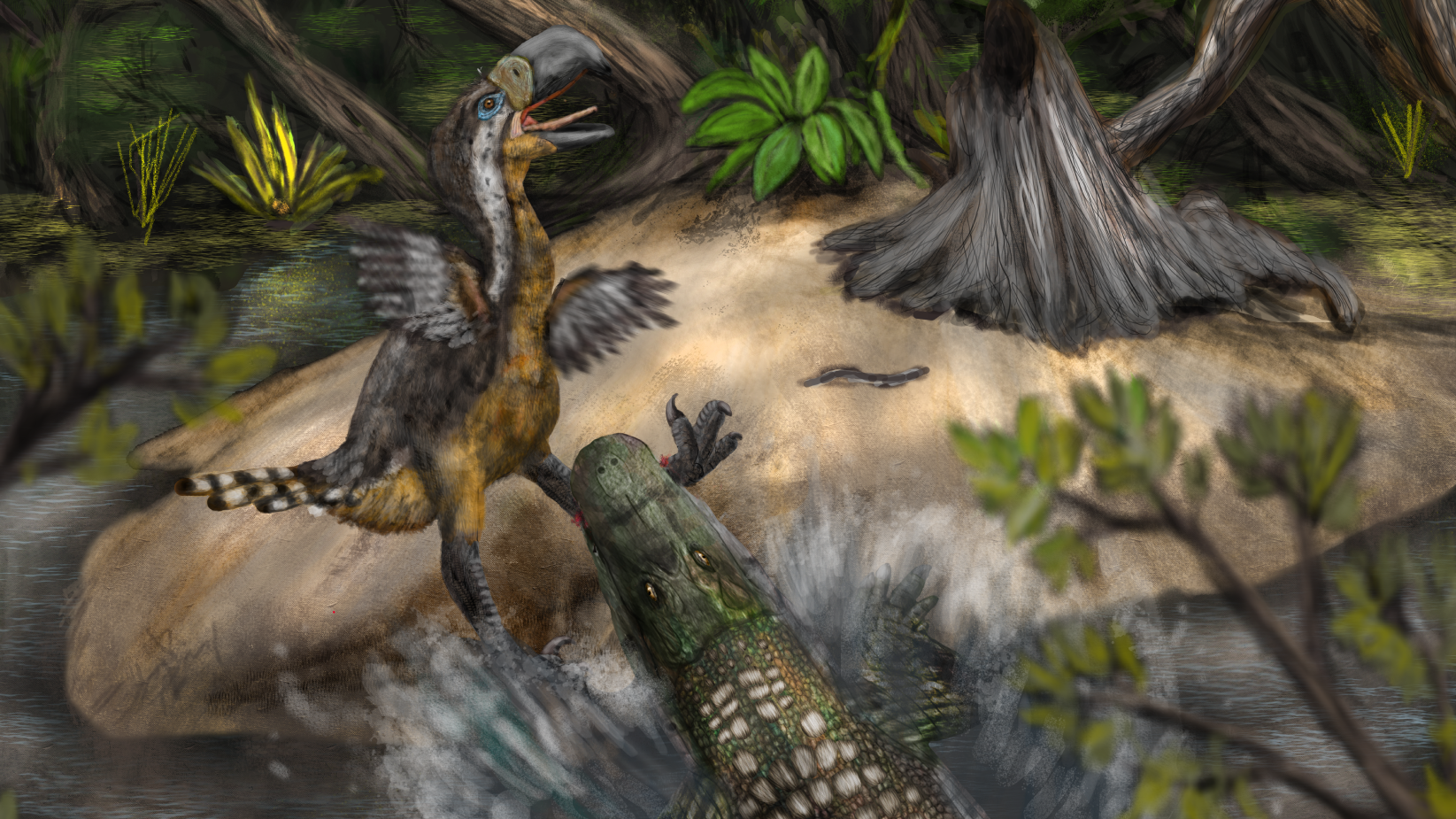
Ancient Bite Marks Suggest Giant Caiman Predated Terror Bird: New analysis of fossilized bone fragments reveals bite marks consistent with a large caiman species, perhaps shedding light on prehistoric predator interactions in South America.
Researchers have meticulously examined fossilized bone marks, creating detailed 3D images to understand the nature of the ancient injury. The study found no evidence of healing in the bone, indicating the damage was likely fatal. The size and shape of these marks closely match those that would be inflicted by a caiman measuring approximately 15.1 to 15.8 feet (4.6 to 4.8 meters) in length.
(Image credit: Julian Bayona Becerra/Biology Letters)
The research team posits that the bite likely originated from Purussaurus neivensis, the largest known ancient caiman species inhabiting the La Venta region. However, the specific individual responsible for the bite was likely a subadult, not yet reaching its full mature size. For context,P. neivensis is estimated to have grown to lengths of up to 33 feet (10 meters), making it an exceptionally large predator.
While direct evidence of the caiman consuming the terror bird is absent, these findings offer a compelling account of an aquatic apex predator potentially preying upon or scavenging a terrestrial apex predator. This interaction is placed within the middle Miocene epoch, a period spanning from 23 to 5 million years ago.
According to the study’s findings, this research contributes valuable insights into the dietary habits of Purussaurus, the ecological dynamics and perceived dangers in proximity to water bodies at La Venta during the middle Miocene, and the intricate web of life within the proto-Amazonian ecosystems of tropical South America.
