
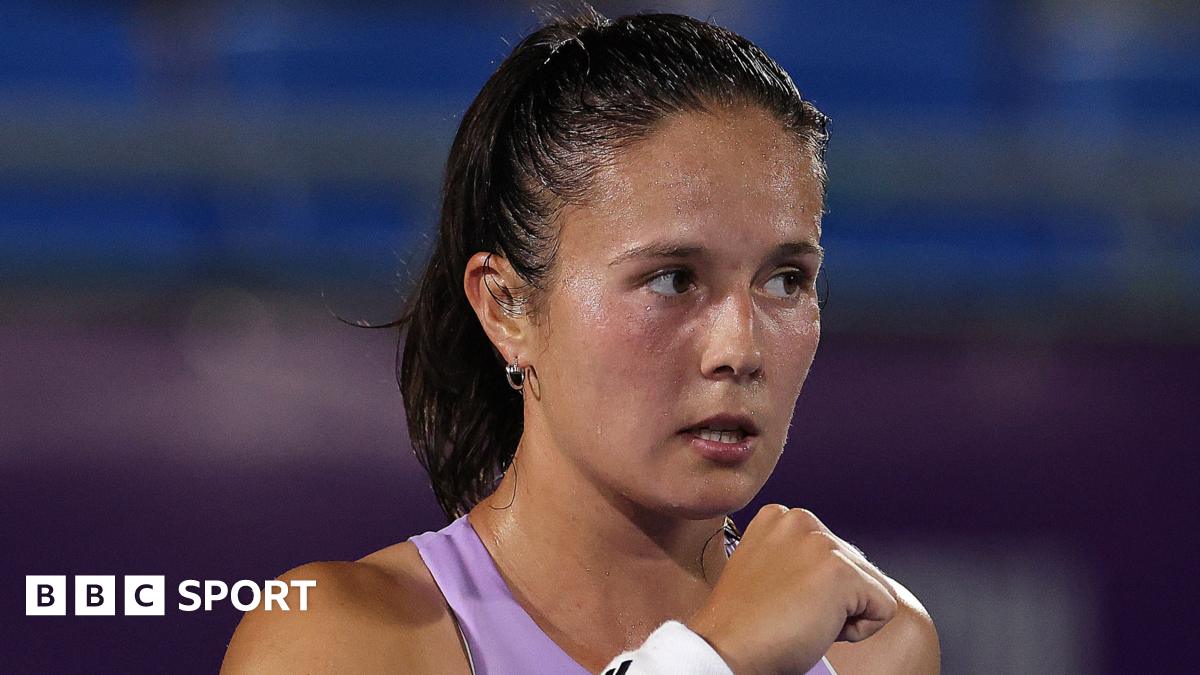
Daria Kasatkina Cuts Season Short, Cites Mental and Emotional Strain
Russian tennis star Daria Kasatkina has announced she is ending her season early, revealing she has reached a “breaking point” due to a combination of on-court pressures and the emotional toll of recently switching her nationality.The announcement adds to a growing chorus of concern among players regarding the demanding tennis calendar and the mental health challenges within the sport.
Kasatkina’s decision follows similar moves by former top-five players Elina Svitolina and Paula badosa,both of whom recently concluded thier seasons prematurely. Svitolina stated she “had not been feeling like myself,” while Badosa cited the mental strain stemming from a persistent back injury.This wave of withdrawals underscores a critical juncture for professional tennis, where the relentless schedule and competitive demands are increasingly impacting player well-being and prompting calls for systemic change.
The 26-year-old Kasatkina explained her decision stemmed from a confluence of factors,including the stress associated with her recent nationality switch. “I am at breaking point and sadly I am not alone,” she stated. “Add in to the mix the emotional and mental stress related to my nationality switch and there is only so much I can deal with and take as an individual woman.” She acknowledged feeling vulnerable but also expressed confidence in her ability to recover through rest and self-reflection, stating, ”If this makes me weak, then so be it, I’m weak. However, I know I am strong and will get stronger by being away and recharging. It’s time I listened to myself for a change.”
The current structure of professional tennis, governed by the Women’s Tennis Association (WTA) and the Association of Tennis Professionals (ATP), requires top players to participate in all four Grand Slam tournaments, ten WTA 1000 events, and six 500-level tournaments. players can be excused from mandatory events only for injury or personal reasons, but face penalties – loss of ranking points and prize money – for non-participation.
The intensity of the schedule has drawn criticism from multiple players. At recent tournaments in China, five players retired due to injury, prompting six-time Grand slam champion Iga Swiatek to describe the season as “too long and intense.” Novak Djokovic, a former world number one who has adjusted his schedule to prioritize physical health, has urged players to demonstrate greater unity in advocating for changes to the tour structure. The majority of WTA 1000 and ATP Tour events, as well as all four Grand Slams, span two weeks in duration.
