
Webb Telescope Unravels Serpent Star’s Secrets
New Images Reveal Three Celestial Companions Locked in Cosmic Dance
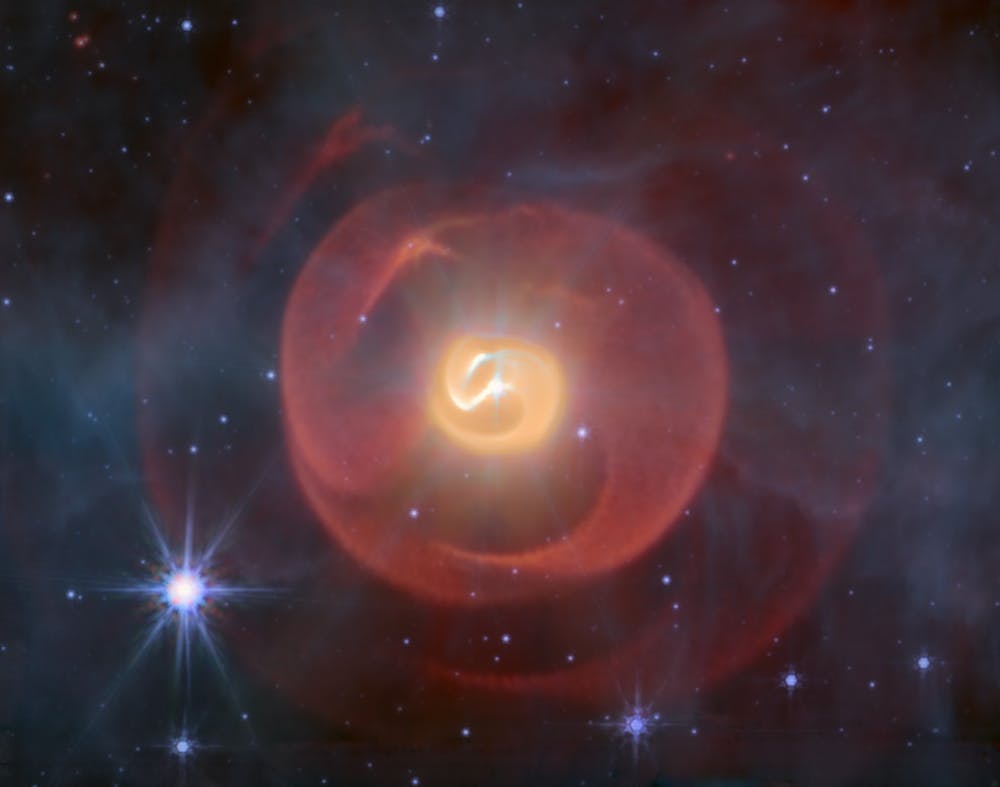
A stunning new image from the James Webb Space Telescope (JWST) has provided unprecedented detail of Apep, a celestial serpent named for the Egyptian god of destruction. This cosmic entity, previously captured by the Very Large Telescope, is now understood to be a complex system of three massive stars.
A Cosmic Serpent’s Structure Revealed
Initially observed five years ago as two dying stars enveloped in a spiral of dust, Apep’s true nature has been unveiled. Radio astronomer **Joe Callingham** first shared an infrared image of the system, described as a “snake eating its own tail.” The advanced capabilities of JWST have now provided a more intricate view, analyzed in two recent scientific papers.
Violent Stellar Evolution and Dust Formation
Massive stars nearing their end, known as Wolf-Rayet stars, violently expel their outer layers, exposing their dense cores. These stars generate powerful stellar winds, far exceeding that of our Sun. When the winds from binary Wolf-Rayet stars collide, they compress gas, creating dense regions where carbon can condense into dust. This process is vital for the creation of the universe’s earliest carbon-rich materials, the building blocks of life.
A Twist in the Tale: Three Stars Emerge
The gravitational dance of binary stars is known to shape the ejected dust into elegant spiral nebulae. However, Apep defied these expectations. The new JWST data, analyzed using infrared capabilities similar to thermal imaging, reveals that Apep is not a pair but a trio of Wolf-Rayet stars. Their winds are nearly equal in strength, resulting in a broad, wind-sock-shaped dust nebula.

Previous observations had noted a third, more distant star. The enhanced detail from JWST reveals three distinct dust shells, each progressively cooler and fainter, precisely spaced. This new imaging confirms the presence of a third stellar companion actively shaping the system’s structure.
Decoding the Cosmic Structure
The scientific interpretation of the JWST data is presented in two papers. One, led by Caltech astronomer **Yinuo Han**, investigates the cooling of the nebula’s dust and its relationship to the background stars. This analysis suggests the stars are further away than initially estimated, indicating exceptional luminosity.
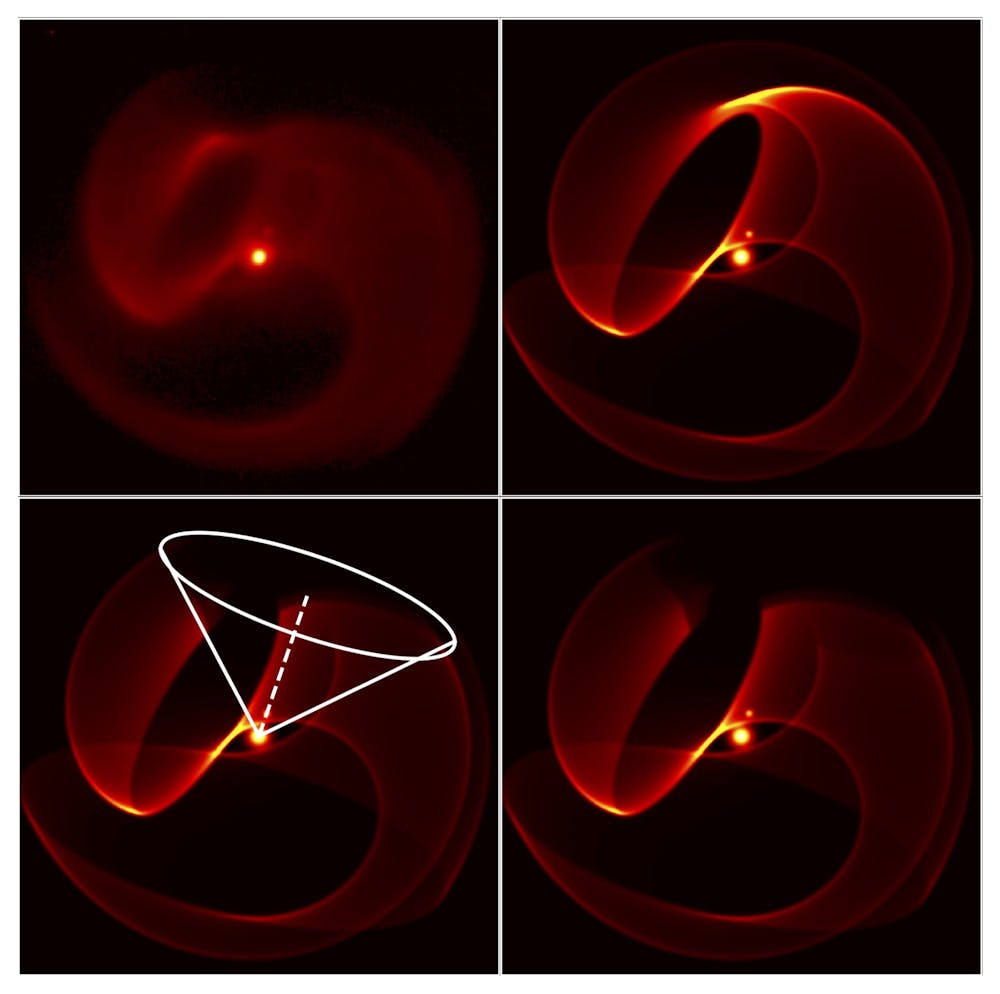
The second paper, authored by Macquarie University Masters student **Ryan White**, developed a sophisticated computer model to precisely map the nebula’s shape and decode the inner stars’ orbits. **White** identified a distinct “bite” within the dust shells, a feature carved out by the third star’s powerful wind, confirming its integral role in the Apep system.
A Glimpse into Cosmic Origins
Systems like Apep offer profound insights into the violent processes of stellar death and the genesis of essential cosmic elements. The intricate patterns formed by these celestial events possess a unique beauty, presenting puzzles that challenge and reward scientific inquiry. The study of these phenomena continues to enrich our understanding of the universe’s evolution.
The universe’s dramatic stellar deaths, much like the natural world, provide complex puzzles that have captivated thinkers for centuries. In 2023, astronomers estimated there were over 2 trillion stars in the observable universe, many of them in binary or multiple star systems, highlighting the prevalence of such dynamic celestial interactions.
