
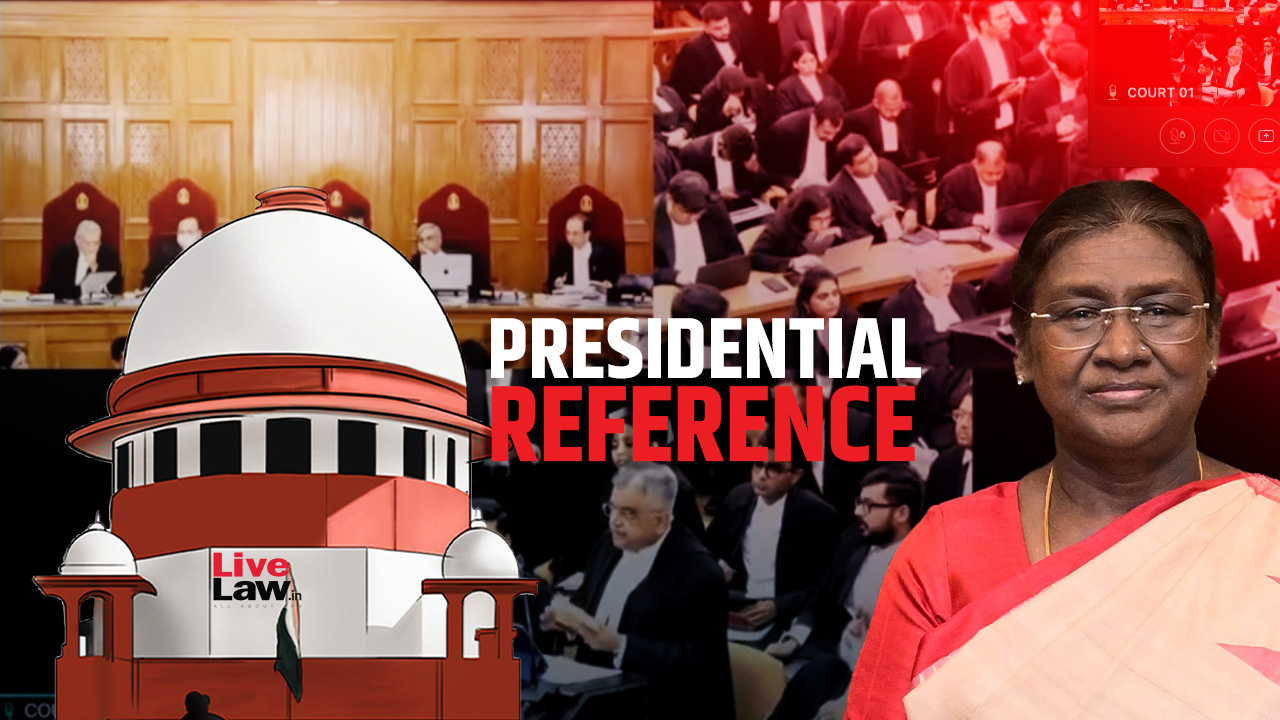
Supreme Court Questions center on Delayed Governor Action on State Bills
New Delhi: the Supreme Court sharply questioned the central government’s stance on the delays in governors acting on bills passed by state legislatures,asking how it could dismiss concerns raised by states as ”false alarms” when bills remain pending with governors for years. A five-judge bench, comprising Chief Justice of India BR Gavai, Justice surya Kant, Justice Vikram nath, Justice PS Narasimha and Justice AS Chandurkar, is currently hearing a Presidential Reference on 14 questions related to the powers of governors and the timelines for acting on state legislation.
The pointed inquiry came during ongoing arguments concerning the constitutional validity of indefinite delays by governors in granting assent to bills. advocate Avani Bansal argued that the Constitution delineates four categories of timelines for presidential/governor action, ranging from “reasonableness” to definite periods, and “as soon as may be” versus “as soon as possible,” asserting the latter demands a higher degree of urgency. She urged the Court to clarify the distinction.
The Presidential Reference arose from concerns over governors withholding bills passed by state legislatures, prompting states like Telangana, Andhra Pradesh, Karnataka, Kerala, and Punjab to argue against granting governors the power to indefinitely delay assent. Senior Advocates Nirajan Reddy (for the State of Telangana), P wilson, Gopal Shankarnarayan (for two intervenors), Siddharth Luthra (for the State of Andhra Pradesh), and Advocates Amit Kumar (for the state of Meghalaya) have also presented arguments. Previous days of hearings have seen Senior Advocate Kapil Sibal argue that the Constitution should not be interpreted in a way that renders governors unaccountable, and disagreements with Senior Advocate Abhishek Singhvi’s argument that governors have no discretion when acting on bills.
