
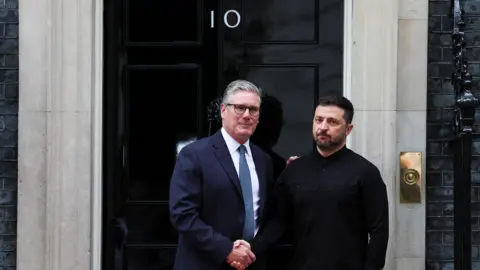
Starmer to Urge Allies to provide Long-Range Missiles to Ukraine at London Summit
LONDON – Labor leader Sir Keir Starmer will use a London summit to press Western allies to accelerate the delivery of long-range missiles to Ukraine, as Kyiv continues to seek crucial military aid to counter Russia‘s ongoing invasion. The meeting comes amid stalled efforts to unlock frozen Russian assets for Ukraine’s financial support and follows a recent trip by Ukrainian President Volodymyr Zelensky to Brussels seeking increased assistance.
The push for advanced weaponry reflects Ukraine’s urgent need to strike deeper into Russian-held territory and disrupt supply lines, a capability currently limited by the range of existing systems. While US President Donald Trump recently suggested the potential sale of Tomahawk cruise missiles to Ukraine, Zelensky left a White House meeting last week without a firm commitment. the London summit aims to build momentum for providing Ukraine with the tools it needs to defend itself and potentially shift the battlefield dynamics.
Zelensky has consistently identified long-range missiles as a key requirement in discussions with international partners.At the recent Brussels summit, European leaders stopped short of fully endorsing a proposal to utilize up to €140bn (£122bn) in frozen Russian assets to financially aid ukraine, citing both political and legal obstacles. However, they did agree to continue supporting Ukraine’s financial needs over the next two years.
Alongside the missile discussion, Starmer will consult with allies on strategies to further restrict Russia’s revenue streams by targeting its oil and gas markets. The US has already taken steps in this direction, announcing sanctions on Wednesday against Russian oil giants Rosneft and Lukoil, aiming to increase financial pressure on Moscow to engage in ceasefire negotiations.
Russia launched its full-scale invasion of Ukraine in February 2022 and currently occupies approximately 20% of Ukrainian territory, including the Crimean Peninsula, which Moscow annexed in 2014. The conflict continues to have far-reaching geopolitical implications, prompting international efforts to support Ukraine and deter further Russian aggression.
