
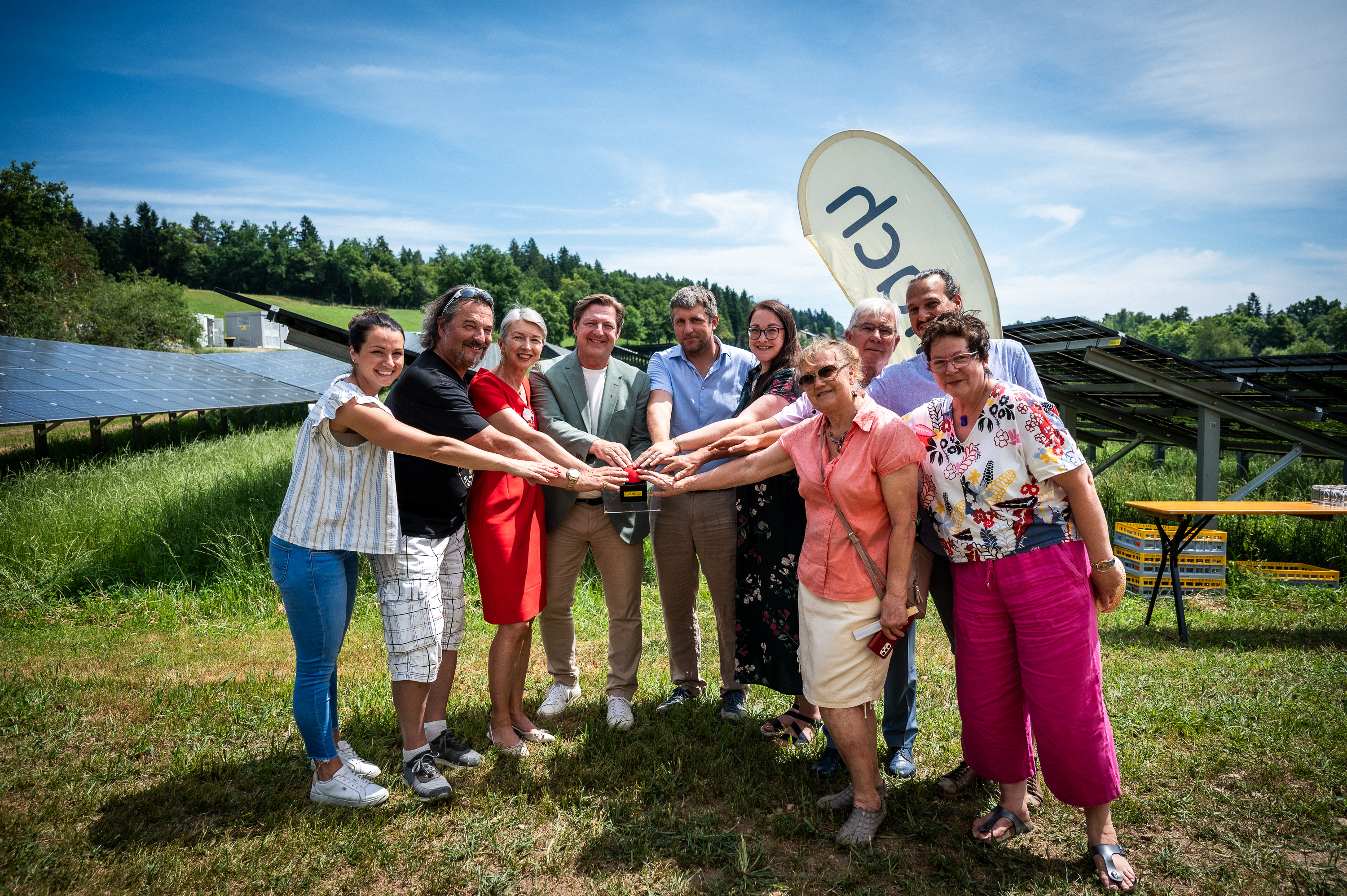
Villach’s Zauchen Sun Park Opens, Powering 1,000 Homes with Green Energy
Table of Contents
- Villach’s Zauchen Sun Park Opens, Powering 1,000 Homes with Green Energy
Villach, Austria – On Monday, june 30th, the city of Villach inaugurated the Zauchen sun park, a new AGRI PV system designed to supply green electricity to the equivalent of 1,000 households while implementing a comprehensive strategy for species protection. The project underscores Villach’s commitment to renewable energy and environmental sustainability.
Key Features of the Zauchen Sun Park
The photovoltaic (PV) system in Zauchen comprises approximately 7,000 PV modules and is projected to cover one-third of Villach’s current electricity consumption. This initiative is expected to save 734 tons of CO2 annually, equivalent to removing over 8,500 flights from Klagenfurt to Brussels [[1]].
Did You Know? AGRI PV systems integrate solar energy production with agricultural land use, maximizing land efficiency.
Statements from City Officials
During the opening ceremony, Mayor Günther Albel emphasized the project’s importance: “The sonnenpark Zaucht is part of the strategy of the city of Villach to cover the electricity requirement 100 percent with renewable energy. The PV panels do not seal any area because there is no concrete foundation, and they can be removed again if necessary.” He also noted the project’s cost-effectiveness, with construction totaling 2.4 million euros, below the initial budget of three million.
Governor Deputy Gaby Schaunig praised Villach’s forward-thinking approach, stating, “if I had to give the city of Villach a predicate, then it would be ‘the city of future’. It is not one-hit wonder what happens here,but part of a strategic planning that includes many areas. Such measures contribute to the resilience of a location.”
Sustainability officer Vice Mayor Sarah Katholnig highlighted the biodiversity aspects: “We managed to build a biodiversity paradise on this area. On the one hand, we have biological robotic lawnmowers with the Krainer Steinschafen, on the other hand there are dry biotopes, beehives and fruit trees.” Construction officer City Councilor Harald Sobe added, “The expansion of photovoltaics on the roofs of the urban buildings reaches its limits.That was why it was important to realize this project here.”
Biodiversity and Environmental Considerations
The Zauchen sun park incorporates several features to promote biodiversity, including:
- Biological robotic lawnmowers (krainer Steinschafen)
- Dry biotopes
- Beehives
- Fruit trees
These elements create a diverse habitat that supports local flora and fauna, enhancing the ecological value of the area.
The Role of Photovoltaic Systems in Renewable Energy
Photovoltaic (PV) systems, like the one in Zauchen, play a crucial role in the transition to renewable energy. These systems convert sunlight into electricity using semiconductor materials. When light strikes the semiconductor, it generates an electric current that can be used to power homes, businesses, and entire communities [[2]].
Pro Tip: Regular maintenance of PV systems can considerably improve their efficiency and lifespan.
Project Metrics
| Metric | Value |
|---|---|
| PV Modules | ~7,000 |
| Electricity Coverage | 1/3 of Villach’s Consumption |
| Annual CO2 Savings | 734 tons |
| Construction Cost | €2.4 million |
Future Implications
The Zauchen sun park serves as a model for other cities looking to increase their renewable energy capacity while promoting environmental stewardship. By integrating solar power with agricultural practices and biodiversity initiatives, Villach is setting a new standard for sustainable development.
What other innovative approaches can cities take to promote renewable energy? How can communities balance energy needs with environmental protection?
Evergreen Insights: The Rise of Agri-PV Systems
Agri-photovoltaics (Agri-PV) is an innovative approach that combines solar energy production with agricultural activities on the same land. This dual-use strategy addresses the growing demand for both renewable energy and food production, optimizing land use and promoting sustainable practices. Agri-PV systems can take various forms, including elevated solar panels that allow crops to grow underneath, or vertical solar panels integrated into agricultural landscapes. The benefits of Agri-PV extend beyond energy generation, including improved crop yields in some cases, reduced water consumption, and enhanced biodiversity [[3]].
Frequently Asked Questions About Solar Power
How does solar power work?
solar power systems use photovoltaic (PV) cells to convert sunlight directly into electricity. These cells are typically made of semiconductor materials that generate an electric current when exposed to sunlight.
what are the benefits of using solar energy?
Solar energy is a clean, renewable energy source that reduces reliance on fossil fuels, lowers carbon emissions, and can save money on electricity bills. It also enhances energy independence and creates jobs in the renewable energy sector.
Can solar panels be installed on existing homes?
Yes, solar panels can be retrofitted onto existing homes. The process involves assessing the roof’s suitability,installing the panels,and connecting them to the home’s electrical system [[4]].
what is a power conditioner and what role does it play in solar energy systems?
A power conditioner, also known as an inverter, converts the direct current (DC) electricity generated by solar panels into alternating current (AC) electricity, which is used to power most homes and businesses [[5]].
How is solar power generation measured?
Solar power generation is typically measured in kilowatt-hours (kWh), which represents the amount of electricity produced over time. The amount of electricity a solar panel generates depends on factors such as sunlight intensity, panel efficiency, and the angle of installation [[6]].
Share your thoughts in the comments below and subscribe to our newsletter for more updates on renewable energy initiatives!
