
Bakery and Jangjang Industries Face Scrutiny Over Prolonged regulatory Protection
Table of Contents
- Bakery and Jangjang Industries Face Scrutiny Over Prolonged regulatory Protection
- Background: Livelihood-suitable Industries in South Korea
- Frequently Asked Questions
- What is a ‘livelihood-suitable industry’ in South Korea?
- What are the main concerns regarding the bakery industry regulations?
- How does the jang industry regulation work?
- What is the potential impact of prolonged regulatory protection?
- What changes have been made to the bakery regulations recently?
Seoul, South Korea – Regulations designed to protect small businesses in the bakery and jang (fermented paste) industries are under increasing criticism for potentially stifling competition and hindering innovation, even as market dynamics rapidly evolve. A decades-long system of protections, initially intended to safeguard traditional businesses, is now being questioned for its long-term effects on industrial competitiveness.
The core of the debate centers around South korea’s “livelihood-suitable industry” designations. These classifications grant specific protections to sectors deemed vital for maintaining traditional livelihoods, limiting expansion by larger companies and controlling production volumes. While intended to foster a balanced market, critics argue the prolonged restrictions are creating stagnation and limiting consumer choice.
Bakery Regulations: A Shifting Landscape
Regulations governing the confectionery and bakery sectors have been in place as 2019 and were recently extended through August 6, 2029, following an agreement between the Korea Confectionery Association, major franchises, and a shared growth committee. Initially, large franchises were restricted from opening stores within 500 meters of neighborhood bakeries, and new store openings were capped at 2% of the previous year’s total. These restrictions were partially relaxed last year, increasing the radius to 400 meters and allowing up to 5% new store growth in metropolitan areas, but their overall effectiveness remains debated.
Despite these adjustments, the bakery industry continues to report difficulties. The rise of cafes and convenience stores offering bread products, alongside increased competition from both domestic and foreign bakeries, has significantly altered the market. Convenience stores, in particular, have gained traction with mass-produced breads marketed on nostalgia and unique flavors.
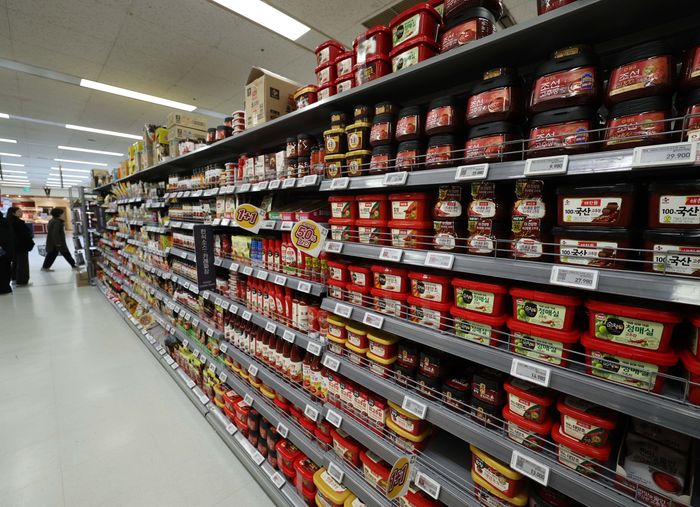
Sources such as red pepper paste are sold at a large mart.â’¸ Newsis
Jangjang Industry: A Similar Dilemma
The jang industry - encompassing soy sauce,miso,red pepper paste (gochujang),and fermented soybean paste (cheonggukjang) – faces a similar situation. Designated a livelihood-suitable industry in 2020 and re-designated in January 2025, it allows for controlled production levels.The committee has agreed to permit a transition to new production methods within established shipment allowances, but anticipates a 10% decrease in total new shipments from large companies between 2025-2030 compared to the 2020-2024 period.
However, concerns are mounting that prolonged protection coudl hinder market competition. If regulations are fixed for a long time, we can only reduce market vitality,
stated an official from the food industry. The restrictions effectively block entry for new and mid-sized companies, potentially stifling innovation in price, quality, and service.
While the re-designation of jang allows for the development and export of new products like sauces and mixed pastes, some worry that diminished domestic competitiveness will impede reinvestment in overseas expansion.
Did You no? …
the jang industry, specifically soy sauce, miso, red pepper paste, and cheonggukjang manufacturing, was officially re-designated as a livelihood-suitable industry in January 2025, with the designation lasting until january 31, 2030.
The Limits of Protection
Critics argue that extending regulations without adapting to changing consumer trends – the increasing popularity of convenience store and cafe offerings, and foreign brands – renders the protective measures ineffective. They fear that prolonged regulatory interests may weaken the industry’s overall competitiveness and investment in research and development.
| Industry | Regulation Type | Current Status | next Review/End Date |
|---|---|---|---|
| Bakery | Store proximity limits, new store caps | Extended | August 6, 2029 |
| Jang (Fermented Pastes) | production volume controls | Re-designated | january 31, 2030 |
pro Tip: …
Understanding the nuances of South Korea’s ‘livelihood-suitable industry’ designations is crucial for businesses operating in or considering entering these sectors.
The debate highlights a broader challenge: balancing the need to protect small businesses with the imperative to foster a dynamic and competitive market. As consumer preferences evolve and new competitors emerge, the long-term viability of these protective measures remains uncertain.
What steps can be taken to modernize these regulations and ensure a thriving bakery and jang industry? How can South Korea strike a balance between protecting traditional livelihoods and promoting innovation?
Background: Livelihood-suitable Industries in South Korea
The concept of “livelihood-suitable industries” in South Korea stems from a post-Korean War effort to stabilize the economy and protect traditional crafts and businesses. Over time, the designation has been applied to sectors considered essential for preserving cultural heritage and providing stable employment. However, the system has faced criticism for potentially hindering economic growth and innovation by limiting competition. The current debate surrounding the bakery and jang industries reflects a broader discussion about the effectiveness of these protections in a rapidly changing global market.
Frequently Asked Questions
What is a ‘livelihood-suitable industry’ in South Korea?
A ‘livelihood-suitable industry’ is a sector designated by the South Korean government as vital for preserving traditional livelihoods and cultural heritage, receiving specific regulatory protections.
What are the main concerns regarding the bakery industry regulations?
Concerns center around the potential for stifled competition, limited innovation, and reduced consumer choice due to restrictions on new store openings and proximity to existing bakeries.
How does the jang industry regulation work?
The jang industry regulation controls production volumes for soy sauce, miso, red pepper paste, and cheonggukjang, aiming to protect traditional producers.
What is the potential impact of prolonged regulatory protection?
Prolonged protection could lead to stagnation, reduced investment in R&D, and a weakened ability to compete in both domestic and international markets.
What changes have been made to the bakery regulations recently?
The radius for restricting new franchise stores was increased from 500 meters to 400 meters, and the cap on new store openings in metropolitan areas was raised to 5%.
