
Unexpected Asteroid Makes Remarkably Close flyby of Earth
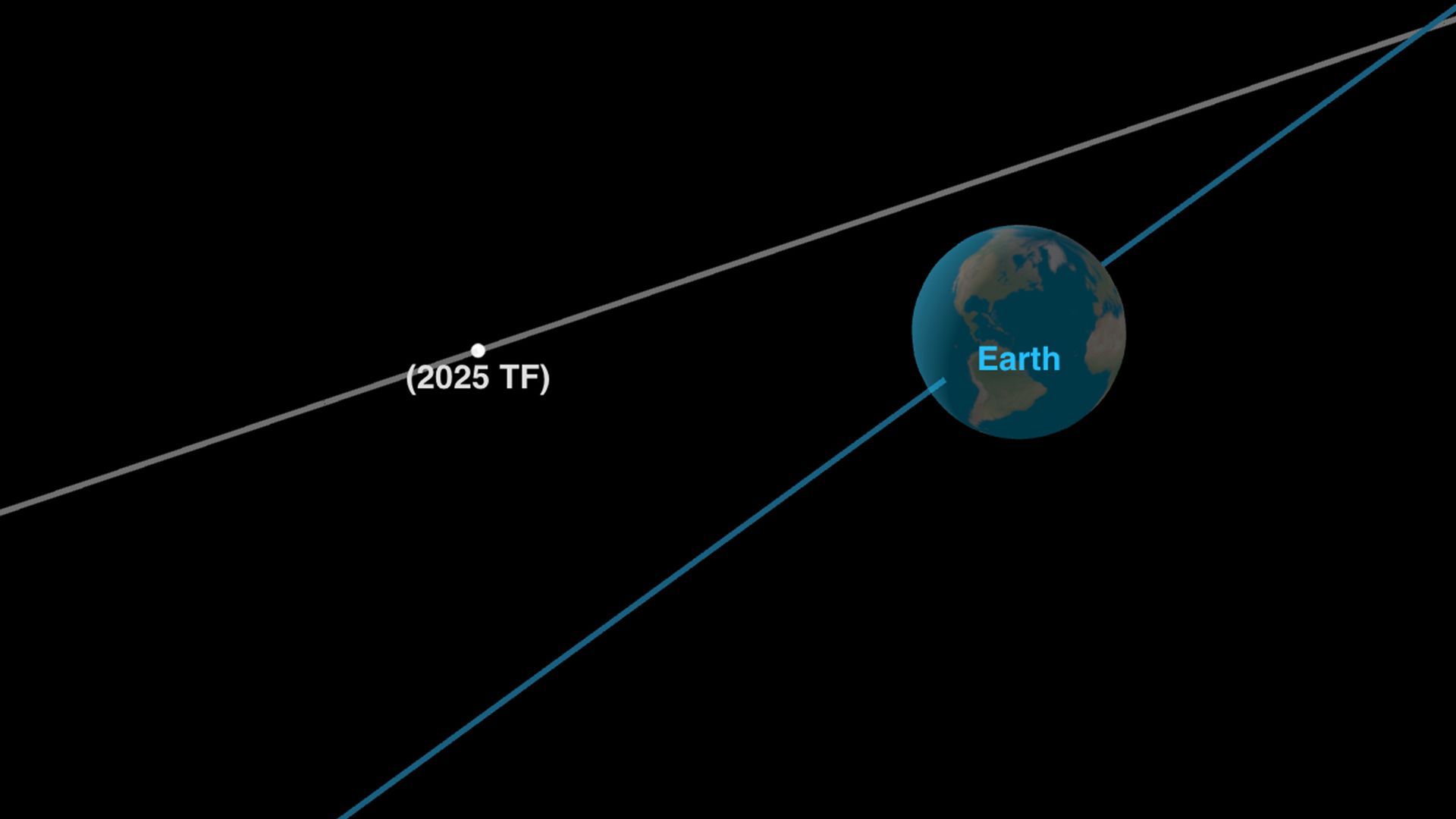
An asteroid, designated 2025 TF, zipped past Earth this week at a distance of just 262 miles (423 kilometers), offering a rare and surprisingly close encounter. The flyby, which occurred recently, was close enough that the asteroid passed over Antarctica and was roughly 262 miles above the planet’s surface, according to data from NASA‘s Center for Near-Earth object studies (CNEOS) at the Jet Propulsion Laboratory.
While NASA routinely tracks potentially hazardous asteroids, 2025 TF is a smaller space rock that was arduous to detect due to its size and the focus of telescope networks on larger, more threatening objects. The asteroid’s nominal distance at its closest approach was calculated to be 4,213 miles (6,780 km) from the center of the Earth. Despite the close proximity, scientists emphasize there was no risk of impact.
This event highlights the ongoing work to catalog near-Earth objects. NASA continuously monitors the skies for asteroids that could pose a threat, and while a few have been labeled “potentially hazardous,” decades of searching have revealed no imminent, large-scale threats to our planet. Smaller asteroids like 2025 TF are becoming more frequently detected thanks to improving technology, with astronomers often spotting similar close passes several times a week.
The close approach of 2025 TF underscores the dynamic nature of our solar system and the constant stream of space rocks orbiting near Earth. NASA and its partners continue to refine their tracking capabilities, ensuring a thorough understanding of the objects sharing our cosmic neighborhood.
