
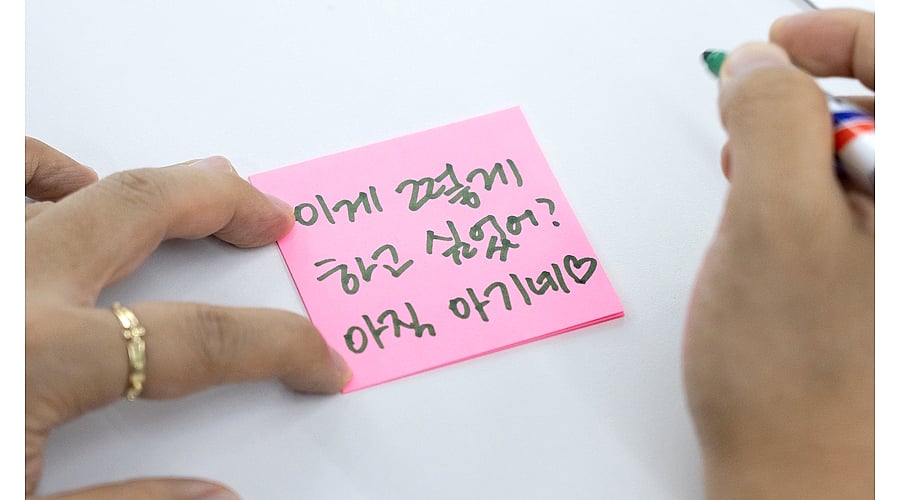
Seoul‘s ’Papa School’ Empowers Fathers to Redefine Family Roles
Table of Contents
SEOUL,South Korea – In a groundbreaking initiative,25 fathers in Seoul are actively reshaping traditional family dynamics through participation in the “Papa school: Fatherhood Care Capacity-Building Workshop.” The program, a collaboration between the UN Women Knowledge and Partnerships Center and Root Impact, aims to address the persistent imbalance in caregiving responsibilities frequently enough placed disproportionately on women.
Addressing a systemic Imbalance
The workshop series, held in seongsu-dong, eastern Seoul, directly confronts a societal reality where men often lack opportunities to develop and practice caregiving skills.Despite advancements in gender equality policies, deeply ingrained social norms, workplace demands, and cultural expectations continue to impede men’s full participation in unpaid care work. This disparity not only reinforces gender inequality but also limits men’s potential for deeper family connections and personal fulfillment.
Hwang Yun-jeong, director of the UN Women Knowledge and Partnerships Center, emphasized the far-reaching consequences of this imbalance. “Research shows that active father involvement improves family happiness, boosts children’s self-esteem and emotional development, strengthens spousal relationships and enhances fathers’ mental health and life satisfaction,” she stated during the program’s opening session. Studies on paternal involvement consistently demonstrate these positive correlations.
Did You Know? South Korea has one of the lowest rates of male participation in housework and childcare among OECD countries,despite increasing awareness of gender equality.
The ‘Papa School’ Curriculum
The “Papa School” curriculum, facilitated by Kim Ki-tak, director of the Fatherhood and Care Culture Institute, utilizes interactive exercises and open dialog to equip fathers with practical skills. Participants began by reflecting on their current roles as fathers, identifying areas of strength and areas for growth. Common concerns included managing frustration, responding to a child’s distress, and engaging in playful interaction.
The workshops progressed to role-playing scenarios,allowing fathers to experience parenting from a child’s perspective. This exercise proved particularly insightful, highlighting the impact of their words and actions. participants also engaged in exercises focused on dialogue, emotional awareness, and age-specific parenting challenges.
Transformative Experiences
The program has already yielded significant results. Noh Hwan-hee, a father of two, shared, “This training made me realize that even my impulsive emotional reactions can influence my children. I now think that if I can adjust my emotions and express them more thoughtfully, it will positively effect my parenting.”
Another participant, identified only as Park, acknowledged a tendency towards overly rational approaches to parenting. “I realized I had approached my relationship with my children too rationally-deciding what a father should be and what children should be-and when reality didn’t match, my emotions would explode or I’d avoid the situation.Now I want to understand my children more, share emotions and keep practicing to improve.”
Pro Tip: Open communication and active listening are crucial components of effective parenting, irrespective of gender.
Heo Jae-hyung, CEO of root Impact and a father to a 67-day-old baby, emphasized the personal impact of the program. ”Beyond changing diapers or soothing the baby, I thought deeply for the first time about what kind of father I want to be.I’ve now set a clearer path for my fatherhood journey, and I’ll work to ensure papa School continues into its second and third rounds.”
| Program Component | Description |
|---|---|
| Self-Reflection | Fathers identify their strengths and challenges as parents. |
| Role-Playing | Participants experience parenting from a child’s perspective. |
| Communication Skills | Techniques for effective and empathetic communication. |
| Emotional Awareness | Understanding and managing personal emotions. |
What steps can other communities take to encourage greater paternal involvement in childcare? How can workplaces better support fathers in balancing work and family responsibilities?
The Evolving Role of Fathers
Globally,there’s a growing recognition of the importance of fathers’ active involvement in their children’s lives. This shift is driven by research highlighting the positive impact on child development, family well-being, and gender equality.Initiatives like “Papa school” represent a strategic approach to dismantling traditional gender roles and fostering a more equitable distribution of caregiving responsibilities. The long-term implications of this trend include more resilient families, healthier children, and a more inclusive society.
frequently Asked Questions
- What is the primary goal of the ‘Papa School’ program? To empower fathers to actively participate in caregiving and strengthen family bonds.
- Why is paternal involvement in childcare significant? It improves family happiness, boosts children’s development, and promotes gender equality.
- What challenges do fathers in South Korea face regarding caregiving? Social norms, workplace structures, and cultural expectations often hinder their participation.
- What methods are used in the ’Papa School’ workshops? Interactive exercises, role-playing, and open dialogue.
- Is this program unique to Seoul? While similar initiatives exist elsewhere, ‘papa School’ represents a targeted effort to address specific challenges within the South Korean context.
This initiative offers a powerful example of how targeted programs can challenge societal norms and empower individuals to embrace more fulfilling family roles.As more fathers actively engage in caregiving, the benefits will ripple through families and communities, creating a more equitable and supportive future for all.
