
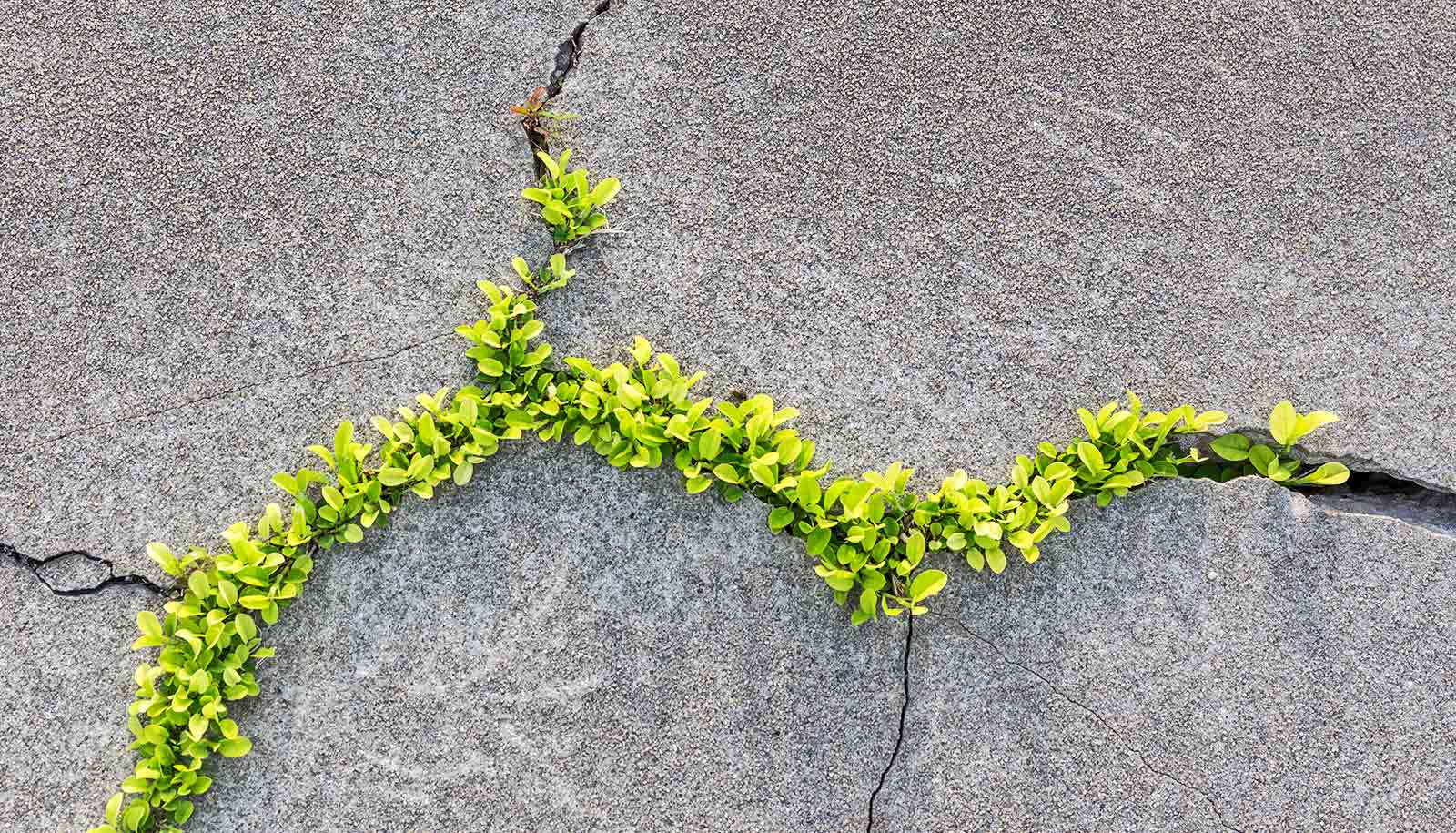
Self-Healing Concrete: A revolutionary Approach to Infrastructure
imagine a world where concrete structures could repair themselves, much like human skin mending a cut. This vision is becoming a reality thanks to groundbreaking research that promises to revolutionize the construction industry and enhance infrastructure safety.
Researchers have developed a novel method that enables concrete to autonomously mend its own cracks, perhaps averting structural failures and saving lives. This innovative approach draws inspiration from nature, specifically the symbiotic relationship found in lichens.
The Cracking problem: A Costly and Hazardous Flaw
Concrete, a ubiquitous building material, is prone to cracking due to various factors, including freeze-thaw cycles, drying shrinkage, and heavy loads. These cracks, even microscopic ones, can compromise structural integrity, leading to catastrophic failures. The consequences can be devastating, as evidenced by building and bridge collapses.
The cost of repairing and maintaining concrete infrastructure is staggering. The U.S. alone spends tens of billions of dollars annually addressing this issue. Detecting cracks in heavily used structures like bridges and highways presents a significant logistical challenge.
Nature’s Inspiration: The Lichen System
The key to this self-healing concrete lies in mimicking the self-sustaining partnership found in lichens. Lichens, often seen on trees and rocks, are a symbiotic association between fungi and algae or cyanobacteria. This partnership allows them to thrive in harsh environments.
Inspired by this natural phenomenon, researchers have created a synthetic lichen system that enables concrete to repair itself without external intervention.
The Science Behind Self-Healing
The synthetic lichen system utilizes cyanobacteria and filamentous fungi.Cyanobacteria convert air and sunlight into food, while filamentous fungi produce minerals that seal the cracks. This self-sufficient system requires only air, light, and water to function.
This autonomous nature distinguishes it from previous self-healing concrete approaches, which frequently enough require an external supply of nutrients for the healing agents.
microbe-mediated self-healing concrete has been extensively investigated for more then three decades, but it still suffers from one crucial limitation-none of the current self-healing approaches are fully autonomous since they require an external supply of nutrients for the healing agents to continuously produce repair materials.
Customary methods frequently enough involve laborious crack detection followed by the injection or spraying of nutrients, a process that is often impractical.
Lab Results and Wider Implications
In laboratory tests, these microbe pairs demonstrated the ability to grow and produce crack-filling minerals even in the challenging habitat of concrete.
Beyond the lab, researchers are exploring the broader implications of this technology, including public perception and ethical considerations.Collaborations with social science departments are underway to address these issues.
Potential Impact and Applications
Self-healing concrete holds immense potential for reducing maintenance costs, extending the lifespan of structures, and enhancing safety. Its applications extend to various areas of lasting construction, including space infrastructure.
