
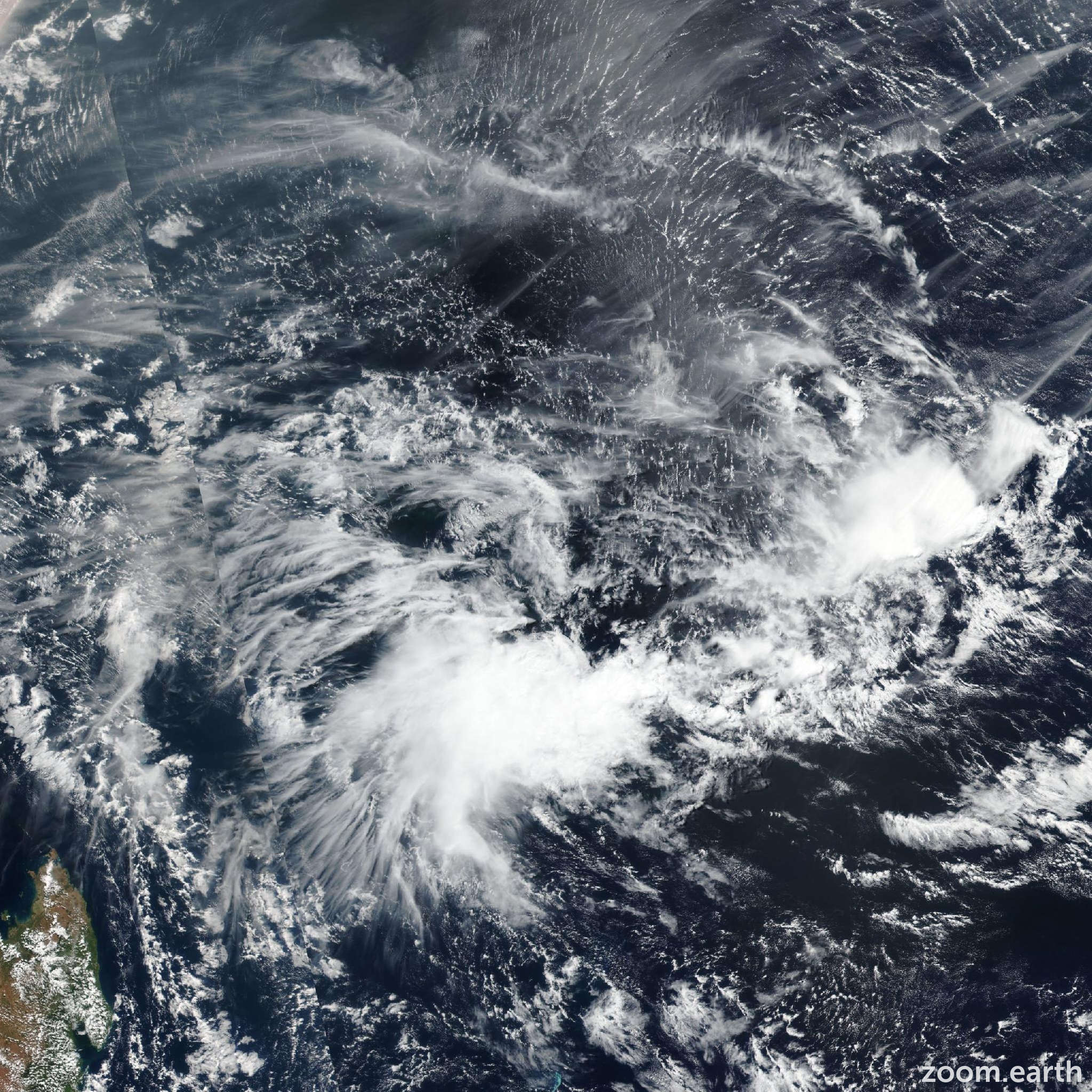
Tropical Cyclone Awo Rapidly Weakening in Indian Ocean, Expected to Dissipate
Table of Contents
A newly formed tropical cyclone, designated Awo, is rapidly losing strength in teh Indian Ocean and is forecast to dissipate within the next 24 hours. Located approximately 1,291 kilometers (802 miles) west of Diego Garcia,Awo has been moving west-northwest at 19 kilometers per hour (10 knots). current significant wave heights are measured at 4.6 meters (15 feet).
Forecasters predict Awo will continue on its west-northwest trajectory, remaining on the northern edge of the subtropical ridge situated to the south. However, conditions are quickly becoming unfavorable for the cyclone’s development. increasing wind shear, currently estimated at 45 kilometers per hour (25 knots) from the east, is already impacting the system. A large mass of dry air is also encroaching upon Awo, particularly across its northern portion, and is expected to fully engulf and weaken the inner core.
Both deterministic and ensemble track guidance show strong agreement regarding Awo’s path, with a spread of less than 185 kilometers at the 24-hour mark. Intensity forecasts are also in tight alignment, bolstering confidence in the predicted dissipation. While the remnant circulation may drift towards the Seychelles over the next two days, wind speeds will be negligible by that time.
understanding Tropical Cyclone Formation and Dissipation
Tropical cyclones, known as hurricanes in the atlantic and typhoons in the Northwest Pacific, are powerful weather systems that form over warm ocean waters near the equator. They require several key ingredients to develop: warm sea surface temperatures (at least 26.5°C or 80°F),low vertical wind shear,and pre-existing atmospheric disturbances.
Wind shear, the change in wind speed or direction with altitude, is a major factor in cyclone development. High wind shear disrupts the cyclone’s structure, preventing it from intensifying. Similarly, dry air inhibits the formation of thunderstorms, which are the engine of a tropical cyclone. The Horse Latitudes, a high-pressure zone around 30 degrees latitude, often contribute to stable atmospheric conditions and can suppress cyclone development. Historically, the Indian Ocean has seen an increase in cyclone activity in recent decades, perhaps linked to rising sea surface temperatures due to climate change.
Frequently Asked Questions About Tropical Cyclone Awo
