
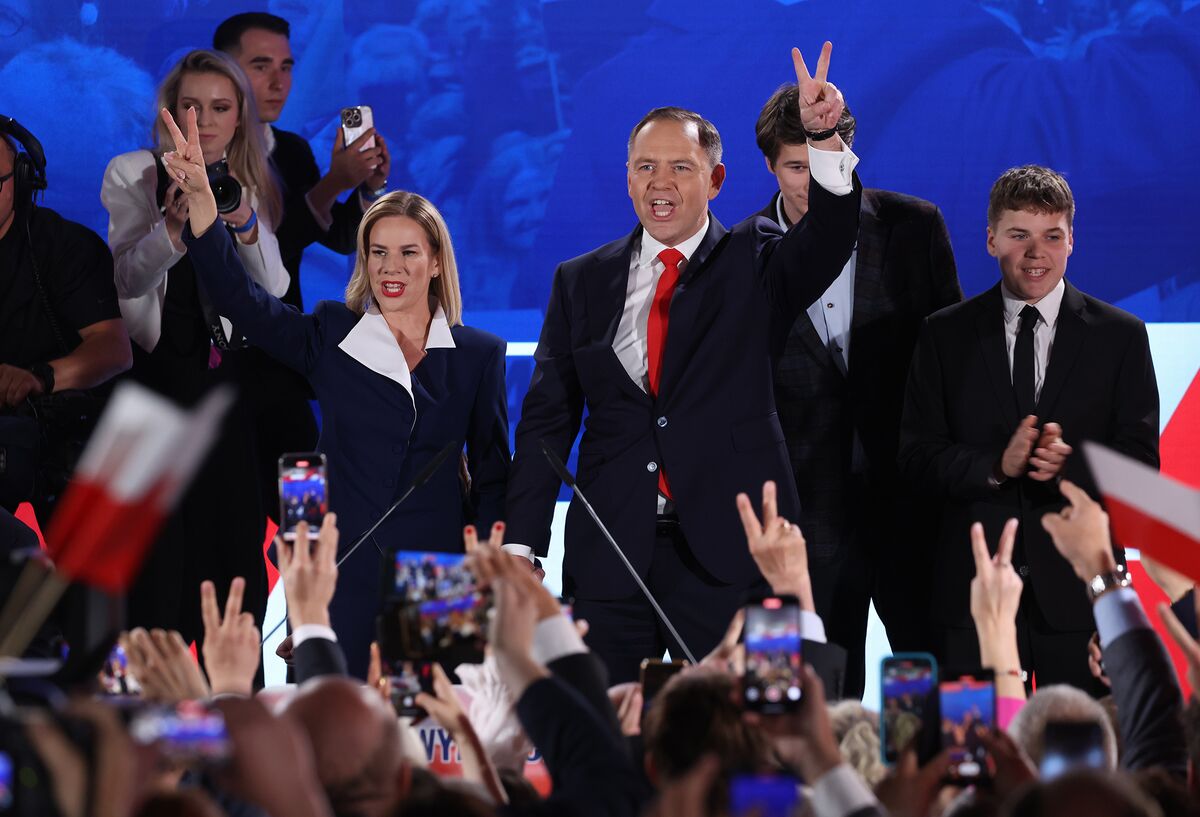
poland’s Presidential Runoff: A Nation at a Crossroads
Poland’s recent presidential runoff election pitted Karol Nabrocki, a candidate known for his patriotic stance and support for former U.S. President Donald Trump, against Rafau Chaskowski, the centrist mayor of Warsaw. The outcome of this election carries notable implications for Poland’s relationship wiht the European Union and its domestic political landscape.
The Forecast and the Stakes
Initial projections, based on vote counting and exit polls, suggested a narrow victory for Mr. Nabrocki. These forecasts indicated that Mr. Nabrocki, described as a conservative historian and former boxer, secured 51% of the vote, while Mr. Chaskowski trailed with 49%.It is indeed crucial to note that Mr. Chaskowski initially led in the first exit polls, adding an element of suspense to the final outcome. Official results were expected to be released within two days.
The election’s meaning extends beyond domestic politics. With the EU grappling with trade policies from the U.S. and ongoing tensions with Russia, the election’s outcome will shape Poland’s role as a reliable partner within the international community.
Impact on Prime Minister Tusk’s Administration
The results of this election are poised to have a considerable impact on the administration of Prime Minister Tusk. In 2023, Mr. Tusk spearheaded a coalition government that led to the resignation of nationalist forces, who had held power for eight years. This previous regime faced scrutiny from EU authorities regarding the rule of law, raising questions about Poland’s commitment to liberal Western values.
A victory for Mr. Nabrocki could jeopardize Mr. Tusk’s vision of reintegrating Poland into the EU mainstream and securing continued funding from the union.
Presidential Influence and Political Maneuvering
Prime Minister Tusk’s policies have faced repeated challenges from the incumbent President Duda, whose term is nearing its end. Mr. Nabrocki, who enjoys the support of President Duda, emphasized to his supporters that his victory would serve as a check on what he described as mr. Tusk’s monopoly
of power.
