
Mission to Black Hole: A Microscopic Craft Could Soon Embark
Astrophysicist Proposes Decades-Long Journey to Study Cosmic Enigmas
Childhood dreams of space exploration are reaching unprecedented frontiers. The concept of dispatching tiny probes towards the universe’s most enigmatic objects—black holes—is transitioning from science fiction to a tangible scientific pursuit.
Ambitious Nanocraft Plan Unveiled
Astrophysicist Cosimo Bambi of Fudan University has detailed a groundbreaking proposal to send microscopic spacecraft, dubbed “nanocrafts,” to the nearest black hole. These minuscule probes, weighing mere grams and equipped with a microchip and light sail, would be propelled by powerful Earth-based lasers to achieve one-third the speed of light.
The journey is envisioned as a monumental undertaking, lasting approximately 70 years for the nanocraft to reach a black hole situated 20 to 25 light-years away. An additional 20 years would be required for data transmission back to Earth, totaling a mission duration of 80 to 100 years.
Probing the Universe’s Extreme Limits
This mission aims to unravel fundamental questions about black holes and the very fabric of spacetime. Scientists hope to confirm the existence of event horizons, investigate potential alterations in physical laws under extreme conditions, and rigorously test Einstein’s theory of general relativity.
Understanding physics in such intense environments could dramatically advance our knowledge of space and time. For instance, the Laser Interferometer Gravitational-Wave Observatory (LIGO) has detected gravitational waves, ripples in spacetime predicted by Einstein, proving that even incredibly faint cosmic signals can be measured (LIGO).
Overcoming Significant Hurdles
Two primary challenges face this ambitious project. Firstly, identifying a nearby black hole is crucial. Due to their invisible nature, detecting them relies on observing their gravitational influence on surrounding celestial bodies or the distortion of light.
“We don’t have the technology now, but in 20 or 30 years, we might. The lasers alone would cost around one trillion euros today, and nanocraft technology doesn’t yet exist.”
—Cosimo Bambi, Astrophysicist
Secondly, the development of the necessary technology presents a significant hurdle. Traditional spacecraft are ill-suited for such a long and demanding voyage. The proposed nanocrafts must be engineered to withstand decades of space travel while maintaining their data collection and transmission capabilities.
Optimism Fueled by Past Achievements
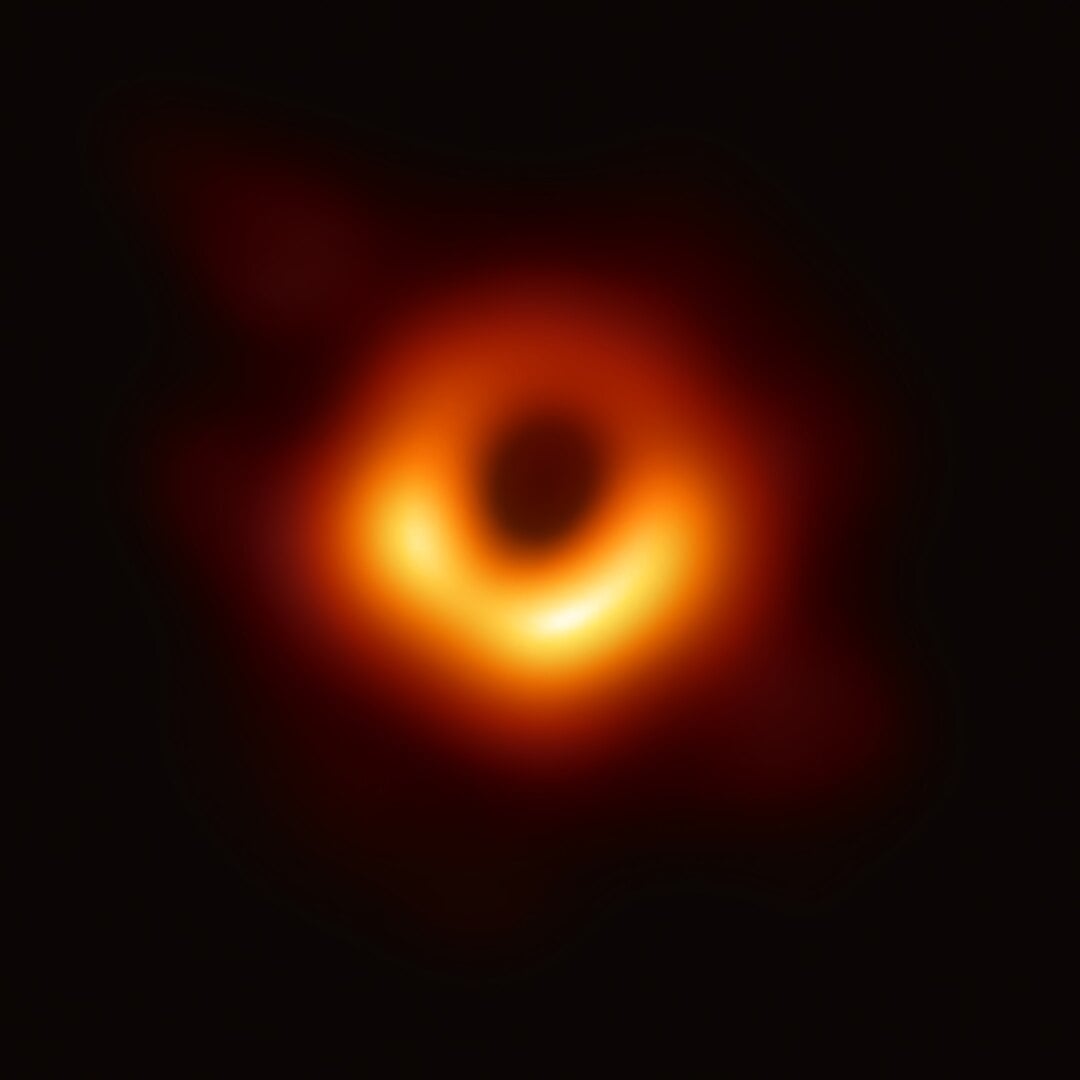
Despite the formidable obstacles, Bambi remains optimistic, drawing parallels with past scientific breakthroughs once deemed impossible. He points to the detection of gravitational waves and the imaging of black hole “shadows” as testaments to humanity’s capacity to achieve the extraordinary.
While the full realization of this mission may seem distant, the pursuit itself promises to accelerate advancements in space exploration technology and deepen our understanding of the cosmos. The prospect of a minuscule probe reaching the edge of a black hole embodies the relentless spirit of human curiosity venturing into the universe’s profound mysteries.
