
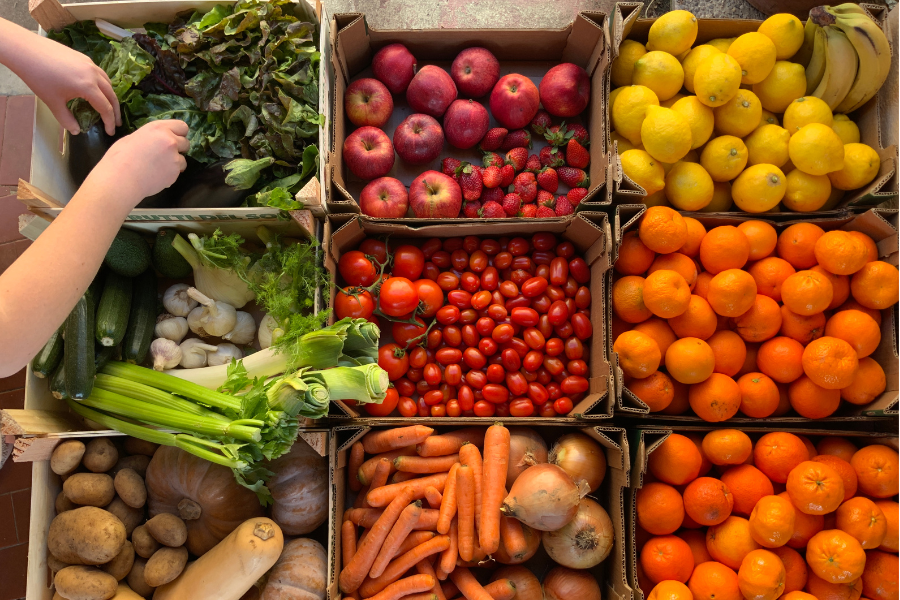
Are you interested in discovering how one community is implementing innovative strategies for lasting nutrition? The “Food Empowerment” initiative in Rheine’s Schotthock district is taking a holistic approach to improve eating habits and reduce food waste. Learn how this pioneering project uses community engagement to create a healthier and more sustainable future,with actionable insights for individuals and educators alike.
Rheine’s Schotthock district Embarks on “Food Empowerment” Initiative
April 7, 2025
A new Project Aims to Revolutionize Nutritional Habits and Reduce Food Waste Through Community Engagement and Educational Programs.
Cultivating Change: A Neighborhood Approach to Nutrition
The Rheiner district of schotthock is set to become a real-world laboratory for sustainable nutrition,thanks to a new project focused on transforming social practices to foster healthier eating habits. This initiative, dubbed “Food Empowerment,” aims to create an integrated neighborhood concept that addresses both nutritional well-being and environmental sustainability.
- Key Partners: The project unites various community stakeholders, including:
- Youth and Family Service e. V.
- Cafeteria association Rheine e. V.
- Gymnastics club Jahn-Rheine 1885 e. V.
- Bodelschwinghschule
- Ludgerusschule Schotthock
- Nelson-Mandela School
- Core Goals: The initiative focuses on:
- Joint design of nutritional environments.
- Sustainable avoidance of food waste.
- Implementation of the Planetary Health Diet.
“Food Empowerment”: A Modular Concept for Sustainable Nutrition
The “Food Empowerment” concept is designed to be transferable and modular, providing materials and instructions tailored for diverse target groups. The goal is to reach individuals, especially students, with migration backgrounds and other marginalized groups, fostering positive experiences through intercultural activities, self-efficacy, and the joy of cooking and eating together.
To achieve changes towards a sustainable and healthy nutritional system, you need to change social practices. this is where the present project comes in and would like to develop this as part of an integrated neighborhood concept for the rheiner district of Schothock.
Integrated Urban Development: A Holistic Approach
This project aligns with the “Integrated Urban Development Concept Rheine Scothock: Our Scothock – in good neighborhood.” This broader initiative by the city of Rheine addresses urban planning, ecological concerns, and social issues within the district, actively engaging the population in participatory design and transformation processes.
The project emphasizes a co-creation process, fostering intergenerational cooperation among professionals, volunteers, and representatives from the target groups. Scientific support will guide the development and testing of social space-oriented educational concepts focused on sustainable nutrition.
Phased Implementation and Coaching
The project will unfold in two successive phases, involving practical testing in schools, across school settings, and at extracurricular learning locations within the neighborhood. A coaching concept will also be implemented to train future “coaches” from secondary schools.
Elementary school students will be introduced to the planetary Health Diet through informative sessions, experiments, and promotional activities.
The elementary school students should already be brought about information, experiments and promotions about Planetary health Diet.
Open Educational Resources for Educators
The project’s outcomes, including educational formats, materials, and modules, will be compiled into action guidelines, introductions, and background information for educators from various fields. These resources will be available as open educational resources (OER), ensuring widespread accessibility and impact.
The tried and tested, evaluated and possibly optimized educational formats as well as materials and modules are compiled in the form of action guidelines, introductions and background information for educators from different areas as open educational resources (OER).
Project Details
- Project execution: University of Applied Sciences Münster-Institute for Sustainable Nutrition, Münster, North Rhine-Westphalia
- Contact Person: Prof. Dr. Tobias Fischer
- Cooperation Partner: City of Rheine, Rheine, North Rhine-Westphalia
- Funding: Dbu-a: 39774/01
- Funding Period: April 2025 – March 2028
