
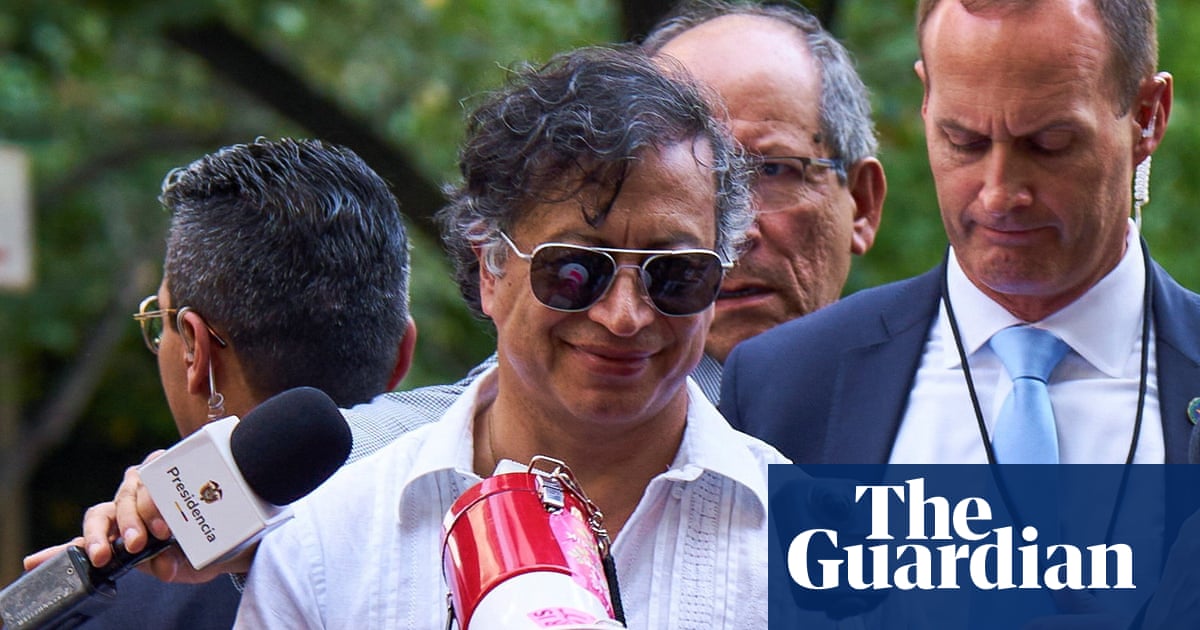
Colombia‘s Petro Responds to US Visa Revocation with defiance
Table of Contents
Bogotá – The United States revoked the visa of Colombian President Gustavo Petro on September 27, 2025, citing reckless and incendiary actions
following his criticism of Israel’s actions in Gaza. Petro responded with a defiant message, urging armed forces not to obey orders from Donald Trump and instead to obey the orders of humanity.
The move further strains already tense relations between Colombia and the US.
The visa revocation stems from Petro’s recent statements on the Israel-Hamas conflict and his call for international action. The US State Department announced the decision on X (formerly Twitter),signaling a sharp rebuke of the Colombian leader’s rhetoric. This action raises questions about diplomatic protocol and freedom of expression within the framework of the united Nations, as Colombia argues the US is misusing diplomatic tools.
Escalating Diplomatic Tensions
Colombia’s foreign affairs ministry condemned the visa revocation as a violation of the spirit of the UN,which protects freedom of expression and the independence of member states during UN events. The ministry suggested the UN should identify a neutral host country for future events, allowing the organization itself to authorize entry for attendees. The UN should find a entirely neutral host country … that would allow the organisation itself to issue authorisation to enter the territory of that new host state,
a ministry statement read.
Did You Know?
This isn’t the first time a Colombian president has had their US visa revoked. Ernesto Samper’s visa was canceled in 1996 amid allegations of campaign funding from the Cali drug cartel.
Relations between bogotá and Washington have deteriorated since Donald Trump’s return to office. Earlier in 2025, Petro temporarily blocked deportation flights from the US, leading to threats of tariffs and sanctions, which where later resolved through negotiation. In July, both countries recalled their ambassadors after Petro accused US officials of plotting a coup – allegations Washington dismissed as baseless.
Petro’s Stance on Israel and Regional Conflicts
Petro has taken a strong stance critical of Israel, cutting diplomatic ties with the country in 2024 and halting Colombian coal exports to Israel. This decision, coupled with his outspoken criticism of Israel’s military actions, appears to be a key factor in the US decision to revoke his visa. The move aligns with a growing alliance of activist states advocating for stronger international pressure on Israel.
| Date | Event |
|---|---|
| 2024 | Colombia cuts diplomatic ties with Israel |
| Early 2025 | Petro blocks US deportation flights |
| July 2025 | Colombia & US recall ambassadors |
| September 27, 2025 | US revokes Petro’s visa |
Pro Tip: Understanding the ancient context of US-Colombia relations, particularly regarding drug trafficking and political interference, is crucial to interpreting these recent diplomatic clashes.
The unfolding situation raises concerns about the future of US-Colombia relations and the potential for further diplomatic fallout. What impact will this visa revocation have on ongoing negotiations between the two countries? And how will Petro’s defiant stance influence other Latin American leaders critical of US foreign policy?
Frequently Asked Questions
- What prompted the US to revoke Petro’s visa? The US cited Petro’s
reckless and incendiary actions
related to his statements on the Israel-hamas conflict. - How has Colombia responded to the visa revocation? Colombia’s foreign affairs ministry condemned the move, arguing it violates UN principles of freedom of expression.
- What is the history of US-Colombia diplomatic tensions? Past tensions include allegations of drug cartel funding of presidential campaigns and recent disputes over deportation flights and alleged coup plots.
- What is Petro’s position on Israel? Petro has been highly critical of Israel, cutting diplomatic ties and halting coal exports.
- What are the potential consequences of this diplomatic rift? The situation could further strain US-Colombia relations and impact ongoing negotiations.
Background: US-Colombia Relations
The relationship between the united States and Colombia has been complex for decades, marked by cooperation on issues like drug trafficking and security, but also by periods of tension and mistrust. US involvement in Colombia’s internal affairs, particularly during the “war on Drugs,” has been a source of controversy. More recently, disagreements over migration policy and regional conflicts have added to the strain. Colombia is a key partner for the US in Latin America, and a further deterioration in relations could have significant geopolitical implications.
This is a developing story.We encourage you to share your thoughts in the comments below and subscribe for updates.
