
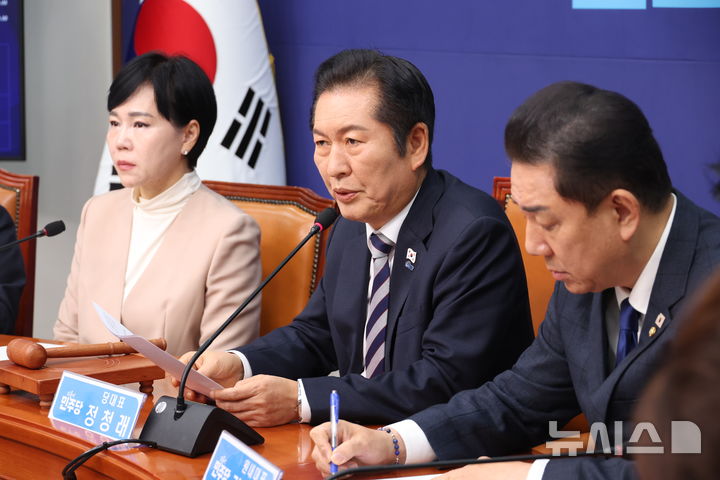
Democratic Party Faces Internal Discord Over Proposed Voting Changes
The Democratic Party of Korea is navigating internal conflict surrounding proposed changes to its party constitution and rules, specifically regarding the weighting of votes between party delegates and regular party members (often referred to as ”Rights Party members”). the debate centers on a move towards a “one person, one vote” system, and has sparked criticism regarding procedural fairness and a perceived lack of open discussion.
The current push for reform has drawn attention to similar efforts made during the leadership of former party leader Lee Jae-myung. Representative Chung Cheong-rae highlighted this history in a recent Facebook post titled “It was like that then too,” attaching a press article detailing a previous attempt under Lee Jae-myung to establish a 1:1 vote equivalence between delegates and Rights party members. That plan was ultimately revised to a ratio of less than 20:1 following opposition. Representative Chung further emphasized that during Lee Jae-myung’s tenure, external committee chairs had also advocated for a one-person, one-vote system.
The renewed debate has prompted concerns within the party, with some members arguing the changes contradict broader trends towards national justification and lack procedural legitimacy. Despite these concerns, the party leadership appears steadfast to move forward.
Chief Spokesperson Park Soo-hyun acknowledged anxieties surrounding the role of delegates and strategic regions, stating that the proposed constitutional amendment includes supplementary content addressing these concerns. Park indicated that further discussion would occur within the already established “delegates role redefinition task force,” with potential revisions to follow.
The democratic Party plans to hold a party affairs committee meeting today,followed by a central committee meeting on the 28th,to vote on the proposed amendments. The Central Committee is reportedly considering conducting the vote online, without a separate offline discussion period. A party leadership official stated that no separate discussions are currently planned, with the intention of clarifying the revisions through Q&A sessions.
this approach has fueled criticism from within the party, with some members expressing concern that the leadership is stifling debate. One Democratic Party official argued that offline meetings are necessary to allow for the expression of dissenting opinions, while another leadership member suggested the rapid pace of the process is creating unnecessary misunderstandings.
The controversy has even led to legal challenges. A group of 300 party members, including YouTuber ’Kim Seong-soo TV’, are reportedly pursuing a provisional injunction to condemn the leadership of Chung Cheong-rae and invalidate the proposed changes. Thay allege that the move to equalize delegate and rights Party member votes was undertaken without adequate dialog, and that the shift from a formal “all-party vote” to an “opinion poll” was accompanied by questionable changes to participation qualifications. They claim that only 14.5% of Rights Party members participated in the poll, and that claiming overwhelming approval based on this limited participation is a procedural violation that infringes on the sovereignty of party members.
