
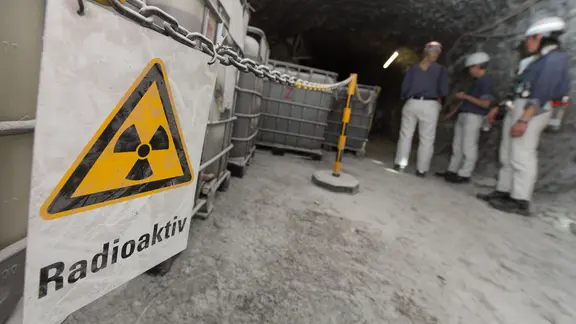
First Images Reveal Deteriorating Nuclear Waste Barrels Deep Inside Asse Mine
Asse, Germany – December 2, 2025 – Newly released photographs offer the first visual confirmation of the advanced state of decay afflicting approximately 126,000 barrels of nuclear waste stored within the Asse II salt mine. The images, depicting containers in chamber 8a, underscore growing concerns about the feasibility of retrieving the material, a task politicians across the german political spectrum have pledged to undertake.
The revelation comes as pressure mounts to address the long-term safety of the Asse II repository,which was used between 1967 and 1978 to store low- and intermediate-level radioactive waste. While the mine was intended as a temporary solution, decades of water ingress and corrosion have compromised the integrity of the barrels and the surrounding salt formations. A former official responsible for overseeing the repatriation process recently stated that a complete removal of the waste is now “almost unachievable,” raising questions about the future of the site and the potential environmental risks.
The Asse II mine, located in Lower Saxony, was originally a salt mine before being repurposed for nuclear waste disposal. The waste originates from various sources, including nuclear power plants and research facilities. The photographs, obtained by NDR, show visible corrosion on numerous barrels, with some exhibiting significant structural damage. This deterioration raises fears that radioactive materials could leach into the surrounding groundwater,potentially contaminating the environment and posing a threat to public health.
Politicians have repeatedly emphasized the need to remove the waste, citing the mine’s instability and the long-term risks associated with its continued storage. However, the technical challenges and potential costs of retrieval are substantial. The former repatriation official’s assessment suggests that the situation might potentially be far more complex than previously understood, potentially necessitating alternative long-term management strategies.
