
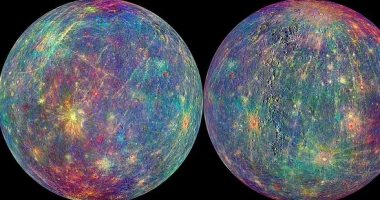
Scientists Detect Lithium on Mercury Using Magnetic Waves
New Technology Unlocks Secrets of Planet’s Thin Exosphere
In a groundbreaking scientific achievement, researchers have successfully detected the elusive element lithium within Mercury’s tenuous exosphere. This marks the first instance of monitoring lithium on the smallest planet in our solar system, utilizing a novel magnetic wave analysis technique instead of traditional detection methods.
Unprecedented Discovery Method
The challenge of studying Mercury’s atmosphere lies in its extremely thin outer layer, composed of sparse atoms and molecules. Traditional spectral analysis tools struggle to directly monitor elements in such an environment. This new approach circumvents those limitations by analyzing the indirect effects of elements like lithium when excited by ultraviolet radiation.
When ultraviolet rays strike lithium atoms, they emit electromagnetic waves at a specific frequency. This unique “magnetic fingerprint” has finally confirmed the presence of lithium, resolving decades of scientific debate.
Data from NASA’s Messenger Mission
The study, spearheaded by researcher Daniel Schmidt of the Austrian Academy of Sciences, delved into four years of magnetic data meticulously collected by NASA’s Messenger spacecraft. By examining twelve brief events, each lasting only minutes, the team was able to discern these characteristic magnetic emissions.
Researchers theorize that the detected lithium originates not from Mercury’s interior, but from the impact of meteorites. Upon striking the planet’s surface at high velocities, these meteorites can vaporize, releasing elements like lithium into the outer exosphere.
Broader Implications for Planetary Science
This breakthrough extends beyond Mercury, offering new insights into how volatile elements are retained in the exospheres of airless bodies. The findings could prompt a reevaluation of the chemical evolution of rocky planets and other small celestial bodies across the solar system.
Daniel Schmidt emphasized the significance of this advancement, stating, The ability to follow precise elements such as lithium through electromagnetic frequencies is a qualitative leap in research in sensitive weather covers and paves the way for a deeper understanding of geological processes in space.
The discovery underscores that even seemingly quiescent planets like Mercury continue to yield scientific surprises. Modern technological innovations are providing scientists with powerful new avenues to unravel complex celestial puzzles.
For context, understanding atmospheric composition is crucial for identifying potential resources. For example, the Moon’s regolith contains valuable elements like helium-3, a potential fuel for future fusion reactors, with estimates suggesting over 1 million metric tons could be present (NASA, 2022).
