
New Heart Valve Procedure Brings Hope to Singapore Patients
A novel medical procedure offers a minimally invasive treatment for leaky heart valves, providing a lifeline for individuals who are unsuitable for traditional open-heart surgery. This innovative approach has already transformed the lives of several patients in Singapore.
A Groundbreaking Procedure
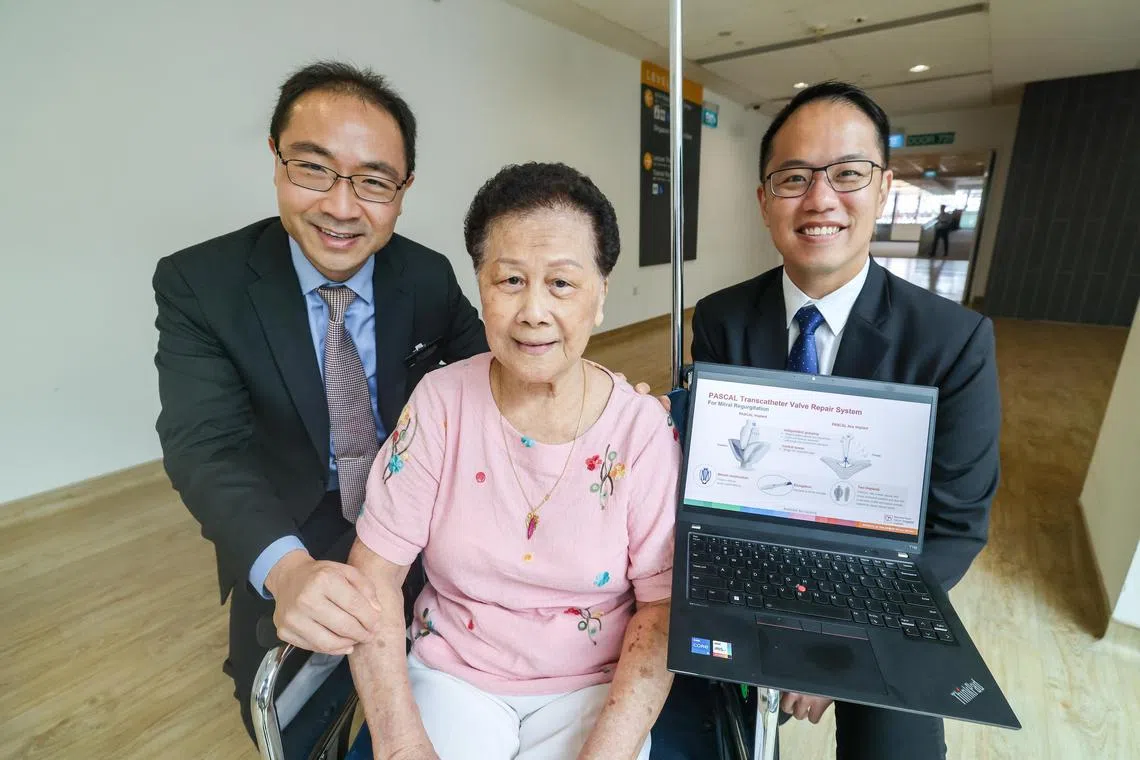
In 2022, Madam Tay Sioh Lian, then 74, began experiencing breathlessness. After diagnosis, she was deemed unsuitable for open-heart surgery. However, in February 2025, she became the first patient in Singapore to undergo the Pascal transcatheter valve repair at the National Heart Centre Singapore (NHCS).
The Pascal device, developed by Edwards Lifesciences, acts like a clip. It holds a leaky valve in place so it can seal correctly, allowing blood to flow as it should. This procedure is inserted via a tiny incision in the leg, using a catheter.
“The day after the procedure, I was already back home and doing my usual activities like bathing and walking, and after a week, I could do some light household chores.”
—Madam Tay Sioh Lian
Globally, around 3% of people over 70 suffer from moderate to severe leaky heart valve (Mitral Regurgitation), which increases with age. In the United States, mitral valve disease affects over 5 million people annually, and this number is expected to increase due to an aging population (CDC).
Traditional vs. New
Open-heart surgery remains the gold standard for treating leaky heart valves. However, the Pascal procedure provides an alternative, especially for those who are high-risk. The procedure is less invasive, and patients usually return home and resume normal activities within days.
The Pascal device is designed to repair damaged heart valves precisely. Assistant Professor Wong Ningyan, a consultant at NHCS, stated this is achieved through a small incision. Since February, five patients over 70 have undergone this innovative procedure.
The NHCS also offers other minimally invasive valve treatments like transcatheter aortic valve implantation and Mitraclip treatment. According to CEO Yeo Khung Keong, expanding treatment options allows for more personalized care.
