
New Class of Black Hole Discovered: Bridging the Cosmic Gap
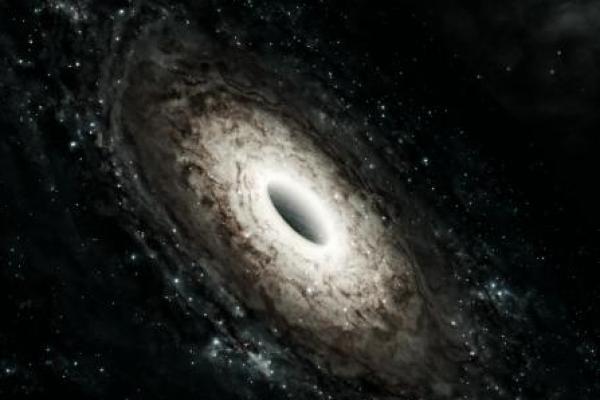
Illustration of Black Hole or Black hole (Photo: Pexels/iceberg San)
For the first time, astronomers have confirmed the existence of a new type of black hole,one that fills a significant mass gap. These black holes are too large to originate from typical star collapses, yet too small to be classified as the supermassive variety found at the centers of galaxies. This groundbreaking discovery is reshaping our understanding of the universe’s origins and the progress of cosmic structures.
This newly identified class of black holes possesses a mass ranging from 100 to 300 times that of our Sun. The detection stems from gravitational wave data collected by the international LIGO and Virgo collaborations between 2019 and 2020.
Did You Know? Black holes are not actually “holes,” but rather incredibly dense objects with such strong gravity that nothing, not even light, can escape.
The Cosmic Zone That Has Been Empty
Previously, observed black holes were broadly categorized into two groups: stellar black holes (with masses less than 50 times the Sun) and supermassive black holes (weighing millions of times the sun’s mass). A puzzling gap existed between these categories,a void that has now been filled.
Among the 11 black hole mergers recorded by LIGO and Virgo, five exhibited post-collision remnants with masses exceeding 100 times the Sun. Scientists are calling these “Lite Intermediate-Mass Black Holes,” highlighting thier role as the missing link in cosmic evolution.
Penetrating the Supernova Limit
According to stellar theory, a specific type of supernova known as a Pair-Instability Supernova should obliterate stars before they can form black holes with masses between 60 and 120 times the Sun. Though, some of the observed mergers fall squarely within this forbidden zone, even exceeding its upper limits.
This finding supports the hypothesis that intermediate-mass black holes can arise from repeated mergers within dense star clusters. In this scenario, smaller black holes gradually coalesce to form larger objects. This process can also lead to unique rotational characteristics,sometimes with the spin opposing the orbital direction – a feature observed in the latest gravitational wave signals.
Capturing a Very Fine Cosmic Trail
To validate these findings, the research team employed refined gravitational wave models and a Bayesian statistical approach called Rift. This allowed them to precisely estimate the mass and spin of the black holes, even when the signals were faint and fleeting.
Pro Tip: Gravitational waves are ripples in the fabric of spacetime,caused by accelerating massive objects. Detecting them is like “hearing” the universe.
Leap Detection from earth to Moon and Space
Future detections promise even greater precision. Space-based observatories like LISA (Laser Interferometer Space Antenna), a joint project by NASA and ESA slated for launch in the mid-2030s, will detect low-frequency gravitational waves that are inaccessible from Earth.
The concept of an observatory on the lunar surface is also being explored to dramatically expand the reach of detection, enabling scientists to track black hole mergers from their initial stages to completion.
Black Hole MEDIUM: Galaxy Evolution Key
This discovery extends beyond the identification of a new class of black holes.It addresses fundamental questions about galaxy formation, the origin of supermassive black holes at galactic centers, and the events following the birth of the first stars.
With each new detection, scientists move closer to mapping the “genealogy” of the cosmos, from small black holes to the behemoths residing at the heart of galaxies.
What other cosmic mysteries might these intermediate-mass black holes help us unravel? How will future space-based observatories revolutionize our understanding of the universe?
The Broader Context of Black Hole Research
The study of black holes has advanced significantly in recent years, driven by improvements in observational technology and theoretical modeling. The Event Horizon Telescope (EHT),for example,captured the first direct image of a black hole in 2019,confirming predictions made by Einstein’s theory of general relativity. This image, of the supermassive black hole at the center of the M87 galaxy, provided visual evidence of these enigmatic objects.
The discovery of gravitational waves by LIGO and Virgo has opened a new window into the universe, allowing scientists to study black hole mergers and other cataclysmic events that are invisible to traditional telescopes. These observations have revealed a diverse population of black holes with a wide range of masses and spins, challenging existing models of black hole formation and evolution.
| Black Hole Type | Mass Range (Solar Masses) | Formation Mechanism | Typical Location |
|---|---|---|---|
| Stellar Black Hole | 5 – 50 | Collapse of massive star | Within galaxies |
| Intermediate-Mass Black Hole | 100 – 100,000 | Merger of stellar black holes, direct collapse | Globular clusters, dwarf galaxies |
| Supermassive Black Hole | 1 million – 10 billion+ | Accretion of gas and dust, galaxy mergers | Centers of galaxies |
Frequently Asked Questions About Black Holes
- What are the primary methods for detecting black holes?
- Black holes are primarily detected through gravitational waves and X-ray emissions from material falling into them.
- How does the mass of a black hole affect its properties?
- The mass of a black hole determines the size of its event horizon and the strength of its gravitational pull.
- What is the event horizon of a black hole?
- The event horizon is the boundary around a black hole beyond which nothing, not even light, can escape.
- Can black holes merge with each other?
- Yes, black holes can merge, producing gravitational waves that can be detected by observatories like LIGO and Virgo.
- What role do black holes play in the evolution of galaxies?
- Black holes, especially supermassive ones, play a significant role in regulating the growth and activity of galaxies.
Learn more about this research in
the Astrophysical Journal Letters.
What are your thoughts on this discovery? Share your comments below and subscribe for more updates on the latest scientific breakthroughs!
