
Nazi Documents Rediscovered in Argentina Supreme Court Basement
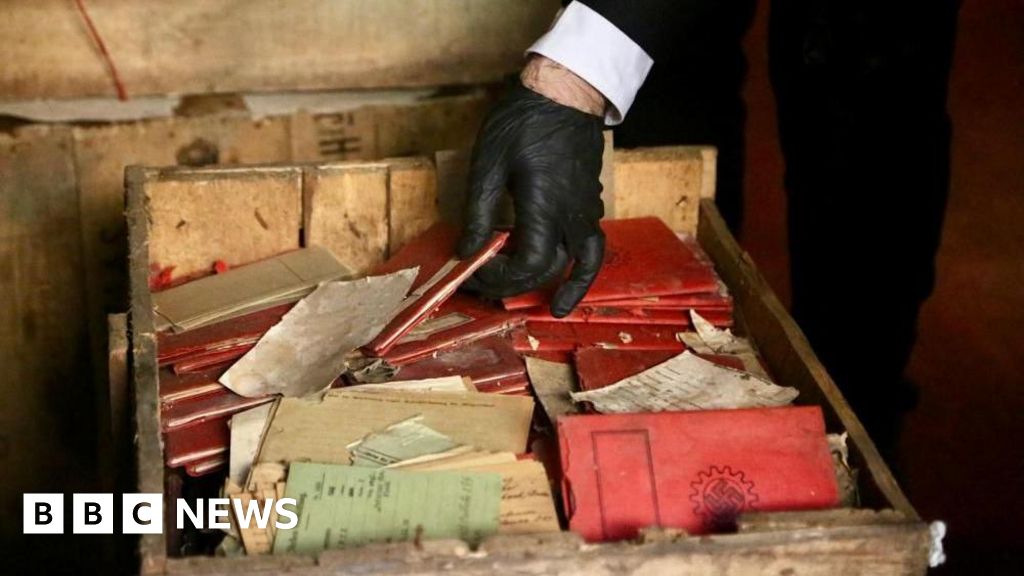
Buenos Aires — September 25, 2024 — A trove of Nazi documents has been found in Argentina’s Supreme Court basement. The finding, which occurred during archival relocation, reveals the existence of propaganda materials, membership booklets, and photographs, signaling a significant ancient find. These documents offer promising insights into the Nazis’ networks. A team of historians and experts are set to fully evaluate the find.
Nazi Documents Rediscovered in Argentina Supreme Court Basement
A trove of documents originating from Nazi germany has been unearthed in the basement of Argentina’s Supreme Court, shedding new light on the Third Reich’s activities in South America. The revelation occurred during preparations to relocate the court’s archives to a new museum.
The documents arrived in Argentina on June 20,1941,aboard the Japanese steamship Nan-a-Maru,originating from the German embassy in Tokyo.They were transported in 83 diplomatic pouches, according to court officials.
Confiscation adn Storage
Argentine customs officials seized the documents in 1941 after randomly opening five pouches and discovering Nazi propaganda. This led to the entire shipment being confiscated and eventually stored in the Supreme Court’s basement.
Workers stumbled upon the crates, initially mistaking them for vintage champagne containers, during the archival relocation process. Upon opening one of the boxes, we identified material intended to consolidate and propagate Adolf Hitler’s ideology in Argentina during [World War Two],
the court stated.
Immediate Response
The crates were promptly moved to a secure office within the Supreme Court building. Court officials contacted the Buenos Aires Holocaust Museum, seeking assistance in creating a comprehensive inventory of the contents.
Photographs released by the court depict experts examining black-and-white photos and membership booklets adorned with swastikas.
Historical Significance
Historians are optimistic that these documents will provide valuable insights into the Nazis’ financial networks and international connections.The find could reveal previously unkown details about nazi operations in South America and beyond.
the Supreme Court provided details about the documents’ journey, noting they were declared as personal effects
by the German embassy in Buenos Aires.Though, the size of the shipment raised suspicions among Argentine officials, who feared it might compromise Argentina’s neutrality.
After the discovery of propaganda material, the German embassy requested the pouches be returned to Tokyo. However, in September 1941, an Argentine judge ordered the seizure of all 83 pouches.
The Supreme Court was tasked with determining the fate of the documents, but no decision was made before Argentina severed ties with the Axis powers in 1944. This explains why the crates remained untouched in the basement for decades.
Argentina’s Post-War Role
Following World War II, Argentina, under the leadership of juan Perón, became a haven for numerous high-ranking Nazis, including Adolf Eichmann and Josef Mengele. This period in Argentina’s history remains a sensitive topic.
In 2000, President Fernando de la Rúa issued an official apology for Argentina’s role in sheltering Nazi war criminals, acknowledging a dark chapter in the nation’s past.
