
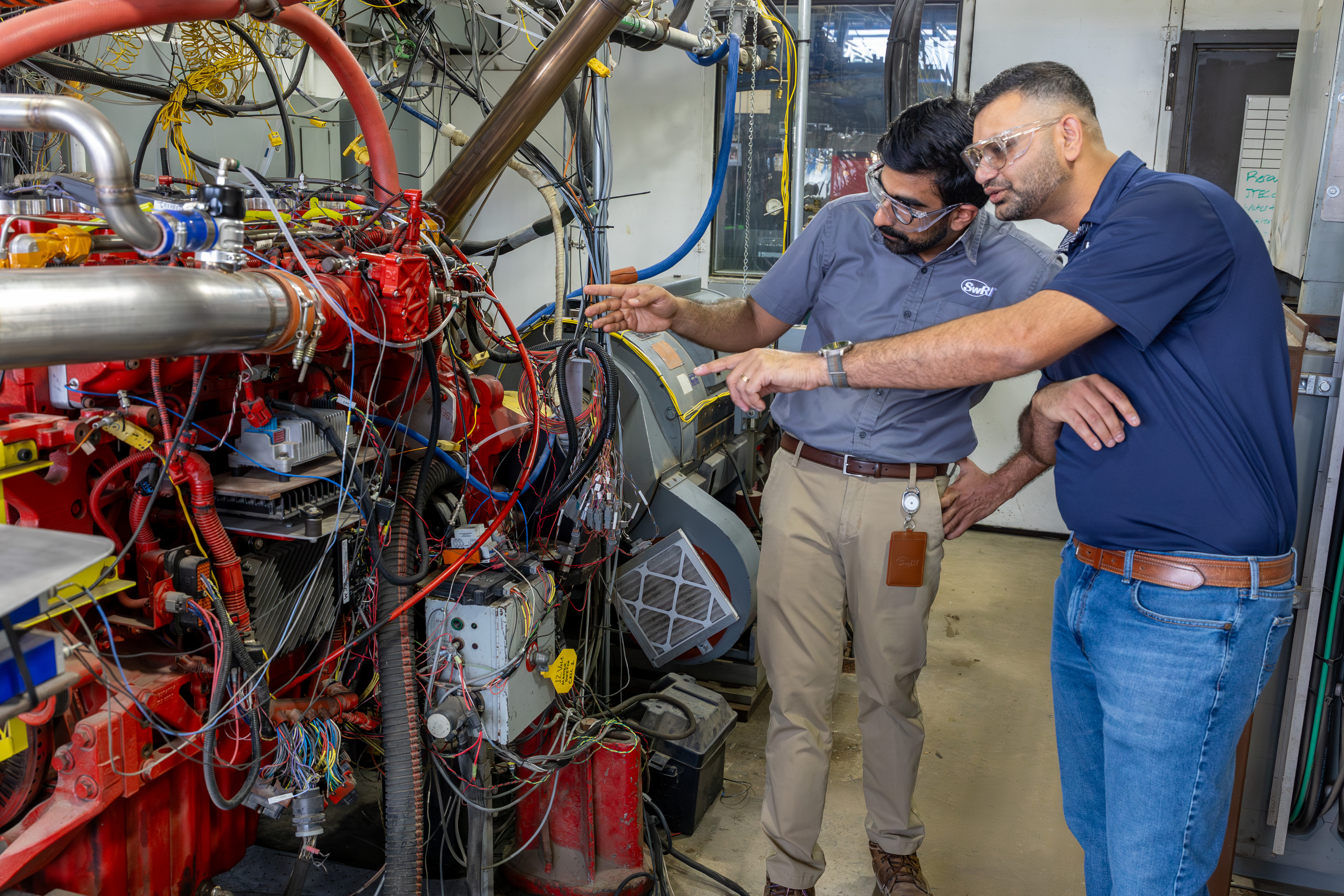
Southwest Research Institute and UT San antonio Collaborate on Hydrogen engine Pre-Ignition Detection
A joint project between the Southwest Research Institute (SwRI) and the University of Texas at San Antonio (UT San Antonio) is tackling the challenge of pre-ignition in hydrogen-powered internal combustion engines (H2-ICE). Supported by a $125,000 grant from the Connecting through Research Partnerships (Connect) program, the initiative aims too develop real-time pre-ignition detection methods.
Hydrogen’s inherent flammability, while making it an attractive clean fuel alternative, also increases its susceptibility to pre-ignition – uncontrolled combustion events occurring before the prescribed spark timing. These events can negatively impact engine performance and perhaps cause mechanical damage. Factors like engine and air temperatures, residual gases, and oil droplets contribute to this issue, making it difficult to isolate and control.
The collaborative team, led by Dr. Abdullah U. Bajwa (SwRI), Ryan Williams (SwRI Manager), Vickey Kalaskar (SwRI Lead Engineer), Dr. Yuanxiong Guo (UT San Antonio,College of AI,Cyber and Computing),and Dr. Yanmin Gong (UT San Antonio, Klesse College of Engineering and Integrated Design), will leverage expertise in hydrogen engine technology, machine learning, and real-time diagnostics.
the project will initially utilize laboratory-grade sensors to gather engine cylinder pressure data, differentiating between normal and abnormal combustion. This data will then be used to train machine learning models to identify the unique signatures of pre-ignition events. Ultimately, these models will be adapted to function with data from commercially available, cost-effective production sensors.
Dr. Bajwa notes that the project will integrate advanced machine learning tools with SwRI’s existing signal processing techniques, while also providing UT San Antonio researchers with a practical submission for real-time combustion system diagnostics.
The Connect program, sponsored by SwRI’s Executive Office and UT San Antonio’s Office of the Vice President for Research, Economic Advancement, and Knowledge Enterprise, facilitates scientific collaboration between the two institutions.The project is scheduled to run through September 30, 2026, and will involve both SwRI staff and UT San Antonio students.
“UT San Antonio is proud to collaborate with SwRI to advance AI research that addresses pressing real-world challenges,” stated Dr. Guo. “By applying AI to pre-ignition detection in hydrogen engines, we aim to accelerate innovation in sustainable energy and transportation while providing opportunities for our students to help shape the future of clean technologies.”
SwRI is actively developing H2-ICE technology through various consortia, including CHEDE-9 and H-ICE, and has already achieved milestones such as a fully functional H2-ICE Class-8 truck.
For further information, visit Connected Powertrain Solutions or contact Jesús Chávez at +1 210 522 2258.
