
Projector Vision: Rethinking Images Through Light Transport
New Techniques Allow Synthetic Lighting and Projector-View Photography
Researchers are demonstrating innovative ways to capture and manipulate visual data. By modeling light transport, it’s now possible to see a scene from a projector’s viewpoint, not just a camera’s, and even to alter the scene’s lighting synthetically. This opens up new possibilities for visual effects and scene reconstruction.
Capturing Light’s Journey
The core of this technology lies in understanding how light travels from a projector to a surface and then to a sensor. Traditionally, capturing this would require projecting one pixel at a time, necessitating thousands of exposures for even a low-resolution setup. This process would be prohibitively time-consuming.
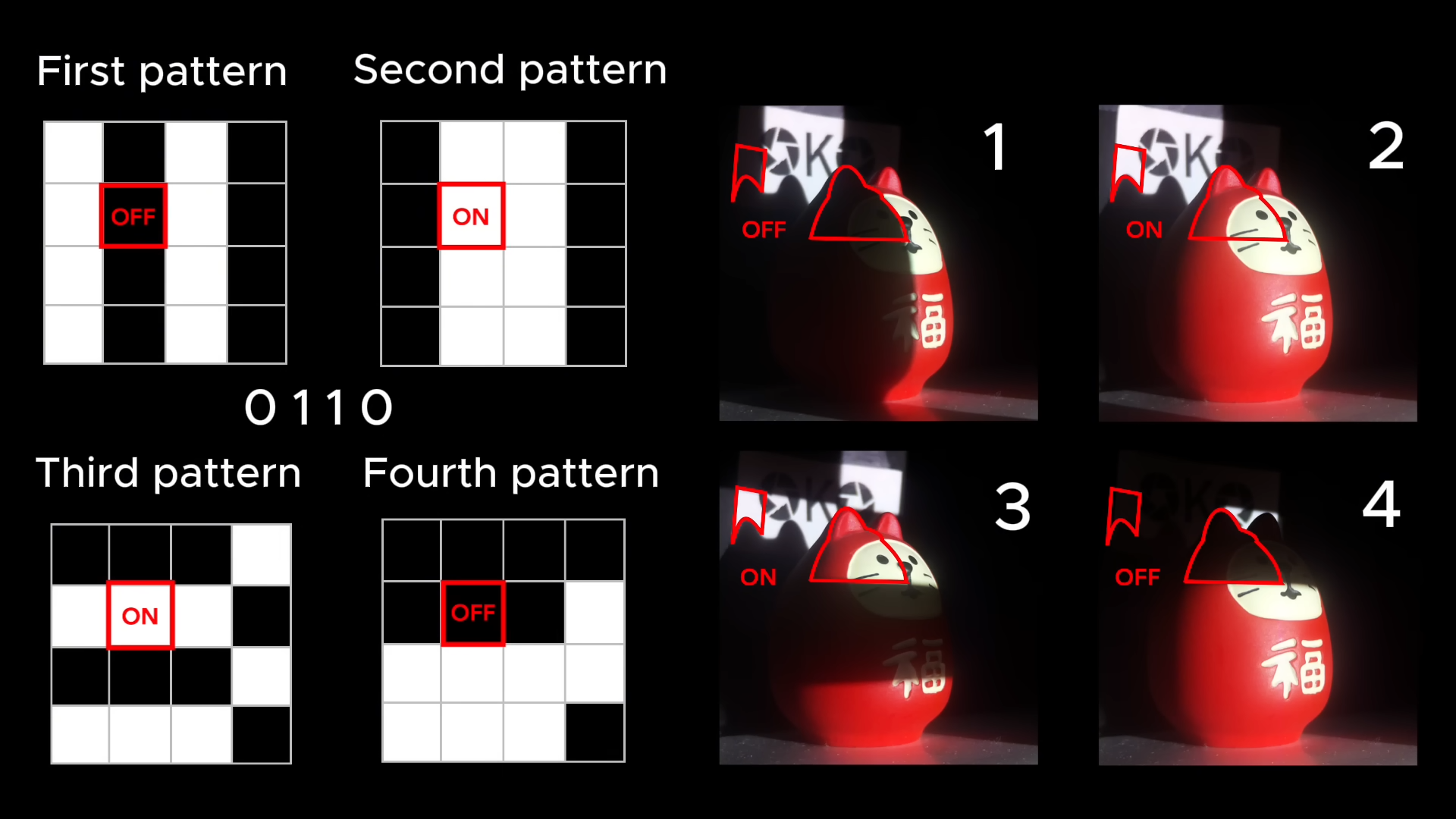
However, a more efficient method uses specially coded binary images. This technique dramatically reduces the number of exposures needed, enabling the collection of essential light transport data with minimal effort.
Unlocking Advanced Visual Effects
With the captured light transport data, a range of sophisticated manipulations becomes feasible. Users can virtually re-light the scene with any desired pattern, as if the projector could emit novel illumination. Furthermore, it’s possible to create a simulated photograph taken directly from the projector’s own perspective.
This technology also enables rudimentary depth reconstruction, offering a glimpse into the scene’s three-dimensional structure. The process is explained with clear visual aids, making this complex subject accessible.
The groundwork for this research was laid by the “Dual Photography” paper presented at SIGGRAPH, a conference that consistently showcases groundbreaking work in computer graphics. The field continues to push boundaries, with recent advancements including real-time, high-quality 3D scene generation from 2D sources.
