
Peripheral artery disease is a severe form of cardiovascular disease affecting more than 230 million individuals worldwide. The correlation of peripheral artery disease with diminished blood flow in one or more major arteries has prompted numerous studies aimed at developing therapies that promote the formation of new mature blood vessels, known as neovessels, to restore blood flow. However, despite years of investigations, the medical therapies designed to do so have lacked therapeutic meaning.
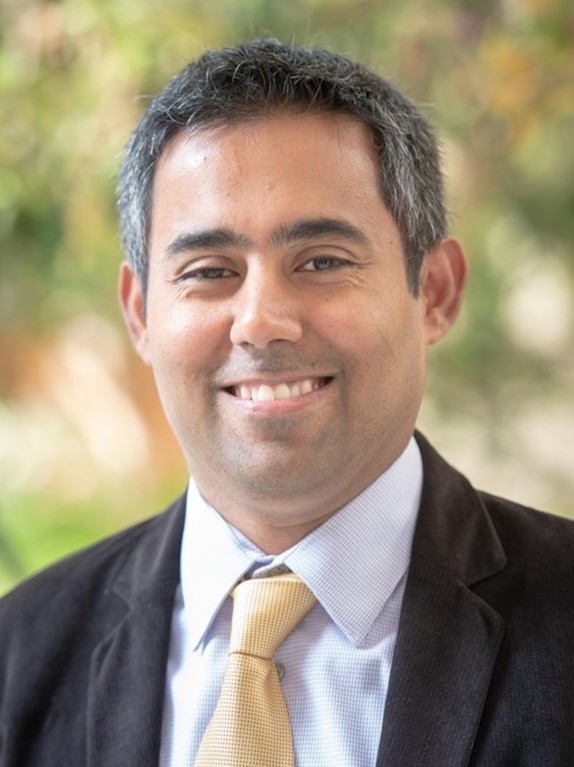
Vivek Nanda, Ph.D., an assistant professor in the Division of Molecular and Cellular Pathology, believes that this is due in large part to a lack of understanding of the mechanisms involved in the formation of mature neovessels. Nanda was recently awarded funding from the National Institutes of Health’s National Heart, Lung, and Blood Institute for his project, titled, “The Role of Leiomodin1 in Hypoxic Neovessel Maturation.” The five-year, $3.4 million R01 will run through February 2030.
“Through an unrelated study,we found a gene called Leiomodin1,which appeared to be critical in the formation of mature neovessels,” Nanda said. “We wanted to investigate this further in the context of peripheral artery disease.”
Nanda’s research team will seek to determine the relationship between Leiomodin1 and peripheral artery disease by investigating the mechanism by which this gene regulates the vascular biology of smooth muscle cells in mature neovessel formation. This attribute may be critical in regulating the pathogenesis of peripheral artery disease.
Specifically, the researchers will implement advanced cell culture models, state-of-the-art genomic and human translational approaches, to elucidate the mechanistic pathway by which reduced Leiomodin1 may impair neovessel maturation. Using advanced in vivo techniques on mouse models,they will determine whether Leiomodin1 mediates defects in neovessel maturation and whether peripheral artery disease is primarily mediated through smooth muscle cells. the team will investigate whether the defect can be restored.
“This work will enhance the scientific community’s understanding of Leiomodin1‘s role in the formation of mature neovessels,” Nanda said.
Nanda’s study will be the first to provide crucial insights into the role of Leiomodin1 in neovessel maturation, possibly paving the way for novel therapeutic strategies for peripheral artery disease.
Evergreen Insights
Peripheral artery disease (PAD) is a common circulatory problem in which narrowed arteries reduce blood flow to your limbs. When PAD develops, your legs don’t receive enough blood flow to keep up with their demand. This causes leg pain when walking (claudication). Smoking and diabetes considerably increase the risk of developing PAD. Understanding the mechanisms of neovascularization, the formation of new blood vessels, is crucial for developing effective treatments for PAD and other ischemic diseases. Research into specific genes and cellular pathways involved in this process, like the one led by Dr. Nanda, is vital for advancing medical therapies.
Frequently Asked Questions
- What is peripheral artery disease (PAD)?
- Peripheral artery disease is a condition where narrowed arteries reduce blood flow to the limbs, most commonly the legs.
- What are neovessels?
- Neovessels are newly formed, mature blood vessels that can help restore blood flow in conditions like PAD.
- What is the goal of Dr. Nanda’s research?
- Dr. Nanda’s research aims to understand the role of the gene Leiomodin1 in the formation of mature neovessels, which could lead to new therapies for PAD.
- What funding did Dr. Nanda receive?
- Dr. Nanda received a five-year, $3.4 million R01 grant from the National Institutes of Health’s National Heart, Lung, and Blood Institute.
Share your thoughts on this groundbreaking research in the comments below! Subscribe to World Today News for more updates on medical advancements.
