
Jupiter-Mass Binary Objects: Simulations Question Existence of Rogue Planet Pairs
Table of Contents
- Jupiter-Mass Binary Objects: Simulations Question Existence of Rogue Planet Pairs
- The Mystery of the jumbos
- Challenging Planetary Formation Theories
- Simulations Reveal Instability
- Are JuMBOs Just Background Noise?
- Key Findings at a Glance
- Evergreen Insights: understanding Rogue planets and Binary Systems
- Frequently Asked Questions About Jupiter-Mass Binary Objects
- What are Jupiter-mass binary objects (JuMBOs)?
- Why are scientists questioning the existence of JuMBOs?
- How were JuMBOs initially discovered?
- What alternative explanations are there for the JWST observations of JuMBOs?
- What do simulations reveal about the lifespan of jupiter-mass binary objects?
- what further research is needed to confirm or deny the existence of JuMBOs?
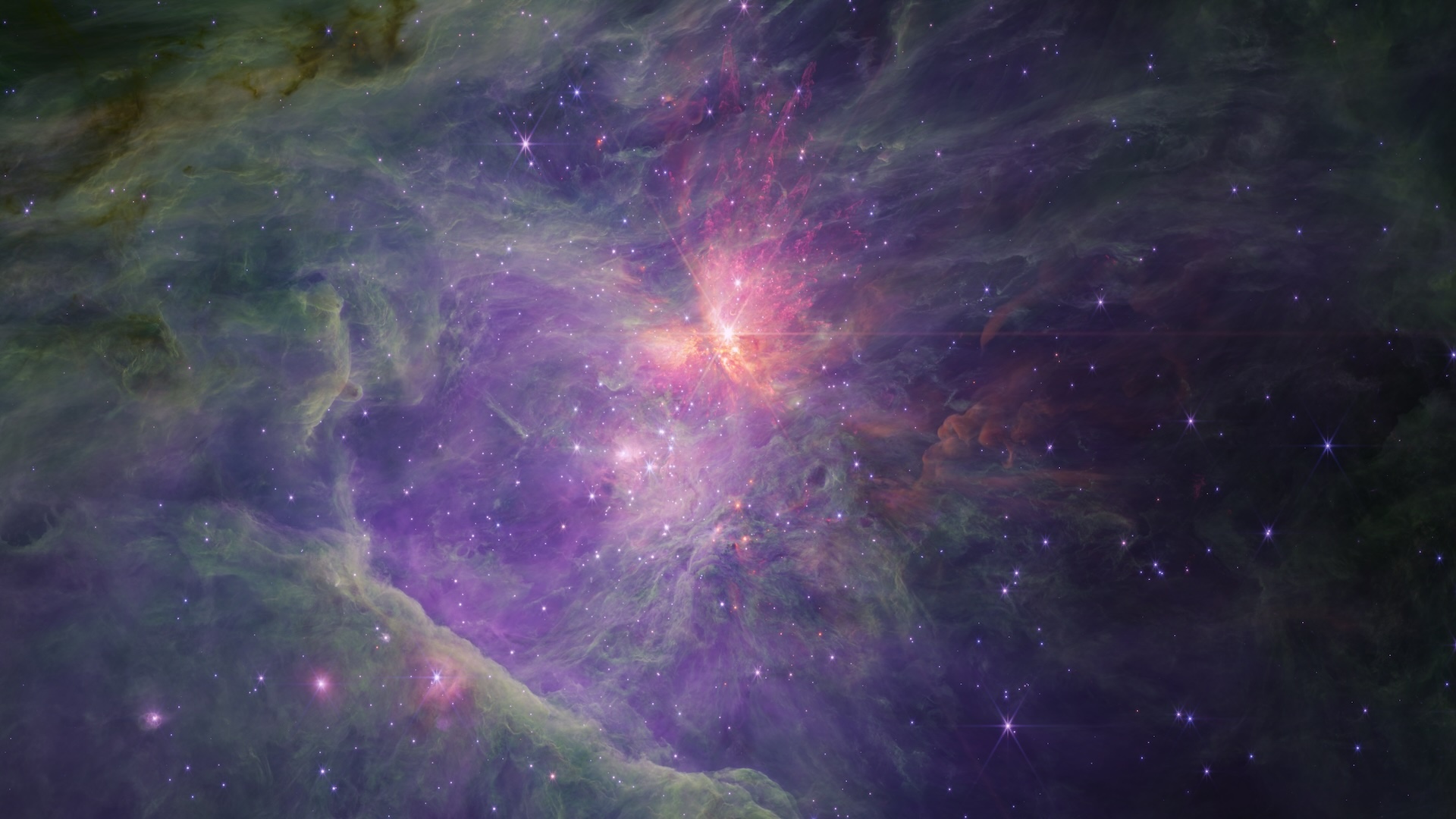
New research casts doubt on the existence of Jupiter-mass binary objects (JuMBOs), pairs of free-floating, planet-like entities initially observed by the James Webb Space Telescope (JWST) in the Orion Nebula. Simulations suggest these objects, thought to be gas giants twirling around each other without orbiting a star, are unlikely to survive the turbulent conditions of thier birth surroundings, leading scientists to question weather they are, actually, distant background objects.
The Mystery of the jumbos
In 2023, astronomers using the JWST identified dozens of these unusual pairings in the orion Nebula cluster. These Jupiter-mass binary objects, dubbed JuMBOs, consist of two gas giants, each ranging from 0.7 to 30 times the mass of Jupiter. Unlike planets in our solar system, JuMBOs do not orbit stars; rather, they orbit each other at vast distances, spanning roughly 25 to 400 astronomical units (AU).One AU is the average distance between Earth and the Sun, approximately 93 million miles (150 million kilometers).
Did You Know? The Orion Nebula, a vibrant star-forming region, is visible to the naked eye under dark skies and has captivated astronomers for centuries.
Challenging Planetary Formation Theories
The existence of JuMBOs challenges conventional theories of planet formation, which typically involve the accretion of material within a protoplanetary disk around a star. The paired nature of JuMBOs and their lack of stellar association have prompted several hypotheses, including the idea that they were ejected from a star system or that they formed like stars from collapsing gas clouds. One theory suggests that JuMBOs are the eroded cores of embryonic stars,indicating a formation process similar to that of stars Space.com.
Simulations Reveal Instability
A recent study, lead by Richard Parker, a senior lecturer in astrophysics at the University of Sheffield, used computer simulations to investigate the long-term stability of JuMBOs in the Orion Nebula Cluster. The simulations, which modeled a nebula containing 1,500 stars and JuMBOs, revealed that these planet pairs are highly susceptible to disruption by the gravitational forces of nearby stars. The research team, including Jessica Diamond, an integrated Masters student, and Simon Goodwin, a professor of theoretical astrophysics, ran multiple simulations with varying parameters, such as the density of the nebula and the separation between the JuMBOs.
The results, published in the journal monthly Notices of the royal Astronomical Society: Letters, indicated that nearly 90% of JuMBOs in dense nebulae are destroyed within a million years due to interactions with neighboring stars. Even under the most favorable conditions, with fewer stars and tighter orbits, only half of the JuMBOs remained intact. The simulations also showed that wider planet pairs were more likely to be disrupted.
Pro Tip: N-body simulations are a powerful tool for studying the dynamics of celestial objects, allowing researchers to model the gravitational interactions of many bodies over time.
Are JuMBOs Just Background Noise?
The short lifespans revealed by the simulations raise questions about the true nature of the objects observed by JWST. Kevin Luhman,a professor at Penn State,reanalyzed the JWST data and suggested that the purported JuMBOs might be distant background objects that happened to align in the telescope’s field of view. Parker’s simulations support this interpretation, suggesting that the observed number of JuMBOs would require an implausibly high formation rate to compensate for their rapid destruction.
The findings suggest that the observed JuMBOs are extremely rare,if they exist at all. this lends credence to the hypothesis that they are simply background objects serendipitously captured in JWST’s images. Further analysis of the original JWST data is needed to confirm or refute the existence of these rogue planet pairs.
Key Findings at a Glance
| Finding | Details |
|---|---|
| JuMBO Lifespan | Nearly 90% destroyed in dense nebulae within 1 million years. |
| Disruption Factor | Gravitational interactions with nearby stars. |
| Alternative Explanation | Distant background objects, not bound planet pairs. |
| Supporting Evidence | Simulations showing rapid destruction of JuMBOs. |
What do you think? Are JuMBOs a new class of celestial object, or simply a cosmic illusion? How might future observations help resolve this mystery?
Evergreen Insights: understanding Rogue planets and Binary Systems
Rogue planets, also known as free-floating planets, are celestial bodies that do not orbit a star.They can be formed in several ways,including ejection from a star system or formation from collapsing gas clouds,similar to stars. Binary systems, on the other hand, consist of two objects orbiting a common center of mass. These systems can include stars, planets, or even black holes. the study of rogue planets and binary systems provides valuable insights into the processes of star and planet formation and the dynamics of celestial objects in various environments.
The revelation and study of JuMBOs contribute to our understanding of the diversity of planetary systems and the conditions under which planets can form and survive. The simulations conducted by parker and his team highlight the importance of considering the environmental context when studying celestial objects, as the gravitational interactions with nearby stars can substantially impact their stability and lifespan.
Frequently Asked Questions About Jupiter-Mass Binary Objects
What are Jupiter-mass binary objects (JuMBOs)?
Jupiter-mass binary objects, or JuMBOs, are pairs of planet-like objects, each with a mass between 0.7 and 30 times that of Jupiter. They are found floating freely in space, not orbiting a star, and were initially observed in the Orion Nebula Cluster.
Why are scientists questioning the existence of JuMBOs?
Recent simulations suggest that JuMBOs are highly unstable in the dense environments where they were observed. The simulations indicate that most JuMBOs would be disrupted by nearby stars within a million years, leading some researchers to believe that the observed objects might potentially be distant background objects.
How were JuMBOs initially discovered?
JuMBOs were first spotted by the James Webb Space Telescope (JWST) in the Orion Nebula Cluster in 2023. These observations revealed pairs of gas giants seemingly unbound to any star.
What alternative explanations are there for the JWST observations of JuMBOs?
One alternative explanation, proposed by Kevin Luhman, is that the observed pairs are not actually bound planet pairs, but rather distant background objects that happened to be aligned in the JWST’s field of view.
What do simulations reveal about the lifespan of jupiter-mass binary objects?
Simulations indicate that Jupiter-mass binary objects are short-lived in star-forming regions. In dense nebulae, nearly 90% of these pairs are destroyed by gravitational interactions with neighboring stars within a million years.
what further research is needed to confirm or deny the existence of JuMBOs?
Further analysis of the original James Webb Space Telescope data is needed. Independent researchers should re-examine the data to either confirm the existence of these rogue planet pairs or support the hypothesis that they are background objects.
Share this article and join the discussion! What are your thoughts on the existence of JuMBOs?
