
Japan Breaks Free From Deflation: A Turning point for the World’s Third-Largest Economy
Tokyo, Japan – After nearly three decades trapped in a cycle of falling prices, Japan is experiencing a sustained period of inflation, possibly marking a pivotal shift for its economy and offering lessons for global policymakers. What began as a response to external pressures is now evolving into a domestically-driven phenomenon fueled by unprecedented wage growth and rising service costs.
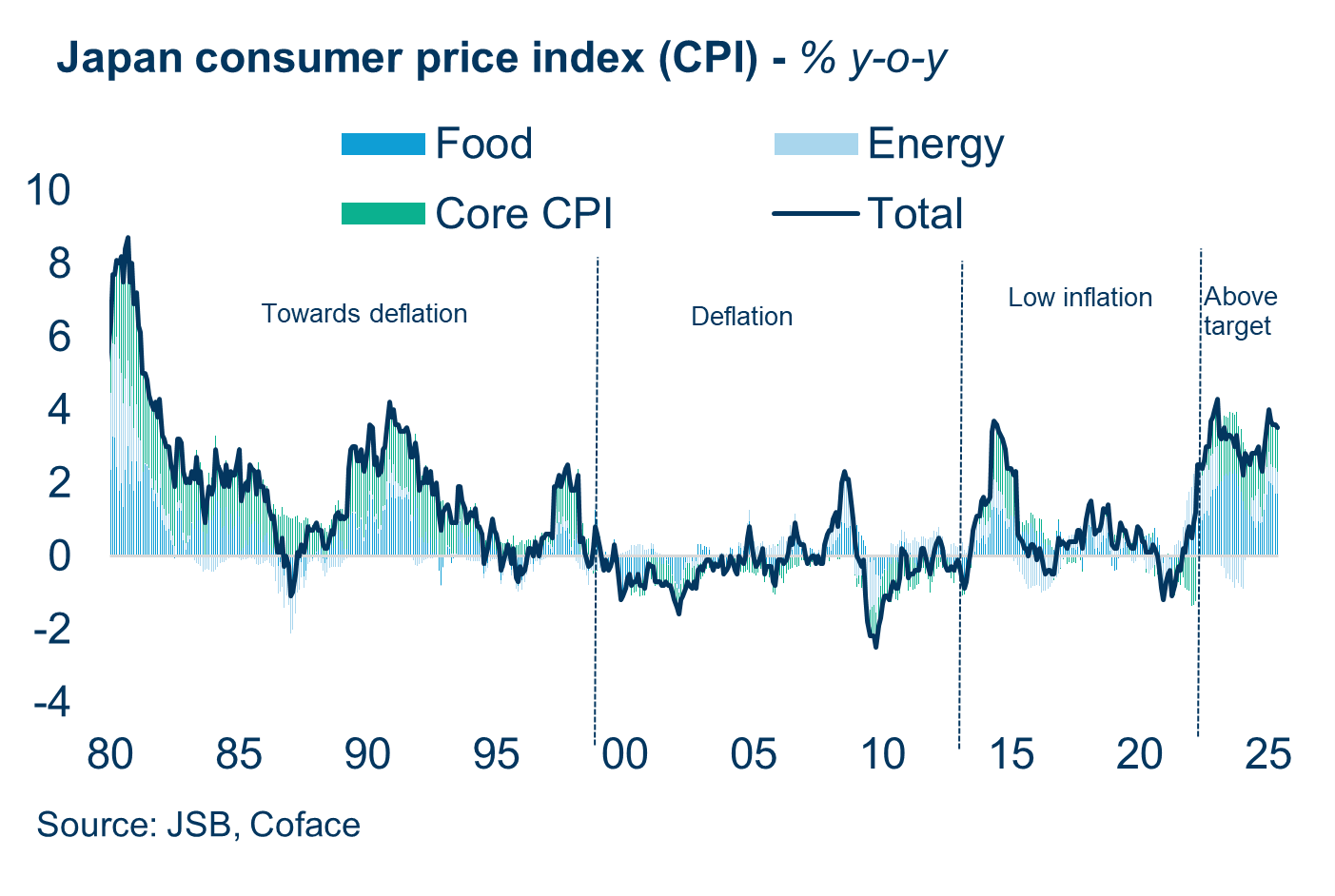
The nation’s struggle with deflation – a sustained decrease in the general price level – dates back to the collapse of its asset bubble in the early 1990s. This triggered a “balance sheet recession,” where households and businesses prioritized debt repayment over spending and investment as land and asset values plummeted. Occasional inflationary spikes, typically linked to temporary shocks like oil price increases or consumption tax hikes, failed to take hold, leaving Japan in a prolonged period of economic stagnation.
However, 2022 signaled a change.Inflation consistently surpassed the Bank of Japan’s (BoJ) 2% target,initially driven by soaring commodity prices and a weakening yen. But the story doesn’t end there.
“Japan is at a historic crossroads,” explains junyu Tan,a Coface economist specializing in North Asia. “For this reflation to translate into sustainable price growth, wage increases must continue, and companies need to convert profits into productive investments. Without this, the country risks falling back into the deflation trap.”
From Cost-push to Demand-Driven Inflation
The initial surge in prices was largely “cost-push” inflation – driven by increased import costs. Though, the dynamic is now shifting. Service companies, facing mounting pressure on their margins, are increasingly passing costs onto consumers. This, coupled with a tight labor market, has empowered Japanese workers to demand – and receive – critically important wage increases.
The numbers are striking:
* 2023: 3.6% wage increase
* 2024: 5.1% wage increase
* 2025 (projected): 5.3% wage increase
These represent the highest wage growth rates Japan has seen in three decades,signaling a fundamental shift away from the country’s customary emphasis on job security towards a stronger focus on compensation. This demand-driven inflation is a crucial growth, suggesting a potential break from the deflationary mindset that has gripped the nation for so long.
The Road ahead: Investment and Sustainability
While the current situation is encouraging, the path to sustained inflation isn’t guaranteed. The key will be whether Japanese companies reinvest their increased profits into productive investments – expanding operations, adopting new technologies, and boosting overall productivity.
The boj faces a delicate balancing act. While the rising inflation provides an possibility to normalize monetary policy, prematurely tightening could stifle the nascent economic recovery.
The world is watching closely. Japan’s experience offers valuable insights into the challenges of overcoming deflation and the importance of wage growth in driving sustainable economic recovery – lessons that are particularly relevant in a global economic landscape grappling with inflation and sluggish growth.
Keywords: Japan, Inflation, deflation, Bank of Japan, Wage Growth, Economy, Reflation, Economic Recovery, Monetary Policy, Japan Economy, japanese Yen, Cost-Push Inflation, Demand-Driven Inflation.
