
Japan Cancels US Security Talks amid Defense Spending Demands
Table of Contents
- Japan Cancels US Security Talks amid Defense Spending Demands
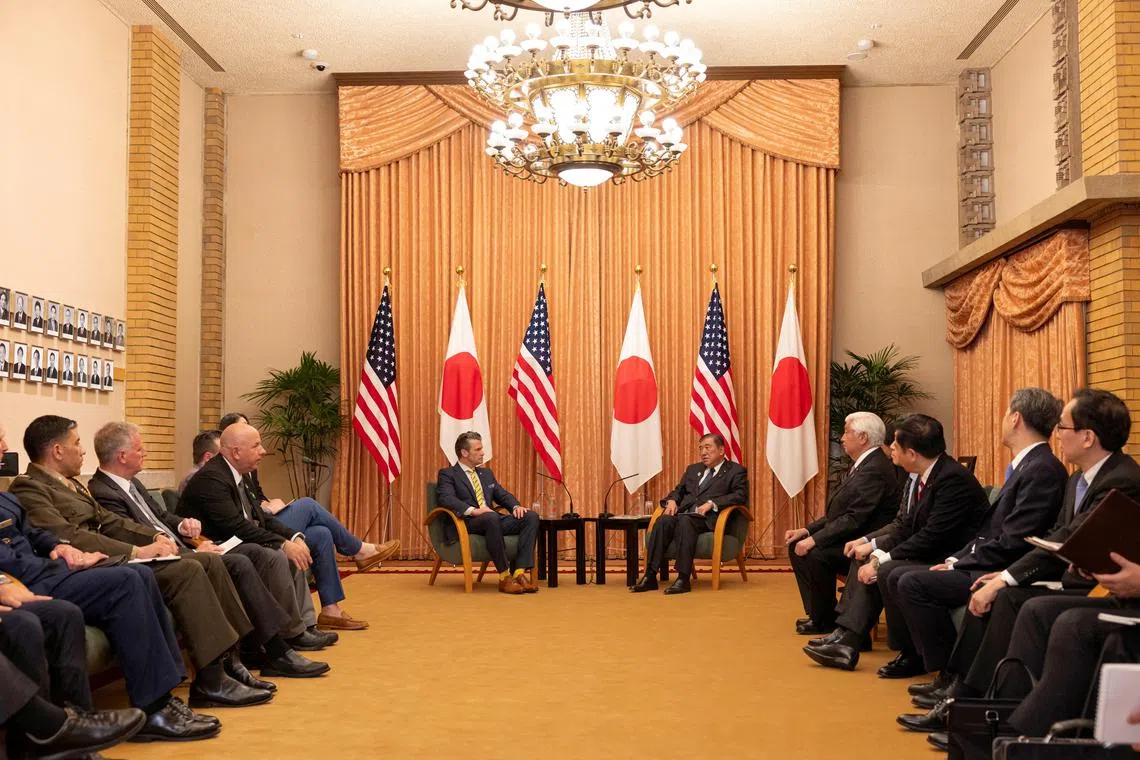
WASHINGTON-A scheduled high-level meeting between Japan and the United States has been called off after the U.S. governance,led by President Trump,reportedly requested a significant increase in Japan’s defense spending. The cancellation underscores growing tensions between the two allies over burden-sharing and security commitments.
Details of the cancelled Meeting
The annual “2+2” security talks, involving the U.S. Secretary of State Marco Rubio and Defense Secretary Pete Hegseth, and their Japanese counterparts, Foreign Minister Takeshi Iwaya and Defence Minister Gen Nakatani, were slated to occur in Washington on July 1. Though, Tokyo decided to scrap the meeting following demands from the U.S. side to elevate defense spending to 3.5% of Japan’s Gross Domestic Product (GDP), exceeding an earlier request of 3%, according to the Financial times [1].
Japan’s Nikkei newspaper further reported that the U.S. government was pushing its Asian allies, including Japan, to allocate as much as 5% of their GDP to defense. This demand comes as the U.S. seeks to redistribute the financial burden of maintaining security alliances globally.
did You Know? japan’s defense budget has been steadily increasing in recent years, driven by concerns over China’s growing military assertiveness and North Korea’s nuclear program. In 2024, Japan’s defense budget reached a record high of approximately $56 billion [2].
Conflicting Reports and official Responses
A Japanese Foreign Ministry official, speaking anonymously to Reuters, refuted claims that specific defense spending targets of 3.5% or 5% had been discussed between the two nations. The official also stated having no knowledge of the Financial Times report. Similarly, a U.S. official confirmed the postponement but did not provide a reason,stating the decision was made weeks prior.
U.S. State Department spokeswoman Tammy Bruce declined to comment on the Financial Times report during a press briefing, and the Pentagon also offered no immediate response. Japan’s embassy in Washington, along with the nation’s foreign and defense ministries and the Prime Minister’s Office, did not respond to requests for comment outside of business hours on June 21.
The Role of Elbridge Colby
The Financial Times indicated that the increased spending demand was recently conveyed by Mr. Elbridge Colby, a high-ranking pentagon official. Colby has previously stirred controversy by initiating a review of a project aimed at providing Australia with nuclear-powered submarines, further straining relations with key U.S.allies in the Indo-Pacific region.
In March, Japanese Prime Minister Shigeru Ishiba asserted that Japan’s defense budget is a sovereign decision, following calls from Colby for Tokyo to increase spending to counter China.These events highlight the ongoing tensions surrounding defense burden-sharing and strategic priorities within the U.S.-Japan alliance.
Broader Context: Trade Talks and Domestic Politics
The decision to cancel the July 1 meeting is also reportedly linked to Japan’s upcoming Upper House election on July 20, which is anticipated to be a crucial test for prime Minister Ishiba’s minority coalition government. The timing of the U.S. demand and the subsequent cancellation could have significant political ramifications within Japan.
This advancement precedes a NATO alliance meeting in Europe, where President Trump is expected to reiterate his demand for European allies to increase their defense spending to 5% of GDP. The U.S. is actively pushing its allies to shoulder a greater share of the financial burden for collective security.
Pro Tip: monitoring defense spending trends and geopolitical tensions can provide valuable insights into potential shifts in international relations and security dynamics.
Impact on US-Japan Relations
The cancellation of the security talks raises questions about the future of the U.S.-Japan alliance. While both countries remain committed to maintaining a strong security partnership, disagreements over defense spending and burden-sharing could create friction and undermine cooperation on other critical issues. the situation is further elaborate by ongoing trade negotiations and domestic political considerations in both countries.
| Name | title | Role |
|---|---|---|
| Marco Rubio | US Secretary of State | Expected to attend the cancelled meeting |
| Pete hegseth | US Defense Secretary | Expected to attend the cancelled meeting |
| Takeshi Iwaya | Japanese Foreign Minister | Expected to attend the cancelled meeting |
| Gen Nakatani | japanese Defense Minister | Expected to attend the cancelled meeting |
| Shigeru Ishiba | Japanese Prime Minister | Facing Upper House election amid the dispute |
| Elbridge Colby | US Pentagon Official | Reportedly made the increased spending demand |
What are the long-term implications of this cancellation for the US-Japan alliance?
How might this dispute affect Japan’s upcoming upper House election?
Evergreen Insights: The US-Japan Security Alliance
The U.S.-japan security alliance is a cornerstone of regional stability in the Indo-Pacific. For decades, the alliance has served as a deterrent against potential threats and has facilitated cooperation on a wide range of security and economic issues. However, the alliance has also faced challenges, including debates over burden-sharing, differing strategic priorities, and evolving geopolitical dynamics.
The current dispute over defense spending reflects a broader trend of the U.S. seeking to redistribute the costs of maintaining its global security commitments. As China’s economic and military power continues to grow, the U.S.is increasingly looking to its allies to play a greater role in maintaining regional security.This has led to tensions with some allies, who are reluctant to significantly increase their defense spending or alter their strategic priorities.
Frequently Asked Questions About Japan’s Defense Policy
- What is japan’s current defense policy?
- Japan’s defense policy is primarily focused on self-defense, with a strong emphasis on maintaining a close security alliance with the United States. Japan’s constitution prohibits the use of force except in cases of self-defense, and its defense spending has traditionally been limited to around 1% of GDP.
- Why is Japan increasing its defense spending?
- Japan is increasing its defense spending in response to growing concerns about China’s military assertiveness, North Korea’s nuclear program, and other regional security challenges. The government is also seeking to enhance Japan’s ability to respond to natural disasters and other emergencies.
- What are Japan’s main defense priorities?
- Japan’s main defense priorities include strengthening its air and missile defense capabilities, enhancing its maritime security, and improving its ability to respond to cyberattacks and other emerging threats. Japan is also investing in new technologies, such as artificial intelligence and unmanned systems, to enhance its defense capabilities.
- How does Japan’s defense policy affect its relationship with China?
- Japan’s defense policy has a significant impact on its relationship with China. China views Japan’s increased defense spending and closer security ties with the United States with suspicion, and it has accused Japan of seeking to contain China’s rise. However, Japan argues that its defense policy is purely defensive in nature and that it is committed to maintaining a stable and cooperative relationship with China.
- What role does the United States play in Japan’s defense?
- The United States plays a critical role in Japan’s defense. Under the U.S.-Japan security treaty, the United States is obligated to defend japan in the event of an armed attack.the United States maintains a significant military presence in Japan, including naval bases, air bases, and Marine Corps bases.
Share your thoughts: How should the US and Japan resolve their defense spending dispute? Subscribe for more updates on global affairs!
