
Axiom Mission Sends Second Indian, Advances Science
International collaboration soars as Ax-4 docks, carrying experiments and new astronauts to the ISS.
After a series of postponements, Axiom Space’s fourth private mission, Ax-4, successfully launched on June 25. The Dragon spacecraft, now christened “Grace,” docked with the International Space Station (ISS) on June 26. On board are four crew members who will join the seven astronauts already on the station, pushing forward scientific research.
Expanding Human Presence in Space
The Ax-4 mission has doubled India’s representation in space. Previously, only cosmonaut **Rakesh Sharma** had ventured beyond Earth, spending a week on the Soviet Salyut 7 in 1984. Now, 39-year-old pilot **Shubanshu Shukla** joins this elite group, becoming the first Indian citizen to reach the International Space Station.
Command of the mission has been assigned to **Peggy Whitson**, a former senior NASA astronaut who now works for Axiom. **Whitson** holds the U.S. record for cumulative time in space at 675 days. Axiom is slated to develop a private space station to replace the ISS, which is scheduled for retirement by 2030. This marks **Whitson’s** fifth visit to the ISS and her second with Axiom.
Global Collaboration on Atmospheric Phenomena
Hungary is working with researchers to continue Israeli research aimed at detecting lightning sprites and other atmospheric occurrences. Led by **Prof. Yoav Yair** of Reichman University, astronauts are attempting to photograph these elusive bursts of light that appear above thunderstorms.
These events, though massive, occur for only fractions of a second. Data from **Yair**, who combines storm forecasts with the space station’s orbital path, allows astronauts to aim their cameras with precision.
**Yair** originally created the experiment for the Columbia mission in 2003, alongside **Ilan Ramon**, Israel’s first astronaut, who successfully captured sprites before the tragic end of the mission. The experiment was also performed by **Eytan Stibbe**, Israel’s private astronaut on the Ax-1 mission in 2022 as part of the “Rakia Mission.”
According to NASA, international collaboration is crucial for successful and sustainable space exploration, citing the ISS as a prime example (NASA.gov).
The Rakia Mission then became a public benefit corporation, facilitating the inclusion of the experiment in Axiom’s subsequent missions. After a failed attempt during Ax-2, Ax-3 yielded promising results. The Ax-4 mission is being carried out in collaboration with **Professor József Bór** of the Hungarian Institute of Earth Physics and Space Science.
“Kapu is the astronaut designated to lead the experiment, but we conducted a video training session with the entire crew, and everyone expressed interest in participating and capturing these phenomena,”
**Yair** told the Davidson Institute website. He hopes the crew will document as many events as possible. “We’ve already recorded dozens of brief electrical discharges, but we’ve yet to capture Gigantic Jets — massive, high-temperature lightning events,”
he stated.
The camera used in the experiment is not permanently stationed on the ISS but accompanies the astronauts on each mission, minimizing exposure to cosmic radiation. The Israeli experiment is one of approximately 60 scientific and medical experiments planned for the AX-4 crew during their two-week stay on the ISS.
“The Rakia Mission has been supporting the Hungarian space mission over the past two years,”
added **Hadar Vernik Shalev**, CEO of the Rakia Mission. “We advised them on astronaut selection, candidate screening, and the setup of their mission control room.”
India’s Growing Space Ambitions
The mission of **Shubanshu Shukla** is generating significant interest in India, which is actively developing its own crewed spaceflight program. Sending a representative to the ISS is viewed as an important initial step.
“As part of Rakia’s efforts to support space missions, we partnered with CMS School in Lucknow, northern India — Shukla’s alma mater,”
said **Hadar Vernik Shalev** to the Davidson Institute website. “We assisted in developing educational content, translating it into local languages, and establishing a mission control room and visitor center. We’re one of the few organizations globally with the expertise to support missions of this kind, and from our perspective, this collaboration with India is just the beginning.”
European Spacecraft Lost After “Partial Success”
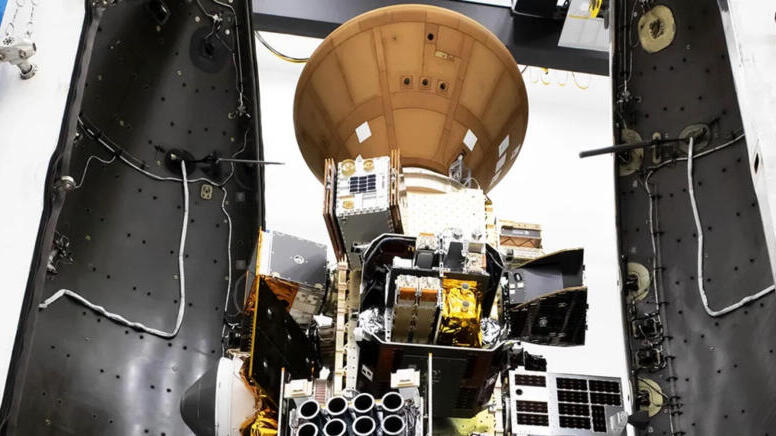
A European company developing spacecraft for cargo and human transport into Earth orbit lost its uncrewed spacecraft at the end of a mission it called a “partial success.”
The spacecraft Mission Possible, developed by The Exploration Company, launched last Monday aboard a SpaceX Falcon 9 rocket from Vandenberg Space Force Base in California, along with other payloads.
Mission Possible detached from the rocket as planned and began a controlled re-entry over the northern Pacific Ocean. The spacecraft operated normally, and mission control activated several onboard experiments.
The 1.6-ton conical capsule survived atmospheric re-entry. Following a brief signal loss, contact was reestablished. However, communication was lost again just minutes before the scheduled splashdown. The company suspects a malfunction in the parachutes caused the spacecraft to crash into the ocean.
“We apologize to all our clients who entrusted us with their payloads,”
the company said, adding that an investigation is underway.
The company plans a follow-up mission. Mission Possible was The Exploration Company’s second space mission. A smaller demonstration craft became stranded in orbit a year earlier, after a second-stage malfunction during the maiden launch of the Ariane 6 rocket.
The spacecraft lost last week was a prototype of Nyx, a vehicle the company is developing for orbital cargo transport. The company announced plans to develop a crewed version of the spacecraft on June 16, at the Paris Air Show.
Parker Solar Probe Completes Another Solar Flyby
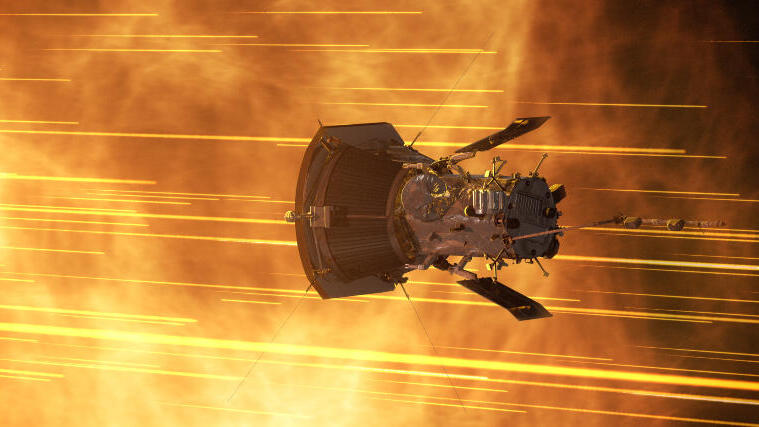
NASA’s Parker Solar Probe completed another close flyby of the Sun, matching its previous records for proximity and speed. The spacecraft came within 6.2 million kilometers of the solar surface and reached a speed of approximately 690,000 kilometers per hour, equaling its record for the fastest human-made object.
This was Parker’s 24th solar flyby since its launch in 2018 and the final one in this phase of the mission. Controllers confirmed a successful pass, with all instruments fully operational and heat shields enduring extreme temperatures exceeding 900°C. Parker will now shift to a more distant orbit.
The data collected during the flybys are used to study solar wind and solar flares. Gaining a better understanding of these events is critical for planning deeper space missions.
“Parker Solar Probe remains in excellent health, with both the spacecraft and its instruments ready to continue their groundbreaking mission,”
said **Arik Posner**, Parker Solar Probe program lead scientist. “The spacecraft will keep exploring the solar atmosphere as the Sun enters the declining phase of its 11-year cycle, providing a unique opportunity to study how solar activity evolves and shapes the heliosphere during this pivotal period.”
Vera Rubin Observatory Releases First Images
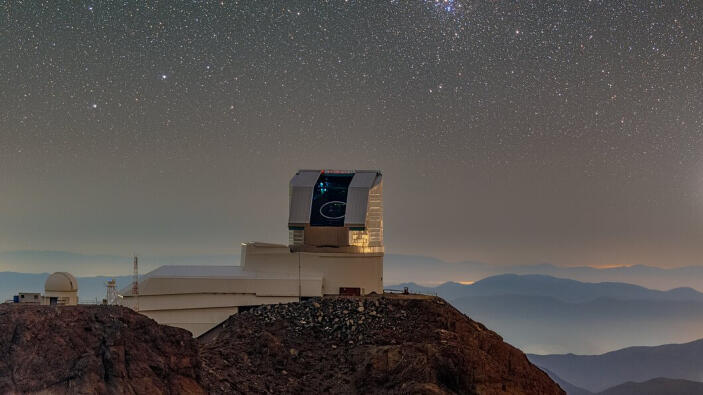
The new U.S. observatory named after astronomer **Vera Rubin** released its first public images. Located in Chile and built over three decades at a cost exceeding one billion dollars, the Vera Rubin Telescope’s images reveal its imaging quality.
The telescope’s strength lies in its camera, roughly the size of a small car and weighing about three tons. Each image it captures is 3,200 megapixels in size, making it the world’s largest digital camera.
The telescope features an exceptionally wide field of view—about 10 square degrees. Designed to take around 1,000 images per night, the telescope can survey the entire southern sky every three to four nights.
Researchers believe the telescope will identify more stars and planetary systems than any previous instrument, and will also enhance planetary defense by detecting asteroids. Additionally, the observatory will contribute to research on dark matter and dark energy.
The Vera Rubin Observatory will operate as part of a broad international scientific collaboration. Among them is Israel’s ULTRASAT space telescope project, in development at the Weizmann Institute of Science and slated for launch in about two years.
Like the Vera Rubin Telescope, ULTRASAT will have a wide field of view and repeatedly scan large portions of the sky—though in ultraviolet light, rather than in visible light, making the two projects scientifically complementary. As part of the partnership, U.S. scientists will gain access to ULTRASAT’s data, and Israeli researchers will be able to use data from the Vera Rubin Telescope.
