
Innsbruck Bids to Host Eurovision 2026,Faces Vienna in final Showdown
Innsbruck has officially entered the race to host the Eurovision Song Contest 2026,submitting its application to the ORF (Austrian Broadcasting Corporation) and setting up a head-to-head competition with Vienna. The Tyrolean capital is promoting its bid under the motto “Together on top,” highlighting its “Alpine stage, urban flair, and international event competence.” the final decision from the ORF is expected in mid-August.
Innsbruck vs. Vienna: the Battle for Eurovision 2026
Innsbruck’s “Together on top” campaign will compete against Vienna’s “Europe, Shall We Dance?” motto. Innsbruck submitted its detailed documents on the last possible day, emphasizing “openness, diversity, and special cooperation.” Mayor Johannes Anzengruber stated the concept is “feasible, affordable, and on solid legs.” Economic State Councilor Mario Gerber sees the event as an “international business card from Tyrol for all of Europe.”
Did You Know? Innsbruck has twice hosted the Winter Olympics, in 1964 and 1976.
Innsbruck’s Strengths: Alpine Charm and Accessibility
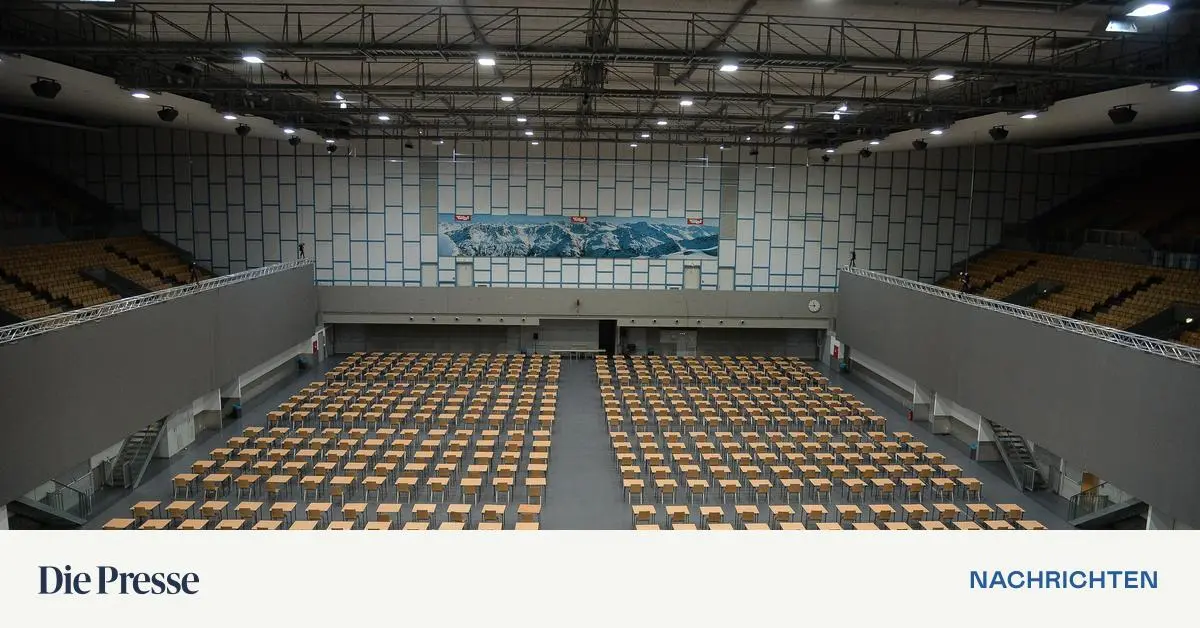
Innsbruck is pitching itself as a “cosmopolitan cultural city in the heart of the Alps,” highlighting its blend of urban accessibility and alpine tradition. The city emphasizes “short paths rather of city traffic,” with the Olympiahalle event location, Tivoli Stadium, and ice rink all within a 15-minute walk from the city center. The “Eurovision Village” is planned for landestheaterplatz, adjacent to the old town, effectively turning the entire city into a stage.
The city also touts its strong tourism sector, noting its excellent connectivity via train, road, and airport, with easy access to Munich, Zurich, and Milan. The Olympiahalle is described as “ready” and convincing in every respect.
Olympic History and Cultural Vibrancy
Innsbruck’s bid also references its history as a two-time host of the Winter Olympics (1964 and 1976). The city notes that the 70th anniversary of the Eurovision Song Contest would coincide with the 50th anniversary of the 1976 Winter Games in Innsbruck. the city also highlights its vibrant cultural scene,citing events like the Bridge Beat Festival,Heart of Noise,Innsbruck promenade concerts,Easter festival,Innsbruck Festival of the Old music,and Archfest.
Pro Tip: Consider Innsbruck’s unique blend of urban convenience and alpine scenery when evaluating its potential as a Eurovision host city.
Budget Considerations
While concrete budget figures have not been released, previous estimates in the “Tyrolean Daily” suggested costs between 17 million and 19.47 million euros. Governor Anton Mattle has indicated that the state will primarily provide infrastructure support.
Other Cities Out of the Running
Lower Austria has withdrawn its bid,citing the extensive criteria and the lack of suitable existing event infrastructure. Graz,Linz/Wels,and Oberwart have also dropped out due to cost concerns or technical challenges.
The ORF will make its decision in mid-August, with the Eurovision finale scheduled for either may 16 or 23, 2026. All applicant cities are bound by a confidentiality agreement.
| City | Motto | Status |
|---|---|---|
| Innsbruck | Together on Top | Applicant |
| Vienna | Europe, Shall We Dance? | Applicant |
| Lower Austria | N/A | Withdrawn |
| Graz | N/A | Withdrawn |
| linz/Wels | N/A | Withdrawn |
| Oberwart | N/A | Withdrawn |
Will Innsbruck’s alpine charm win over the judges? What impact would hosting Eurovision have on the city’s tourism?
Eurovision Song Contest: A Brief History
the Eurovision Song Contest is an international song competition organized annually by the European Broadcasting Union (EBU), featuring participants representing primarily european countries. Each participating country submits an original song to be performed on live television and radio, then casts votes for the other countries’ songs to determine the winner.
First held in 1956, Eurovision has become one of the world’s longest-running and most-watched television events, with a global audience reaching hundreds of millions. The contest has launched the careers of numerous accomplished artists and continues to evolve with changing musical tastes and cultural trends.
Frequently Asked Questions About Eurovision
What are the eligibility rules for Eurovision participants?
Participants must be at least 16 years old and represent a country that is an active member of the European Broadcasting Union. Songs must be original and no longer than three minutes in length.
How is the winner of Eurovision resolute?
The winner is determined by a combination of jury votes and public votes from each participating country. Each country awards points to their top ten favorite songs, and the song with the most points overall wins.
what are some of the most famous Eurovision winners?
Some of the most famous Eurovision winners include ABBA (Sweden, 1974), Céline Dion (Switzerland, 1988), and Lordi (Finland, 2006).
Share your thoughts! Which city do you think should host Eurovision 2026? Subscribe for more updates on the Eurovision song Contest!
