
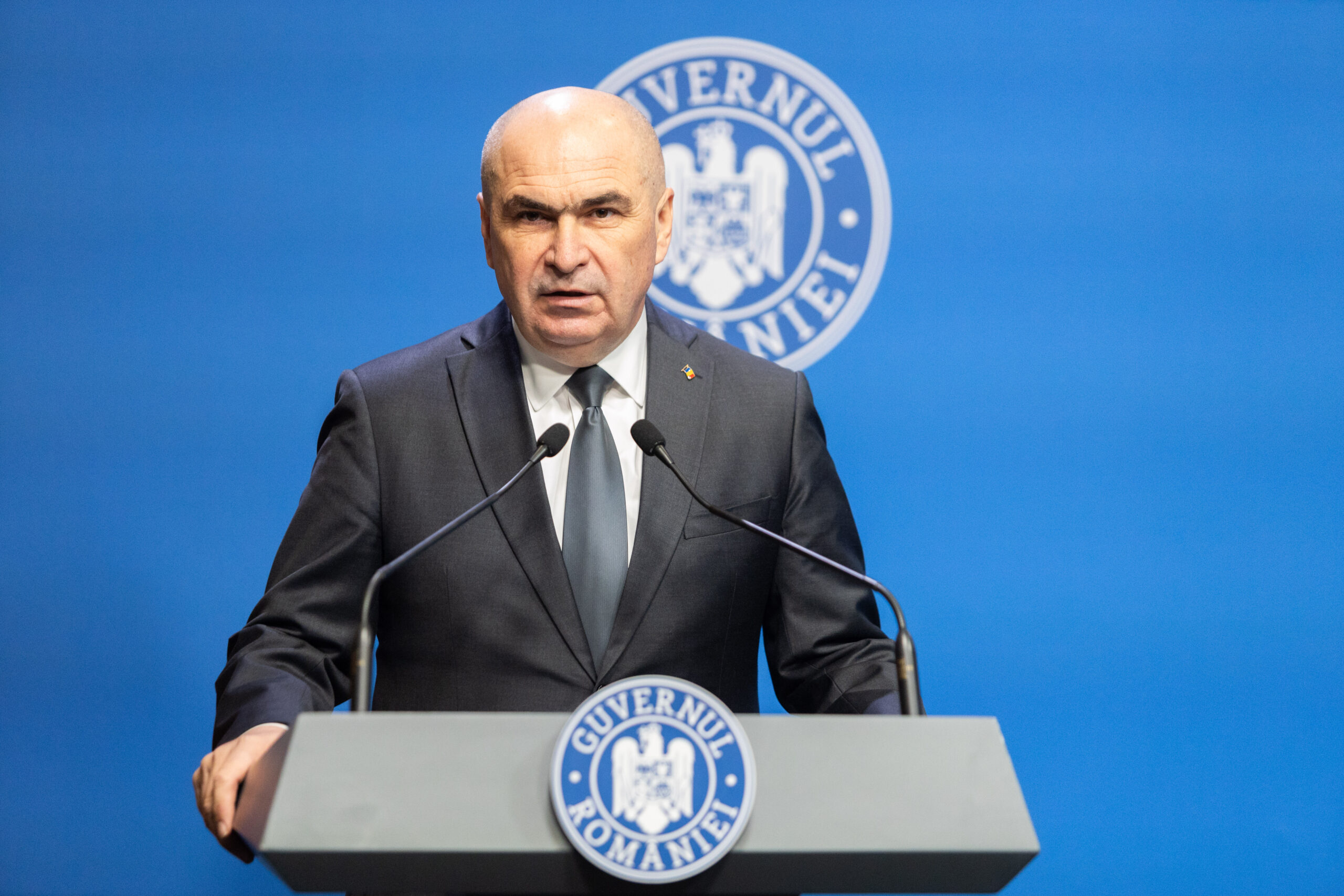
Local Government Overhaul Targets Efficiency, Shared Staff
Prime Minister Unveils Reforms for Streamlined Public Administration
Romania’s local administration is set for a significant overhaul, with Prime Minister Ilie Bolojan announcing a package of measures aimed at boosting efficiency and responsibility. Key proposals include sharing administrative staff between neighboring municipalities and standardizing payrolls for financially strained local councils.
Shared Officials and Standardized Pay Scales
A core component of the reform is enabling mayors to share administrative officials, a move Prime Minister Bolojan likens to private sector practices. “The norm can be divided between two, three mayors,” he stated, emphasizing the potential for collaboration among smaller town halls.
The reforms also address localities struggling to meet personnel expenses. Currently, each local council determines its employee numbers and salaries, leading to discrepancies. “In many cases, the payroll grid is near the deputy mayor’s salary, even if the respective town halls do not allow this,” Bolojan explained.
To rectify this, a single, national payroll framework will be introduced for these municipalities. This ceiling will not be mandatory to reach but will prevent exceeding it. “It is a correct decision, considering that, in fact, the Government of Romania ensures the financing of these localities with significant amounts,” the Prime Minister added.
Police Force Restructuring and Coordination
The efficiency drive extends to local police forces, with plans to restructure and potentially reduce officer numbers. The current ratio of one local police officer per 1,000 inhabitants is slated for an increase. The exact new ratio will be determined after consultations with town halls, particularly in areas with a higher concentration of local police.
Bolojan highlighted cases where officer numbers exceed legal limits, contrasting them with cities that maintain order with fewer personnel. “We have cities that have a policeman to 2,000 inhabitants and have no problems of offense or cleaning under control,” he observed.
To prevent jurisdictional overlaps between national and local police, the proposal includes organizing common dispatchers, fostering better coordination and response capabilities.
Broader Vision for Local Governance
The Prime Minister articulated a broader vision for local administration, focusing on three key directions: increased efficiency and responsibility, fostering community development, and simplifying public policies through decentralization and digitalization.
“The country does not change only from Bucharest. Romania changes from each county, from each county residence and from all the cities and communes of our country,” Bolojan declared.
A significant measure involves setting national ceilings for employee numbers in town halls, primarily based on population size. County councils will also have their staff limits determined by more refined indicators, such as the number of building permits issued.
Bolojan underscored the rationale behind these staffing limits: “Today we have situations where we have the mayors with a small number of employees who work very well and we have the same mayors, so a similar population, with a much larger number of employees where there is no plus of services.” This reform aims to ensure resources are allocated effectively, allowing well-managed administrations greater organizational flexibility.
The proposed reforms come as many Romanian local authorities face budgetary constraints. For instance, in 2023, the Romanian government allocated over 25 billion RON to local budgets, representing a significant portion of public spending, highlighting the reliance on national funding for local services (Ziarul Financiar 2023).
