
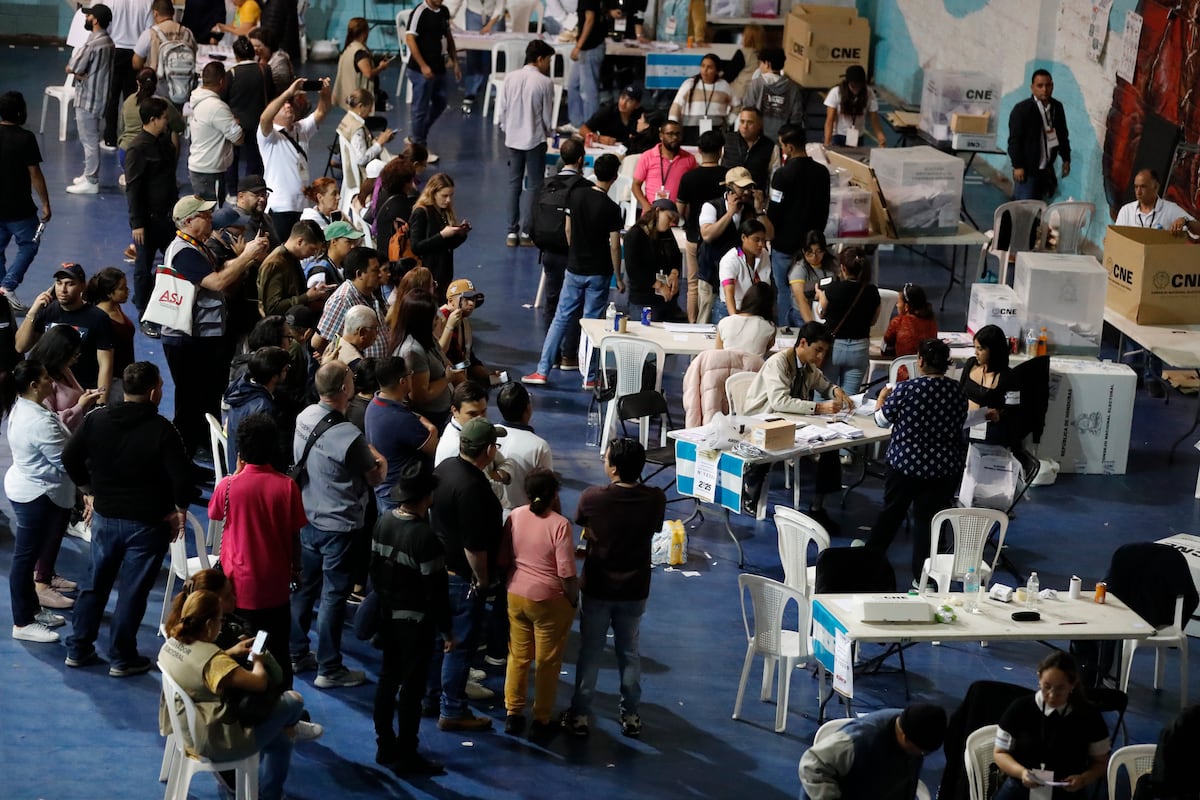
Honduran election results Contested Amidst Concerns of Irregularities
preliminary results from Honduras‘ recent presidential election show Nasry Asfura, a candidate reportedly supported by Donald Trump, leading with 40.20% of the vote. His closest competitor, Salvador Nasralla, currently holds 35.9% of the support with over 88% of ballots tallied. Though, the election is facing meaningful scrutiny and accusations of irregularities.
The Organization of American States (OAS) electoral observation mission has voiced strong criticism regarding the vote counting process, citing a “marked lack of expertise” in both its advancement and execution. Led by former Paraguayan foreign Minister Eladio Loizaga, the mission highlighted “obvious delays” and technical problems, specifically pointing to intermittencies in the management and processing of electoral materials. The OAS has called for a renewed and expedited count, emphasizing the need for “traceability measures that provide certainty in the results.” Concerns have also been raised regarding inconsistent availability of results published on the National Electoral Council (CNE) website.
The ruling Libre party has formally requested the annulment of the presidential election, alleging fraud and claiming a “coup” against their candidate, Rixi Moncada, who currently trails with 19% of the vote. marlon Ochoa, a CNE advisor representing Libre, stated that 86.6% of the tallied minutes contain “errors and inconsistencies.” Libre’s petition to the CNE cites violations of the Constitution and Electoral law, including alleged alteration of voter intent and issues with the preliminary results transmission system (TREP) – a system used on election night. They claim vote numbers were adulterated during transmission via TREP.
Salvador Nasralla has rejected the call for annulment, arguing that the focus should be on accurately counting the votes already cast. He attributed the issues to the performance of ASD,a Colombian company hired at the last minute to manage the recount,citing its “bad record.”
asfura, the frontrunner, has remained largely silent on the matter, though he previously stated he would refrain from highlighting inconsistencies or fueling uncertainty.
The OAS has urged citizens and political parties to continue exercising their legal rights of supervision and surveillance throughout the remaining stages of the process, including the accounting of remaining records, special scrutiny, and the handling of challenges. They emphasize the need for “total clarity, maximum efficiency and without any type of delay” in these final steps.
