
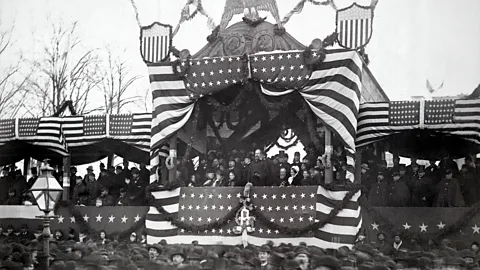
the Assassination That Gripped a Nation: The Tragedy of James Garfield
James A.Garfield’s presidency, brimming with ambitious plans, was tragically cut short in 1881 by an assassin’s bullet. The story, recently revisited in the television series Destiny of the Republic, reveals a complex narrative of political factionalism, personal delusion, and a nation grappling with the aftermath of the Civil War.
garfield took office in March 1881 with a progressive agenda. He envisioned upgrading the US Navy, expanding trade with Latin america, and championing civil rights – a commitment demonstrated by his appointment of Frederick Douglass, a formerly enslaved social reformer, as recorder of deeds for the District of Columbia, marking the first time an African American held such a prominent federal office. However, his path was promptly obstructed by powerful political forces, most notably New York Senator Roscoe Conkling. Conkling, who wielded important influence over the lucrative customs revenue flowing through the port of New York, opposed garfield’s progressive leanings and his resistance to the “spoils system” - the practice of awarding government positions to political supporters. He had already maneuvered his associate, Chester A. Arthur, into the vice presidency, and now sought to control Garfield’s Cabinet appointments.
At the heart of the tragedy lies Charles Guiteau, the man who fired the fatal shots. A failed lawyer, journalist, and even an unsuccessful participant in a free love commune (where, according to accounts, he was rejected by all the women), Guiteau harbored a deep-seated belief in his own destined greatness. He became fixated on Garfield after the congressman’s unexpected nomination in 1880, traveling to New York steadfast to secure Garfield’s victory. He managed to deliver a rambling speech endorsing the candidate at Garfield’s New York campaign office,but remained largely unnoticed.
Guiteau fervently believed in the spoils system and expected a significant reward for his perceived support. He anticipated a key post – ideally, the ambassadorship to France – in exchange for his backing. After Garfield’s election,Guiteau relentlessly pursued his demand,appearing daily at the White house amongst a throng of other office seekers. He even managed a brief encounter with the President,handing him a copy of his election speech with the words ”Paris Consulship” scrawled on it,connected to his name.
Garfield,however,remained steadfast in his opposition to patronage. This rejection fueled Guiteau’s delusion, ultimately leading him to believe he was acting on divine instruction to remove Garfield from power. On July 2, 1881, Guiteau shot President Garfield at the Baltimore and Potomac Railroad Station in Washington, D.C.
The subsequent search for the bullet involved the use of an early metal detector, an invention by Alexander Graham Bell. Despite the best efforts of doctors,employing antiseptics pioneered by British surgeon Joseph Lister,Garfield succumbed to infection on September 19,1881,after suffering for 79 days. His death shocked the nation and exposed the deep fissures within the Republican Party and the dangers of unchecked political ambition.
