
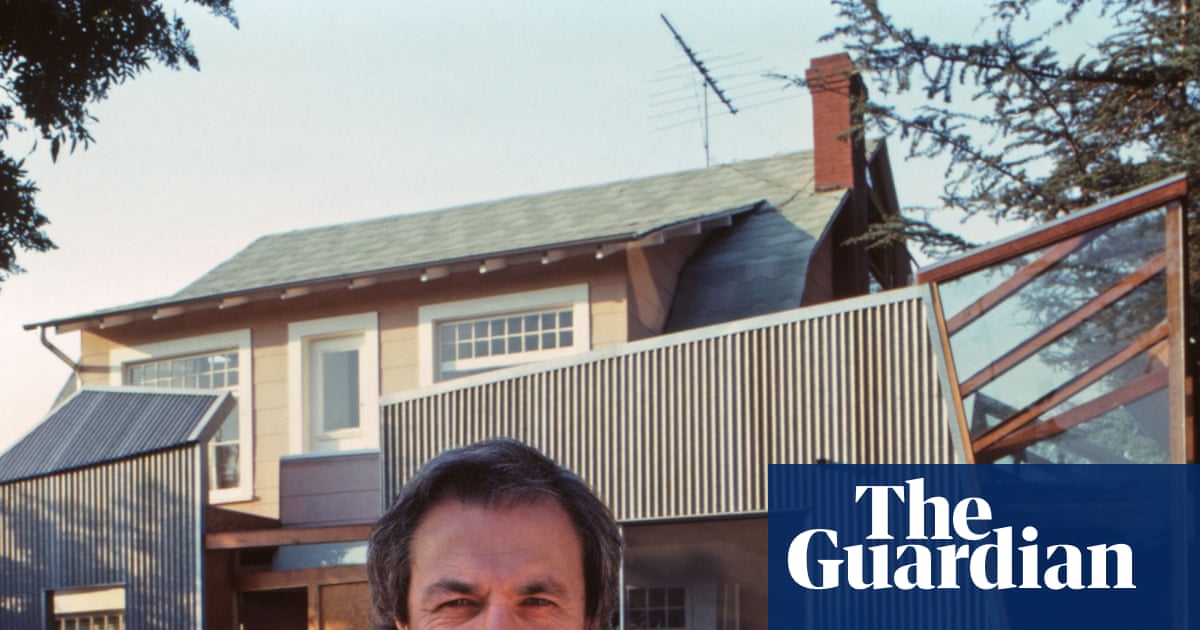
Frank gehry, Architect of the Guggenheim Bilbao and design icon, Dies at 95
Frank Gehry, the Canadian-American architect whose groundbreaking designs-most notably the Guggenheim Museum Bilbao-transformed cities and redefined 21st-century architecture, has died at age 95. His death marks the end of an era for a figure who consistently challenged architectural norms and created instantly recognizable landmarks around the globe.
Gehry’s influence extends beyond aesthetics; he democratized architectural expression,proving buildings could be art,and art could be accessible. His passing prompts reflection on his legacy of innovation, his sometimes-contentious relationship with the profession, and the future of a field he profoundly shaped. The architectural world now assesses the impact of his six-decade career and anticipates how his bold vision will continue to inspire future generations.
Born in Toronto in 1929,Gehry initially pursued a career in business before discovering his passion for architecture. He became known for his deconstructivist style, characterized by titanium-clad curves, fragmented forms, and a rejection of customary right angles. The 1997 opening of the guggenheim Museum Bilbao in Spain catapulted him to international fame, revitalizing the city and establishing the “Bilbao effect”-the idea that iconic architecture can drive economic regeneration.
Beyond Bilbao, Gehry’s portfolio includes the Walt Disney Concert Hall in Los Angeles, the Louis Vuitton Foundation in Paris, and the Dancing House in Prague. He also demonstrated a commitment to more understated projects, such as the Maggie’s Center in Dundee, Scotland, designed in 2003 as part of a network of drop-in centers for those affected by cancer. Modeled on a traditional Scottish “but and ben” dwelling, it featured a white cottage topped by a folded metal roof, resembling origami.
In later years, Gehry undertook projects like the terraforming of the Battersea power station environs in London, designing luxury housing, and a Serpentine pavilion, reconceptualized as a whirlwind in a lumber yard. Throughout his career, he remained a vocal critic of what he considered poor design, famously declaring in 2014, “In the world we live in 98% of what is built and designed today is pure crap. There’s no sense of design, no respect for humanity, just damn buildings.” He even offered a defiant gesture to an audience who accused him of designing “spectacle architecture,” later apologizing for the outburst.
