
Martian Caves May Harbor Evidence of Past Life, New Research Suggests
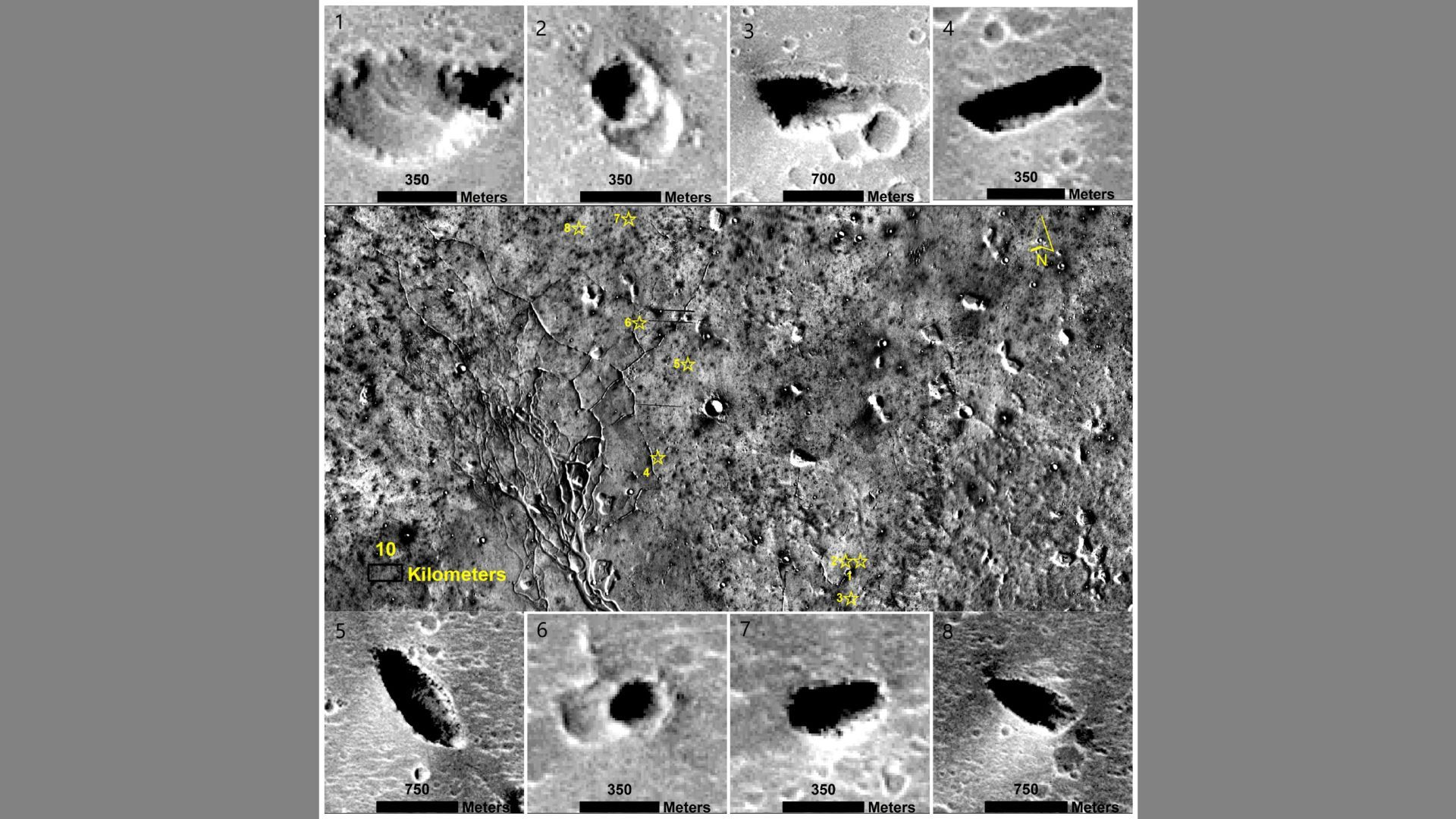
WASHINGTON – Newly discovered evidence suggests colossal, water-carved caves beneath the surface of Mars could offer refuge from the planet’s harsh conditions and potentially preserve signs of ancient life. A team led by researcher Ding, whose findings were published Oct. 30 in The Astrophysical Journal Letters, identified eight potential cave entrances within the Hebrus valles region, offering a promising target for future exploration.
Mars’ surface is bombarded by extreme diurnal temperature swings, pervasive dust storms, and damaging solar ultraviolet and cosmic-ray radiation, making the search for biosignatures challenging. Caves, though, provide a naturally shielded surroundings where organic molecules could be preserved over long periods.
The research focuses on “skylights” – collapsed areas revealing subterranean voids – formed by ancient volcanic activity and water erosion. While accessing these caves presents notable engineering hurdles due to steep walls and limited radio signal transmission, the team’s geomorphological analysis indicates some caves may be accessible via step-like formations of rocky debris.
“From an engineering standpoint, directly entering these caves is a major challenge,” Ding said. “Though, our geomorphological analysis suggests that not all candidate caves are simple vertical shafts. In our paper, we use the term ‘accessible potential karstic caves.'”
Potential exploration strategies include deploying a chain of robotic explorers - wheeled rovers navigating the slopes, climbing robots lowered by winches, or even aerial rotorcraft capable of entering and exiting the skylights.Beyond the search for past life,these caves could also provide crucial shielding for future Mars astronauts and their habitats from radiation and dust storms,potentially shaping humanity’s long-term prospects on the Red Planet.
