
EU Divided Over Response to Gaza Crisis
EU Faces Criticism for Inaction
Following a report indicating potential human rights breaches by Israel, the European Union is facing scrutiny for its response to the ongoing conflict in Gaza. Protests erupted in Brussels as the EU deliberated on whether to suspend its trade agreement with Israel.
An EU report presented to foreign ministers highlighted possible violations of human rights obligations under the EU-Israel Association Agreement. The protesters, backed by numerous NGOs and charities, demanded the EU take decisive action.
For the protesters waving Palestinian flags outside EU buildings in Brussels, it was the moment that everything might change.
— world-today-news.com (@worldtodaynews) June 26, 2025
“Every red line has been crossed in Gaza,”
—Agnes Bertrand-Sanz, Oxfam Representative
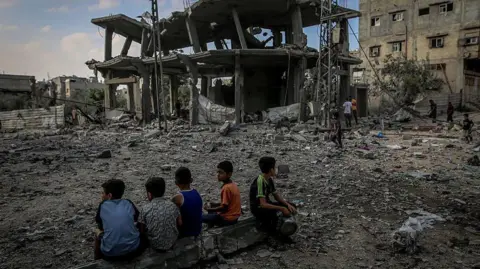
According to the Hamas-run health ministry, over 55,000 Gazans have been killed in 20 months of Israeli military operations, with 1.9 million people displaced. The UN reports that over 400 Palestinians have been killed by Israeli gunfire or shelling while trying to reach food distribution centers.
Internal Disagreements Hamper Action
The EU’s foreign policy chief, Kaja Kallas, stated the EU’s priority is to alter the situation on the ground in Gaza. However, deep divisions among member states have stalled any concrete action.
Several EU countries, including Ireland, Spain, and Belgium, pushed for suspending the agreement with Israel. Yet, decisions require unanimous consent, and opposition from countries like Germany, Austria, and Hungary, has blocked action.
Beate Meinl-Reisinger, Austria’s foreign minister, argued suspending the treaty wouldn’t improve the situation but could damage dialogue with Israel. Friedrich Merz, Chancellor of Germany, has refused to consider suspending the agreement, despite condemning the attacks.
Simon Harris, Ireland’s foreign affairs minister, criticized the EU’s slow response, stating that “far too many people have been left to die as genocide has been carried out.” This highlights the EU’s struggle to present a unified front on the crisis.
