
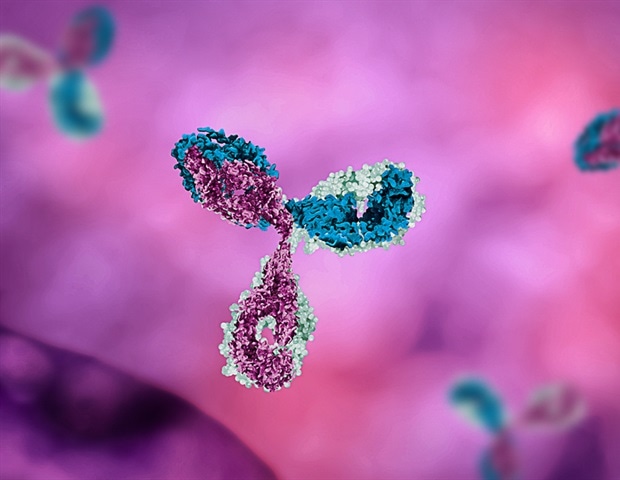
COVID-19 strain. Researchers investigated immune responses, offering insights into protection from prior infection and vaccination.">
Study Reveals Durable Immunity Against original COVID-19 Strain
OXFORD — May 7, 2024 — Landmark research reveals the durability of immunity against the original COVID-19 strain. The University of Oxford-led study examined immune responses,detailing the effectiveness of prior infection and vaccination.This study unveils critical insights for understanding immune protection against the original COVID-19 variant, highlighting the importance of further research.Experts say the work will inform future treatment methods.
Landmark Study Reveals Durable Immunity Against Original COVID-19 Strain
Understanding Immunity: A New Frontier in COVID-19 Research
Researchers have achieved a meaningful milestone in understanding human immunity to COVID-19. A pioneering study, spearheaded by the University of Oxford, has successfully examined immune responses in individuals who already possessed antibodies against the virus. This research provides critical insights into the effectiveness of prior infection and vaccination in conferring protection.
The Power of Combined Immunity
the study’s findings indicate that a combination of previous infection and vaccination offers robust protection against the original COVID-19 strain. This highlights the potential for long-lasting immunity through a hybrid approach.
The Challenge of Finding Seronegative Participants
With the vast majority of the global population now possessing antibodies against COVID-19, identifying seronegative individuals for research purposes has become increasingly difficult. Consider these statistics:
- Over 99% of the U.K. population is seropositive.
- Approximately 59% of the world’s population is seropositive.
These high rates of seropositivity underscore the widespread exposure to the virus, either through infection, vaccination, or both.
Controlled Human Infection Models (CHIMs): A Vital Tool
To accelerate vaccine advancement, researchers employ Controlled Human Infection Models (CHIMs). These models involve deliberately infecting healthy volunteers under carefully monitored clinical conditions. CHIMs enable the rapid testing and comparison of new vaccines and treatments in a controlled environment. In this particular study,researchers utilized a COVID-19 CHIM to assess the immune responses that prevent reinfection in previously infected and/or vaccinated individuals.
Key Findings from the COVCHIM01 Study
Data from the COVCHIM01 study demonstrated durable immunity against the original COVID-19 virus following infection and/or vaccination. The study compared the immune responses of infected and uninfected volunteers, revealing that antibodies in the nasal lining, the virus’s entry point, may play a crucial role in preventing mild infections.
The Emergence of Omicron and Future Research
Interestingly, some participants who successfully avoided infection with the original virus strain later contracted the Omicron variant in the community. researchers are now focusing on newer variants to create CHIMs with higher infection rates, facilitating the evaluation of new vaccines and COVID-19 treatments.
The Importance of Efficient testing
Studies like these are essential for identifying the most efficient and effective methods for testing new treatments and vaccines, ensuring their rapid deployment when needed.
Expert Viewpoint
This is a really crucial proof of concept study demonstrating that controlled human infection studies can be safely carried out during a pandemic and importantly provide valuable data that is difficult to obtain in traditional field studies. We hope this provides confidence in the use of human infection studies as a tool both for the development of improved COVID vaccines and therapeutics and for potential future pandemics.
Professor Helen McShane, Professor of Vaccinology at the department of Paediatrics, Director of the national Institute for Health and Care Research Oxford Biomedical Research Centre and the lead and corresponding author of the COVCHIM01 study
Study Details
the study, published in The Lancet Microbe, marked the inaugural research project at the new NIHR Oxford clinical Research Facility, Churchill Hospital, Oxford. Funding was provided by the Wellcome Trust, the Department for Health and Social Care/UK Health Security Agency, and the NIHR Oxford Biomedical Research Centre.
Frequently Asked Questions (FAQ)
Q: What is a CHIM?
A: A Controlled Human Infection Model (CHIM) involves deliberately infecting healthy volunteers under controlled conditions to study immune responses and test vaccines or treatments.
Q: What does seropositive mean?
A: Seropositive means that a person has antibodies against a particular infectious agent,indicating prior exposure through infection or vaccination.
Q: Why are CHIMs critically important?
A: CHIMs allow researchers to rapidly and efficiently test new vaccines and treatments in a controlled environment, accelerating the development process.
