
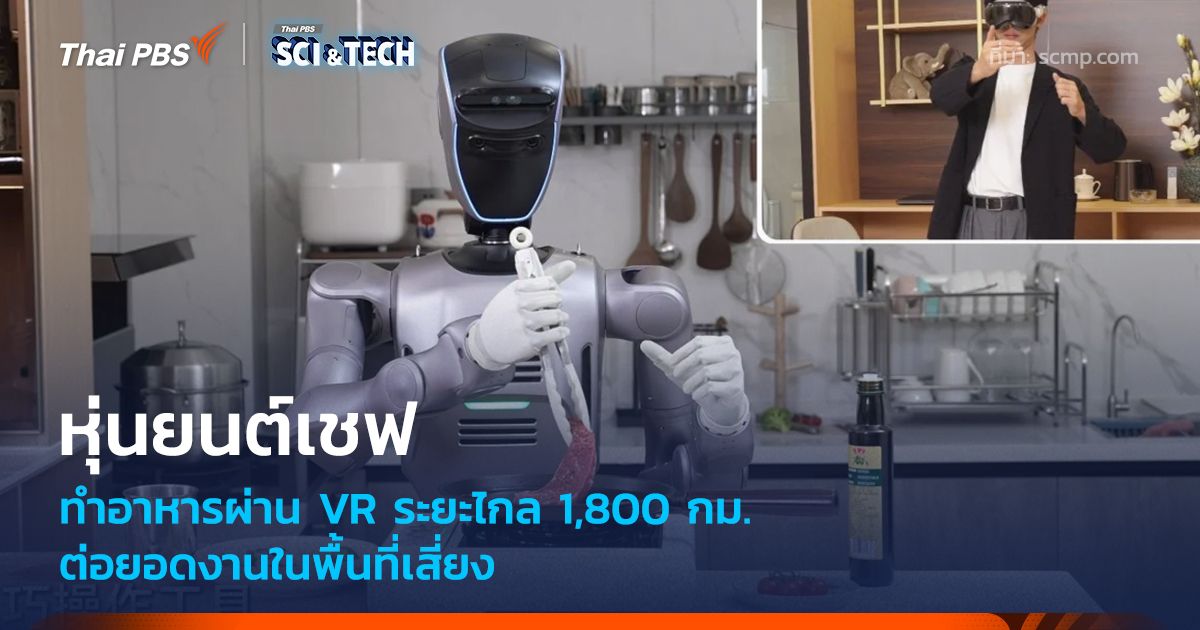
Robots Cook Steak 1,800km Away Via VR
Chinese Tech Firm Showcases Remote Humanoid Robot Capabilities
A groundbreaking demonstration by a Chinese technology company has showcased the ability to control humanoid robots remotely, enabling a chef to cook a steak from 1,800 kilometers away using virtual reality. Researchers believe this innovation extends far beyond culinary applications, holding potential for hazardous environments.
Culinary Connectivity Achieved
The robot manufacturer utilized a human-shaped robot, operated by a chef in Chengdu. Through VR goggles and real-time hand controls, the chef successfully prepared a steak with a remarkable 1,800-kilometer connection. This feat was enabled by sophisticated movement technology, a high-speed network, and low-delay cameras ensuring seamless image and motion transfer.
Mimicking Human Dexterity
Engineered with joints designed to replicate human movements, the robot offers precise feedback, allowing for delicate actions like turning meat and stable grip control. Developers report that the robot can mirror human actions in under 0.1 seconds, crucial for realistic and effective remote operation.
Beyond the Kitchen: Expanding Applications
The system also allows for the recording of gestures and cooking processes, facilitating replication or recipe refinement. VR control opens avenues for experts to transmit specialized skills to distant robots instantaneously. Beyond food preparation, the technology is eyed for deployment in challenging locations.
Potential in High-Risk Zones
Applications are envisioned for areas difficult for humans to access or with high risk, such as hospital sterile rooms, medical operating areas, or disaster zones, particularly where reducing direct human contact is paramount. This could also address labor shortages or skill gaps in environments like space stations or polar research facilities.
Transforming Future Work Models
Despite being in its trial phase, this VR-driven remote robot control technology demonstrates significant potential for revolutionizing long-distance operations. From inter-city cooking to intricate tasks in isolated environments, the innovation points towards future work models prioritizing safety, expertise, and precision across numerous industries.
The development aligns with trends in automation. For instance, industrial robots in manufacturing are becoming increasingly sophisticated; in 2023, the International Federation of Robotics reported a 7% increase in the global robot population, highlighting a growing reliance on automated systems for efficiency and precision (IFR 2023).
