
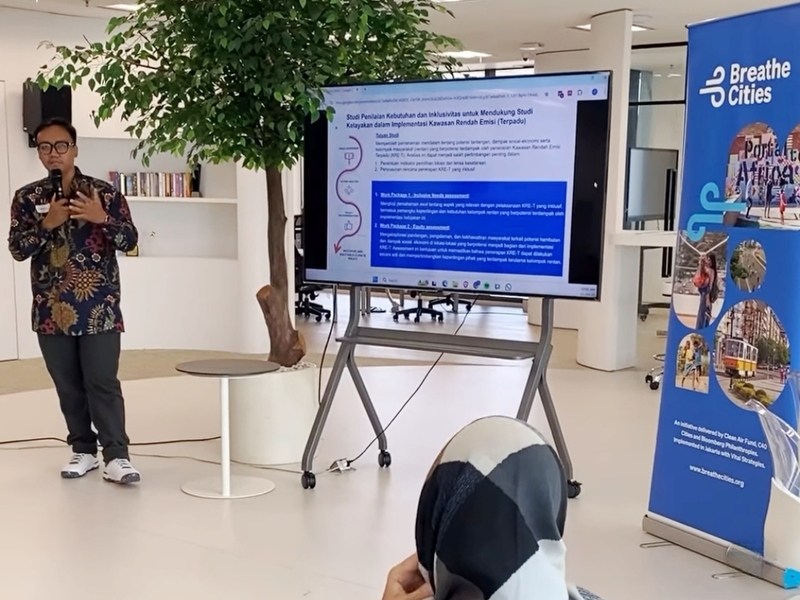
Community Role Vital in Jakarta’s Low Emission Zone Implementation
Jakarta, June 19, 2025 – The Jakarta government is doubling down on its commitment to cleaner air by strengthening collaboration with local communities in the implementation of Integrated Low emission zones (KRE-T). This initiative recognizes the vital role of the community in ensuring the success and sustainability of these zones.
The Importance of Community Engagement
The Breathe Cities Jakarta program, in partnership with the Jakarta Environmental Agency, is actively engaging residents to foster a more inclusive and evidence-based approach to air pollution control. The program is part of a global effort supported by organizations like the Clean Air Fund, C40 Cities, and Bloomberg Philanthropies [1].
Did You Know? Air pollution is responsible for an estimated 7 million premature deaths worldwide each year, according to the World Health Organization.
Asep Kuswanto, Head of the Jakarta Environment Agency, emphasized that the success of KRE-T hinges not only on regulations like Governor Regulation No.90/2021 and Governor decision No. 575/2023, but also on the active role of the community. This includes oversight, public education, monitoring policy impacts, and supporting vulnerable populations.
Community-Based Air Quality Monitoring
Breathe Cities Jakarta, in collaboration with the Resilience Progress Initiative (RDI), is promoting community-based air quality monitoring using low-cost sensors. This technology expands monitoring networks to residential and industrial areas previously inaccessible to conventional monitoring stations.
Pro Tip: Residents can use air quality apps on their smartphones to stay informed about pollution levels in their neighborhoods.
Integrating Hyperlocal Data
The initiative emphasizes integrating hyperlocal data into official monitoring systems, providing a basis for more precise and responsive policies. Community engagement also strengthens local capacity in understanding and using air quality data.
Blueprint for Collective Action
The multi-stakeholder collaboration aims to create a blueprint for collective action, ensuring that the community’s role is strategically integrated into Jakarta’s air pollution control system. The goal is to move beyond symbolic participation to a meaningful and impactful contribution.
Key Initiatives and Goals
The Jakarta government aims to reduce air pollution by 30% by 2030, aligning with national targets for environmental sustainability [2].The KRE-T initiative is a crucial step towards achieving this goal.
| Metric | Target | Timeline |
|---|---|---|
| Air Pollution Reduction | 30% | By 2030 |
| Expansion of Monitoring Networks | Increase coverage in residential areas | Ongoing |
| Community Engagement | Strategic integration into policy | Ongoing |
What are the biggest challenges in implementing low emission zones?
How can residents actively participate in improving air quality in Jakarta?
Evergreen Insights: The Fight for Clean Air in Jakarta
Jakarta has long faced challenges related to air quality due to rapid urbanization, industrial growth, and vehicle emissions. The implementation of Integrated Low Emission Zones (KRE-T) represents a significant step towards addressing these issues. By focusing on community involvement and data-driven policies, Jakarta aims to create a sustainable model for urban environmental management.
Frequently Asked Questions About Jakarta’s Air Quality Initiatives
- What is the role of Integrated Low Emission Zones (KRE-T) in Jakarta?
- KRE-T zones are designed to reduce air pollution by restricting high-emission vehicles and promoting cleaner transportation alternatives.
- Why is community involvement critically important for the success of KRE-T?
- Community involvement ensures that policies are effective, responsive to local needs, and sustainable in the long term.
- How can I monitor air quality in my neighborhood?
- You can use air quality apps and websites that provide real-time data from monitoring stations and low-cost sensors.
- What are the main sources of air pollution in jakarta?
- The main sources include vehicle emissions, industrial activities, and construction.
- What is the Jakarta government doing to reduce vehicle emissions?
- The government is promoting the use of electric vehicles, improving public transportation, and implementing stricter emission standards.
- How does the Breathe Cities Jakarta program support air quality betterment?
- The program provides technical assistance, funding, and partnerships to support the implementation of data-driven policies and community engagement initiatives.
- what are the long-term goals for air quality in Jakarta?
- The long-term goals include reducing air pollution to levels that meet World Health Organization guidelines and creating a healthy, sustainable environment for all residents.
Disclaimer: This article provides general facts about Jakarta’s air quality initiatives and should not be considered as professional environmental advice.
What are your thoughts on community involvement in environmental initiatives? Share your comments below and subscribe for more updates!
