
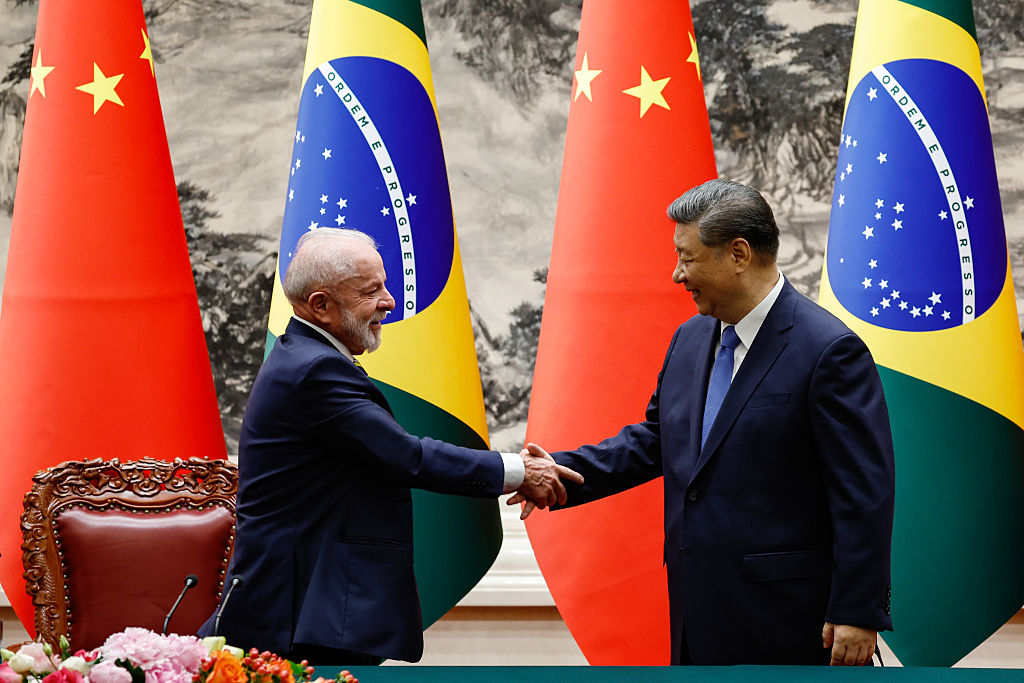
Brazil–China Relations Deepen Amidst Global Shifts
Table of Contents
São Paulo, Brazil – august 21, 2025 – A burgeoning partnership between Brazil and China is reshaping the geopolitical landscape of South America, even as the United States attempts to influence Brazil’s political and judicial systems and imposes substantial tariffs. Enthusiasm for collaboration between Brasília and Beijing appears to be at an all-time high, signaling a strategic realignment with far-reaching consequences.
A Historic high in Bilateral Relations
Chinese President Xi Jinping recently affirmed the strength of the relationship during a call with Brazilian President Luiz Inácio Lula da Silva, stating, ”Our ties are at their best moment in history.” He further pledged China’s support for Brazil’s national sovereignty and legitimate interests. Xi also expressed China’s willingness to collaborate with Brazil as a model for unity and self-reliance among nations of the Global South.
For years, China has been a critical commercial partner for South America, with Brazil consistently serving as its strongest ally in the region. It is China’s top trade partner in Latin America and a primary destination for Chinese foreign investment. This connection has persisted and even grown under successive Brazilian administrations, including that of former President jair Bolsonaro, despite his occasionally critical rhetoric toward Beijing.
Key Developments in 2025
This year has witnessed meaningful milestones in the Brazil-China partnership. In july, Brazil hosted the 17th BRICS summit, where both nations announced plans for a bi-oceanic railway corridor connecting Brazil and Peru’s Pacific coast. Additionally, Chinese automaker BYD launched its first fully electric vehicle manufactured entirely within Brazil, at a new facility in Camaçari, Bahia-the company’s first production site outside of Asia.
As a tangible symbol of the deepening bond, Brazil’s diplomatic mission in Beijing is actively seeking a larger, more prominent location and expanding its personnel. Notably, the embassy will now include an army general and a rear admiral, a level of military depiction previously reserved for Brazil’s embassy in Washington, D.C.
Did You know?
Brazil and china are negotiating mechanisms to track the origin of agricultural products, aiming for a system where both countries recognize the same environmental certifications for goods like “carbon-neutral beef.”
Economic Interdependence and Diversification
Hussein Kalout, an international advisory board member at the Brazilian center for International Relations (CEBRI), observed, “Brazil will resolve many of its trade issues by selling more to China and China will also benefit.” However, Brazil is strategically pursuing a policy of diversifying its partnerships, strengthening ties with other Global South nations alongside its relationship with China.
Vice President Geraldo Alckmin is scheduled to visit Mexico later this month, leading a delegation of over 113 companies to explore expanded commercial opportunities. President Lula recently engaged in discussions with French President Emmanuel Macron to advance the EU-Mercosul trade agreement. Furthermore, Brazil and Vietnam formalized an agreement in March to enhance collaboration across defense, economics, and cultural spheres.
Celso Amorim, Lula’s chief foreign policy advisor, emphasized the importance of diversification, stating, “Diversifying our market is key…we must continue this diversification with BRICS countries and others, too.”
U.S. Concerns and Trade Dynamics
The strengthening Brazil-China relationship has raised concerns in Washington. U.S. media reports suggest that brazil’s hosting of the BRICS summit contributed to the Trump administration’s decision to impose tariffs.Senate Democrats, though, have cautioned against a trade war with Brazil, arguing it would harm both economies and potentially push Brazil closer to China.
China has been brazil’s largest trading partner since 2009,surpassing the United States. As the world’s largest soybean importer, China relies heavily on Brazilian supply.In 2024, approximately 28% of Brazil’s exports were destined for China, while in 2023, Brazil was China’s primary supplier of soy, beef, cellulose, corn, sugar, and poultry.
| Year | % of brazil’s Exports to China | % of Brazil’s Imports from China |
|---|---|---|
| 2023 | 28% | 22% |
| 2024 | 28% | 26% |
| 2025 (Q1) | N/A | 26% |
While historically favorable to Brazil, the trade balance has seen China increase its exports in recent years. In response to U.S. tariffs, China authorized 183 additional brazilian coffee companies to access its market, extending similar access to other products.
Pro Tip: Understanding the historical context of Brazil’s trade relationships is crucial for interpreting current developments. Brazil’s pursuit of diversification reflects a long-standing diplomatic strategy.
Expanding Cooperation and Future Prospects
Beyond trade, cooperation is expanding into new areas. Chinese investment is flowing into Brazil’s green energy and telecommunications sectors, and Chinese companies are increasingly active in service industries like delivery apps. Though, concerns remain about Brazil potentially becoming overly reliant on exporting raw materials and importing finished goods.
The manufacturing industry accounted for 23% of Brazil’s exports to China in the first quarter of 2025, a 6 percentage point increase compared to the same period in 2024. Furthermore, the nature of exchanges is evolving from government-to-government to company-to-company and client-to-client interactions.
Despite a period of strained relations under former President Bolsonaro, who initially adopted a unfriendly stance toward China, economic realities have driven continued cooperation. Brazil’s agricultural sector, a powerful force in the country’s politics, has consistently advocated for maintaining strong ties with China.
What role will the bi-oceanic railway corridor play in strengthening trade ties between Brazil, china, and Peru? How will Brazil
