
Unexpected Synchronization: Gut Rhythms Mirror Brain Activity, New Study Reveals
SAN DIEGO, CA – In a surprising discovery, researchers at UC San Diego have found that the rhythmic pulsations within the digestive system share essential physical characteristics with those of the brain’s neurons. The study, published in Physical Review Letters, suggests a previously unknown link between gut function and brain activity, perhaps offering new avenues for understanding conditions ranging from mental health disorders to neurodegenerative diseases.
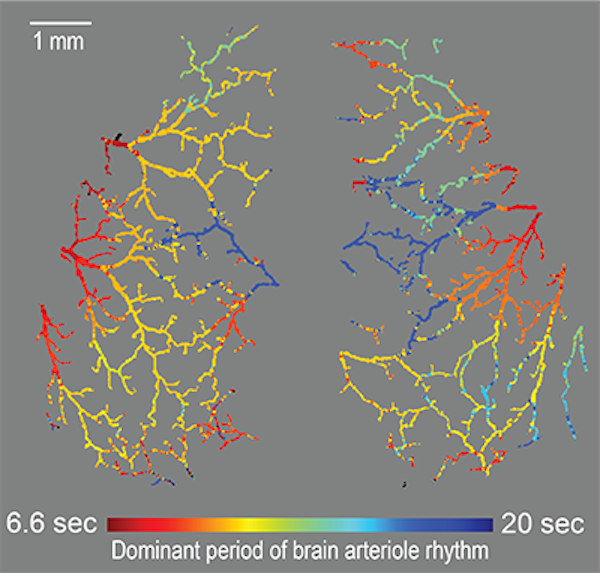
While the gut’s primary role is digestion – a one-way path for food – and the brain facilitates complex thought via a multi-directional blood vessel network,both organs exhibit behavior consistent with “coupled oscillators.” These oscillators, sections of the intestine or neurons, communicate with neighboring sections through synchronized frequencies. “Coupled oscillators talk to each other and each section of the intestine is an oscillator that talks to the other sections near it,” explains physicist Massimo Vergassola. “Normally, coupled oscillators are studied in a homogeneous setting… In our case, the oscillators were more varied, just as in the intestine and the brain.”
The research team’s findings don’t establish a direct connection, but illuminate shared underlying principles.Understanding these pulsations could provide insights into signaling changes related to mental health and potentially even offer early warning signs for conditions like dementia, according to researcher David kleinfeld. “The brain is infinitely more elaborate than the gut, but this is science at its best,” Kleinfeld stated. “You ask one question, it leads you somewhere else, you solve that problem, then return to your original question.”
